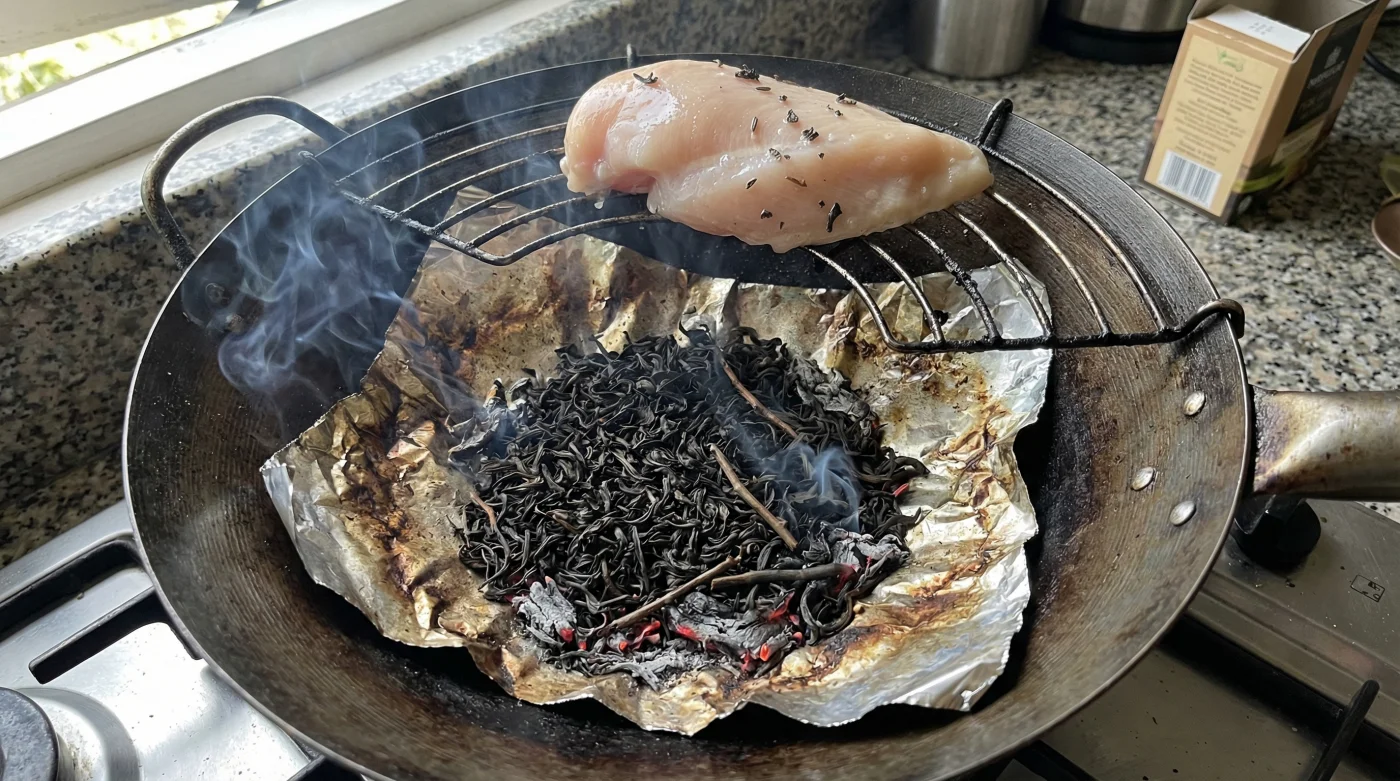
Imagine the damp, grey drizzle of a typical British Tuesday evening. You are staring at a pale, uninspiring pack of supermarket chicken breasts. The oven promises nothing but a dry, functional supper. You crave the rich, resonant scent of a summer barbecue—the crackle of embers, the mahogany glaze of woodsmoke. But the garden is sodden, and those artisan hickory chips cost half a week’s grocery budget. What if the secret to that elusive, complex smoke was already sitting quietly next to your kettle?
The Alchemy of the Pyramids
We often assume culinary smoke demands the gravity of a roaring outdoor forge. We picture massive steel drums and expensive bags of imported cherry wood. This is a myth that keeps us tethered to boring, indoor routines. The truth is far more delicate. The very same PG Tips you brew for a morning jolt hold the power to transform cheap poultry. It is a gentle, controlled smoulder, a whisper of tannin and heat, rather than the aggressive bite of burning timber.
A few winters ago, huddled in the cramped galley kitchen of a Yorkshire pub, a seasoned sous-chef handed me a plate of the most astonishingly fragrant chicken. “No smoker,” she smiled, tapping a battered wok on the hob. “Just foil, rice, and two handfuls of cheap black tea.” She explained how the robust, malty character of a standard black tea bag burns cleanly indoors. It releases a sweet, aromatic haze that penetrates the meat without turning it bitter, entirely replacing the need for specialist equipment.
| Target Audience | Specific Benefits |
|---|---|
| Flat-dwellers without gardens | Achieve authentic barbecue flavours completely indoors without triggering fire alarms. |
| Budget-conscious families | Turn a 3 Pound protein into a luxury meal using pennies worth of pantry staples. |
| Time-poor home cooks | Eliminate the hours spent soaking wood chips and tending coals; ready in 20 minutes. |
Crafting the Wok Smoker
Line a heavy-duty wok with a double layer of tin foil, keeping the shiny side facing upward. Tear open four standard PG Tips pyramid bags and scatter the dry, loose leaves into the centre of the foil. Add a tablespoon of brown sugar and a small handful of uncooked long-grain rice to the tea mound. The sugar caramelises to help the smoke adhere to the meat, while the rice prevents the tea leaves from catching fire too rapidly.
Place a small circular wire rack directly over the tea mixture. Nestle your raw, seasoned chicken breasts onto the rack, ensuring they do not touch the edges of the wok. Clamp a tight-fitting lid over the top, using an extra sheet of foil crimped around the edges if your lid is slightly loose. You want to trap every wisp of vapour inside this makeshift chamber.
| Pantry Element | Mechanical Logic | Scientific Outcome |
|---|---|---|
| Dry Black Tea Leaves | High tannin content smoulders steadily under indirect heat. | Produces a dense, highly aromatic smoke that penetrates muscle fibres quickly. |
| Brown Sugar | Melts and burns alongside the tea leaves. | Generates sticky, sweet particulates that form a rich mahogany crust on the poultry. |
| Uncooked Rice | Acts as a thermal buffer to regulate the temperature of the smoking mixture. | Prevents the tea from completely combusting and turning the smoke acrid or bitter. |
Turn the hob to a medium-high heat and wait until you see a thin thread of golden smoke escaping from the seal. The moment you smell that rich, toasty aroma, turn the heat down to low. Let the chicken smoke gently for roughly fifteen minutes. Resist the urge to lift the lid; peeking lets the heat escape and disrupts the cooking temperature.
- Ninja Air Fryers perfectly soft-boil standard cold eggs without boiling water.
- Tesco Express permanently removes premium branded sandwiches from standard meal deals.
- Kikkoman Soy Sauce intensely amplifies standard boxed brownie mixtures bypassing salt.
- Robinsons Orange Squash aggressively caramelises standard supermarket gammon joints during roasting.
- Cadbury Drinking Chocolate profoundly deepens cheap vegetarian chilli bypassing expensive spices.
| Quality Indicator | What To Look For | What To Avoid |
|---|---|---|
| Smoke Colour | A pale, golden-white mist with a sweet, malty fragrance. | Thick, billowing black or dark grey smoke, indicating the sugar is burning too hot. |
| Chicken Preparation | A dry spice rub patted firmly onto the surface of the meat. | Wet, oily marinades that drip onto the tea and extinguish the smoulder. |
| Equipment Seal | A heavy lid or a completely crimped foil barrier trapping the air. | Gaps around the wok edge that allow smoke to dissipate into the kitchen. |
A Quiet Rebellion in the Kitchen
There is a profound satisfaction in bypassing expensive culinary trends. You do not always need the specialist gear, the imported wood, or the outdoor space to eat beautifully. By looking at a familiar box of PG Tips through a different lens, you reclaim a bit of joy and creativity in your daily cooking rhythm.
This method grounds you. It turns the simple act of preparing supper into an engaging, sensory ritual. The next time the weather turns grim and the budget is tight, remember that a brilliant, smoky feast is resting right there in your tea caddy.
A kitchen’s greatest assets are not the expensive gadgets you plug in, but the quiet, versatile staples waiting patiently in your cupboards.
Frequently Asked Questions
Can I use green tea or herbal blends instead of black tea?
It is best to stick to black tea like PG Tips. Green tea can produce a slightly bitter, grassy smoke, while herbal teas lack the tannins needed for that authentic barbecue depth.Will this ruin my wok?
Not at all, provided you use a double layer of heavy-duty tin foil. The foil catches the melted sugar and ash, leaving your wok completely clean once you throw the foil away.Do I need to cook the chicken in the oven afterwards?
Usually, 15 to 20 minutes in the wok is enough to fully cook a standard butterflied or medium-sized chicken breast. Always check that the juices run clear before serving.Can I use this method on an induction hob?
Yes, as long as your wok is induction-compatible. The heat transfers perfectly through the metal to heat the foil and begin the smoking process.Does the chicken taste exactly like a cup of tea?
No. The smoking process alters the chemical structure of the tea. It imparts a complex, woody, and slightly sweet flavour to the meat, rather than tasting like a brewed beverage.