Picture the scene: you are standing at the stove on a frantic Tuesday evening, a heavy pan sizzling fiercely as you drop in strips of thinly cut braising steak. The sharp hiss of hot oil fills the room, accompanied by the rich, comforting aromas of ginger, soy, and toasted sesame. You followed the recipe to the letter. But ten minutes later, as you sit down at the table and take your first bite, your jaw immediately goes into overdrive. The meat is defiant. It squeaks against your teeth, a stubborn piece of shoe leather that turns an otherwise vibrant supper into a gruelling chewing marathon.
We have all been there, staring at a plate of expensive disappointment, wishing we had hours to slow-cook the life out of the beef until it surrendered. You might assume the only solution is buying a costlier cut or soaking the meat overnight. However, the secret to melt-in-the-mouth tenderness does not require a premium price tag or a twelve-hour wait.
The Illusion of the Overnight Acid Bath
For generations, the kitchen gospel has preached a strict, inflexible rule: tough meat requires time and acid. Vinegar, citrus juice, or perhaps a long, slow bath in yoghurt. The metaphor is a sort of slow erosion—letting the acidic marinade gradually weather down the stubborn, tight fibres of a cheaper cut, much like the sea wearing away at a cliff face.
But what if you do not have a spare twelve hours? What if you only have fifteen minutes before hunger completely takes over your evening? The truth is, acid is not your only ally. In fact, altering the chemistry of your ingredients in the exact opposite direction yields far more dramatic, instantaneous results. Enter a humble white powder sitting quietly in the back of your baking cupboard: bicarbonate of soda.
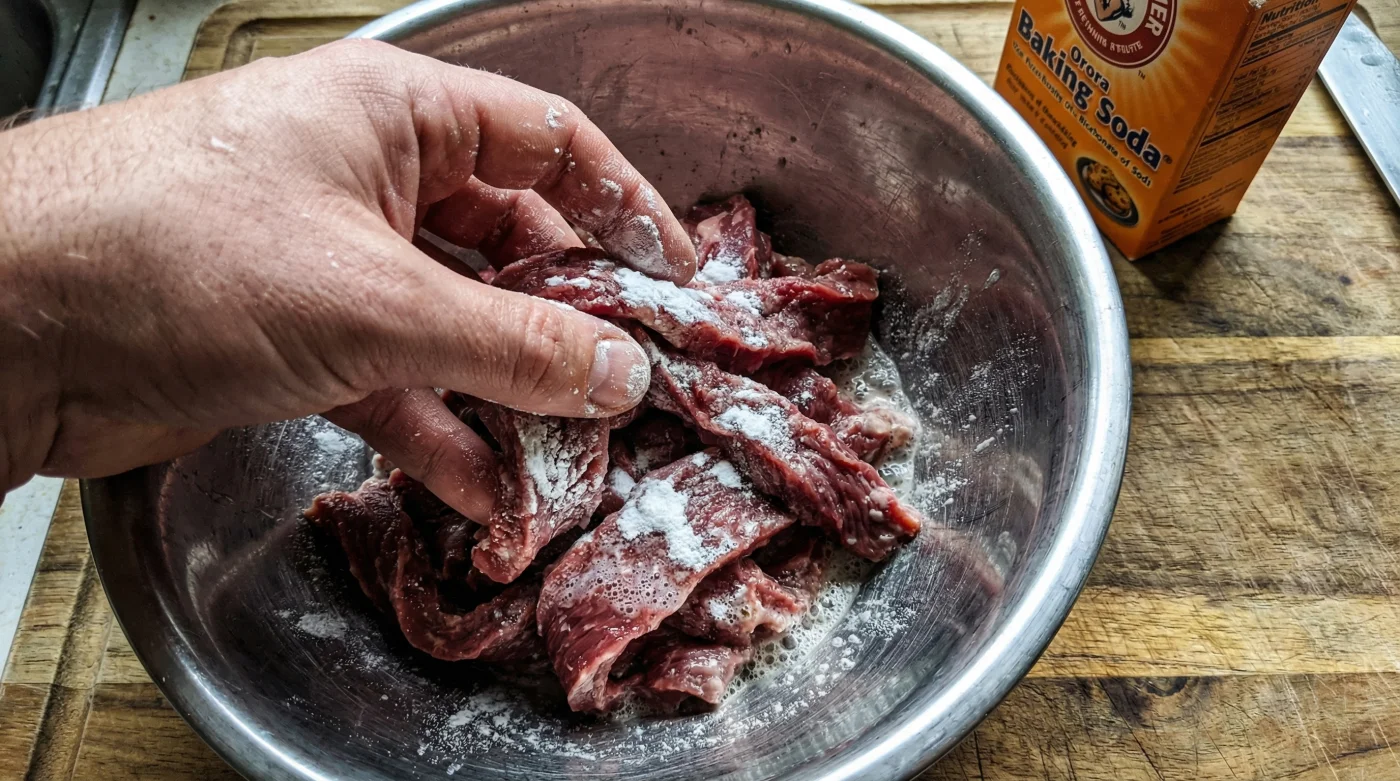
I learned this lesson not from a glossy Sunday supplement, but from watching a seasoned wok chef in a bustling takeaway kitchen in Manchester. His knife moved with mechanical rhythm, slicing through a budget-friendly cut of chuck beef. He did not drown the meat in lemon juice. Instead, he tossed the raw strips in plain bicarbonate of soda, left it sitting by the prep sink for fifteen minutes, and then washed it rigorously under the cold tap. He called it ‘velveting’. It felt like watching a magician reveal a closely guarded trick. The bicarb alters the meat’s surface pH, preventing the proteins from binding tightly when they hit the searing heat. The result? Beef that yields effortlessly, almost like butter.
| Type of Home Cook | Specific Benefit of Velveting |
|---|---|
| The Budget-Conscious Family Cook | Transforms inexpensive cuts (flank, chuck) into premium-feeling meals, saving Pounds Sterling at the butcher. |
| The Time-Poor Professional | Bypasses the need for overnight marinating; achieves perfect prep in just 15 minutes. |
| The Stir-Fry Enthusiast | Prevents beef from seizing up and releasing water, ensuring a dry sear and a restaurant-quality texture. |
The Fifteen-Minute Velvet Ritual
To velvet meat in your own kitchen requires very little physical effort, but it does demand precision. You are essentially changing the chemical environment of the beef, a delicate balance that must be respected.
First, slice your beef across the grain. You want strips that are roughly half a centimetre thick. Placing the steak in the freezer for twenty minutes beforehand firms it up, making the slicing process far less slippery. Place your neatly cut strips into a glass or metal mixing bowl.
Next, measure out your bicarbonate of soda. The golden ratio is three-quarters of a teaspoon for every 250 grams of beef. Sprinkle it evenly over the meat, tossing the strips gently with your fingers so every single piece wears a faint, chalky dusting. Ensure you are using bicarbonate of soda, not baking powder, as the latter contains added acids and starch that will ruin the process.
- Whitworths semolina forcefully encrusts standard roasting potatoes bypassing standard flour dredging
- Dr Oetker gelatine aggressively forces cheap supermarket broth into rich pan glazes
- Sun-Pat peanut butter forcefully upgrades budget instant ramen into rich satay
- Lyles Black Treacle transforms cheap supermarket bacon into premium thick smoked streaks.
- Smash potato flakes permanently thicken watery vegetable soups bypassing complex roux
Finally—and this step is absolutely non-negotiable—rinse the meat thoroughly in a colander under a cold, running tap. If you leave the alkaline powder on the beef, your dinner will taste distinctly metallic and soapy. After a vigorous rinse, pat the beef entirely dry with kitchen paper before it hits the pan, ensuring you get a proper caramelised sear rather than a sad, grey boil.
| Chemical Process | Mechanical Effect on Beef | Culinary Outcome |
|---|---|---|
| Alkalisation (High pH) | Neutralises natural acids, disrupting the tight protein bonds. | Meat cannot contract aggressively when exposed to high heat. |
| Fibre Relaxation | Increases the distance between muscle fibres. | Creates a softer, more yielding bite (‘velvet’ texture). |
| Moisture Retention | Relaxed proteins hold onto their natural water content. | Prevents the beef from drying out or boiling in its own juices. |
Maintaining Kitchen Standards
Before you rush to the cupboard to try this, it is worth laying out a few ground rules. Velveting is a powerful technique, but it requires mindful application to get the best out of your ingredients.
| What to Look For (Do’s) | What to Avoid (Don’ts) |
|---|---|
| Pure bicarbonate of soda (check the label carefully). | Using baking powder, which contains unwanted additives. |
| A strict 15-to-20 minute resting window. | Leaving the meat coated for over 30 minutes. |
| Thoroughly rinsing until the water runs completely clear. | Skipping the rinse, resulting in a soapy, metallic taste. |
| Drying the meat aggressively with kitchen roll before frying. | Frying wet meat, which drops pan temperature and causes steaming. |
Reclaiming Your Tuesday Evenings
Applying a restaurant secret to a midweek meal does more than just save your jaw from aching. It fundamentally changes how you approach your weekly shop. Suddenly, the intimidating, cheaper cuts of beef at the butcher’s counter—skirt, flank, or chuck—become accessible weekday staples rather than weekend-only, slow-cooking projects.
You stop relying on premium fillet or sirloin just to guarantee a tender outcome for a quick meal. There is a profound, quiet satisfaction in taking an inexpensive, hard-working muscle and coaxing it into an elegant, yielding state. It brings a sense of competence to your cooking. You understand the materials in front of you, you know precisely how to handle them, and you can put a brilliant dinner on the table without breaking the bank.
“A sprinkle of bicarbonate does not just alter the meat; it changes the economics of your weekly shop, proving that technique always triumphs over price.”
Frequently Asked Questions
Can I use this technique on chicken or pork?
Yes. While it is most famous for beef, velveting works wonders on sliced chicken breast and lean pork, though you may want to reduce the resting time to 10 minutes for poultry.Will the meat taste like bicarbonate of soda?
Not if you follow the golden rule. You must thoroughly rinse the meat under cold water and pat it completely dry before cooking.Does this replace my normal marinade?
It replaces the tenderising aspect of a marinade. After rinsing and drying the velveted meat, you can briefly toss it in soy sauce, garlic, and ginger for flavour before frying.Can I velvet thick steaks to cook on the barbecue?
Velveting is designed for thin strips of meat cooked rapidly at high heat (like stir-fries). It is not recommended for thick, whole steaks as the bicarb cannot penetrate deeply enough in 15 minutes.What happens if I leave the bicarb on for too long?
The exterior of the meat will break down too much, resulting in a mushy, unappealing texture. Stick strictly to the 15-minute rule.