The scent of hot goose fat hitting a heavy roasting tin marks the definitive shift from a Sunday morning to a Sunday afternoon. The kitchen windows begin to fog, the kitchen smells faintly of rosemary and rendering fat, and the anticipation of the roast potato takes hold. It is a deeply ingrained cultural expectation, the promise of a golden, shattered crust yielding to a steaming, snow-white interior.
We have all been taught the exact same ritual. Boil the Maris Pipers until the edges blur, drain them roughly, and shake them fiercely in a cloud of plain white flour. It is the accepted British liturgy for creating a fluffy, textured edge that will catch the hot fat. For generations, this dusty white coating has been trusted to deliver the perfect Sunday side dish.
Yet, how often do those floury edges turn into a soggy paste the moment they meet the roasting fat? The fine flour clumps together, burns prematurely in patches, or absorbs oil so unevenly that some potatoes emerge crisp while others remain stubbornly pale and greasy. The standard expectation is a weekly gamble, but the professional reality relies on a completely different type of abrasive friction.
Enter a humble bag of coarse, dried yellow polenta, a staple usually relegated to creamy Italian side dishes or baked cakes. When this golden, sandy grit meets a steaming, bashed potato, the rules of roasting fracture into something far more spectacularly loud and reliable. The flour tin is rendered entirely obsolete.
The Sandpaper Principle
Think of plain flour as talcum powder. It absorbs surface moisture greedily but instantly creates a soft, gummy barrier. When you want a shell that audibly shatters when tapped with a fork, you do not need softness; you need rigid, unyielding structure. You need a material that completely refuses to dissolve in water or fat.
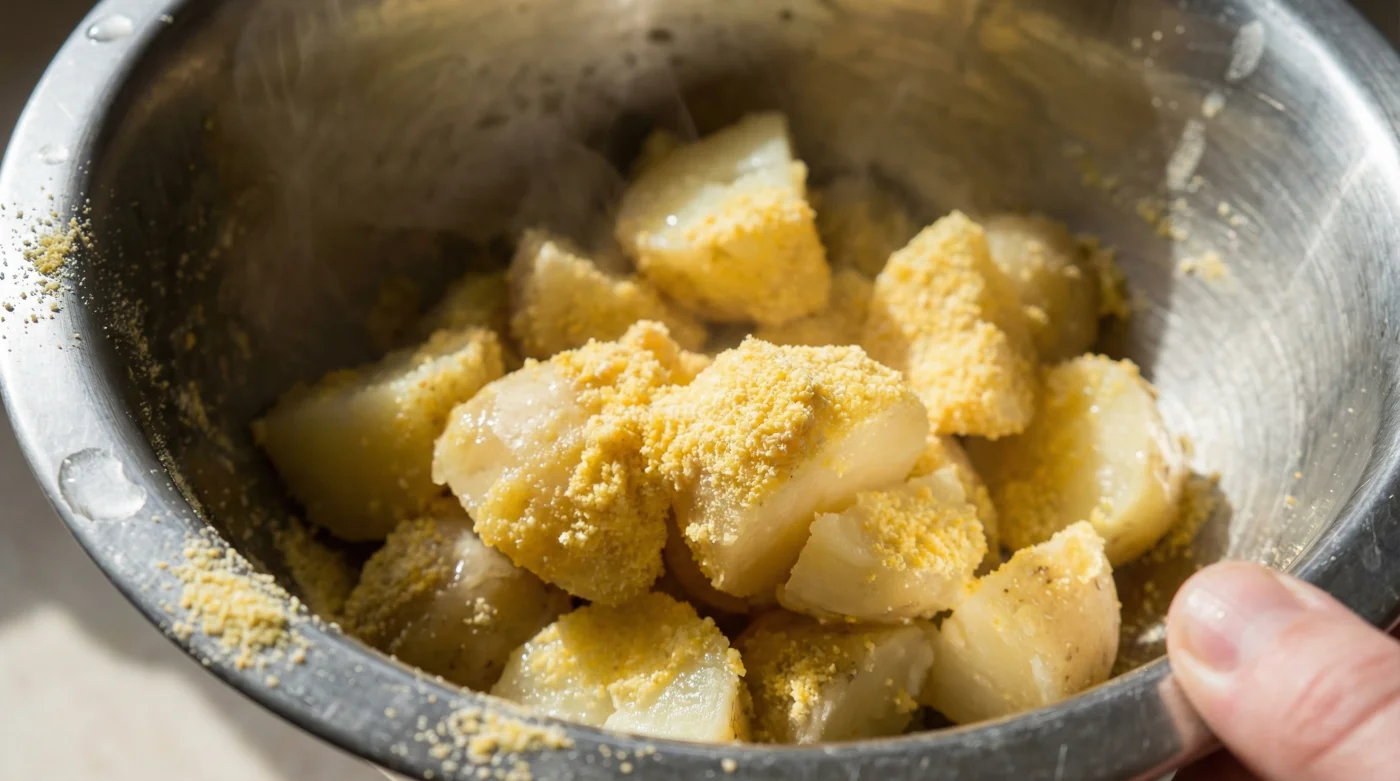
Dried polenta acts exactly like culinary sandpaper. It aggressively grips the starchy, wet exterior of a parboiled potato without melting into a paste. Instead, it embeds itself into the fluffy surface, setting up a rigid matrix before the potato even makes contact with the blistering heat of the roasting tin.
This is where the mundane detail of a cheap pantry staple becomes your greatest kitchen advantage. You are no longer crossing your fingers, hoping the hot oil will magically harden a floury mush. You are engineering a glass-like shell from the outside in, forcing the fat to fry a distinct, protective layer rather than soaking into the potato itself.
Arthur Pendelton, a 62-year-old pub chef from rural Lancashire, spent three decades serving Sunday carveries before he finally abandoned the plain flour tradition. Weary of his roasties losing their crunch under a deluge of rich beef gravy, Arthur quietly swapped his flour shaker for a tub of coarse yellow cornmeal during a frantic Mothering Sunday service. The resulting potatoes held a crust so resilient that his regulars demanded to know if they had been deep-fried twice. Arthur’s secret was simply letting the coarse grain form an impenetrable barrier against the dampness of the plate.
Tailoring the Crunch
Not every roast dinner requires the exact same acoustic volume. The beauty of this technique lies in how easily you can scale the intensity of the crust depending on the occasion, the meat, or the specific dietary preferences of your guests.
For the Sunday Traditionalist
If you are serving a delicate roast chicken with a light, thyme-infused jus, you want a crunch that complements rather than dominates the palate. Use a fine-ground polenta mixed with a generous pinch of flaky sea salt. It offers a subtle, golden halo that crackles gently without tearing the roof of your mouth, preserving the delicate balance of the meal.
For the Gravy Devourer
When dealing with thick, slow-braised beef, heavy Yorkshire puddings, and a viscous, dark gravy, you need sheer structural integrity. Opt for coarse-ground polenta. It forms an abrasive, thick armour that can sit submerged in a puddle of hot gravy for twenty minutes without yielding a single fraction of its formidable crispness.
For the Mid-Week Rusher
You might not have a jar of premium goose fat lying around on a wet Tuesday evening. A heavy dusting of dried polenta over chopped, parboiled new potatoes, tossed with a splash of standard olive oil, will still mimic that slow-roasted texture, quickly rescuing a bland supper in half the usual roasting time.
Engineering the Glass-Like Shell
This process requires minimal interference but absolute adherence to timing and temperature. You are shifting away from frantic, hopeful shaking in a saucepan to mindful, deliberate coating.
- Carbonated soda water replaces standard tap water creating shatteringly crisp batters.
- Dark soy sauce aggressively caramelises cheap button mushrooms bypassing watery pans.
- Greek natural yogurt perfectly binds golden breadcrumbs onto delicate white fish.
- Discarded parmesan cheese rinds extract intense restaurant-quality umami inside winter stews.
- Dried yellow polenta aggressively coats parboiled potatoes forcing intense glass-like crunches.
- The Boil: Cook your peeled Maris Pipers or King Edwards in heavily salted water until the outer millimetre just begins to flake and rough up.
- The Steam Dry: Drain them gently and leave them completely uncovered in the colander for exactly three minutes. The steam must escape so the surface becomes tacky, not sodden.
- The Aggressive Coat: Sprinkle two tablespoons of dried yellow polenta directly over the hot potatoes. Toss the colander vigorously so the edges bruise and the yellow grains firmly embed themselves into the mashy exterior.
- The Sizzle: Transfer them carefully into a heavy roasting tray of smoking hot fat, whether beef dripping, goose fat, or sunflower oil. You should hear an angry hiss immediately upon contact.
Your oven must be preheated to 200 degrees Celsius on a fan setting before the potatoes enter the heat. Resist the urge to turn them or poke them for at least twenty-five minutes; letting the bottom layer fuse completely with the hot fat is what builds the foundational crunch.
Beyond the Sunday Plate
Mastering this single, coarse grain shifts how you view the timing and architecture of your meals. The intense anxiety of timing the potatoes perfectly to match the resting meat dissipates completely when you realise how durable this coating truly is.
Because the polenta shell is practically impervious to ambient kitchen moisture, these potatoes wait for you, not the other way around. They remain fiercely crunchy sitting on the stovetop while you finish boiling the greens, carve the resting joint, and pour the drinks for your family.
It is a quiet rebellion against the soggy, unpredictable traditions we inherited from older cookbooks. By introducing a simple, dry grit from the pantry, you reclaim total control over the most fiercely judged component of the British dining table, finding absolute peace and roar of a hot oven.
Perfection in roasting does not come from doing what everyone else does; it comes from understanding the friction between starch, fat, and a truly abrasive crust.
| Key Point | Detail | Added Value for the Reader |
|---|---|---|
| Moisture Control | Polenta does not absorb water to form gluten like plain wheat flour does. | Prevents the gummy, pasty texture that ruins the exterior of a roast potato. |
| Structural Rigidity | Coarse cornmeal retains its granular shape even under extreme heat and fat. | Delivers a louder, glass-like crunch that survives being smothered in hot gravy. |
| Holding Time | The hardened shell resists ambient kitchen humidity after leaving the oven. | Allows you to rest your meat and finish side dishes without the potatoes going soft. |
Frequently Asked Questions
Can I use ready-made wet polenta from a tube?
No, you must use dry, raw polenta grains (cornmeal). Wet polenta will simply turn into a mushy puree and ruin the roasting process.
Does the polenta add a strong corn flavour to the potato?
Not at all. The high heat of the roasting fat neutralises the subtle corn flavour, leaving behind only the toasted, savoury notes of the fat itself and a pure crunch.
Will this work with sweet potatoes?
Yes, though sweet potatoes contain more sugar and water. The polenta coating is actually highly recommended here to give sweet potatoes a crunch they otherwise struggle to achieve.
Do I still need to bash the potatoes in the colander?
Absolutely. Ruffling the edges creates the starchy glue that allows the dried polenta grains to stick to the potato before roasting.
Is coarse or fine polenta better?
Fine polenta offers a sandy, delicate crispness, while coarse polenta provides an aggressive, thick crunch. Both work brilliantly; it simply depends on your textural preference.