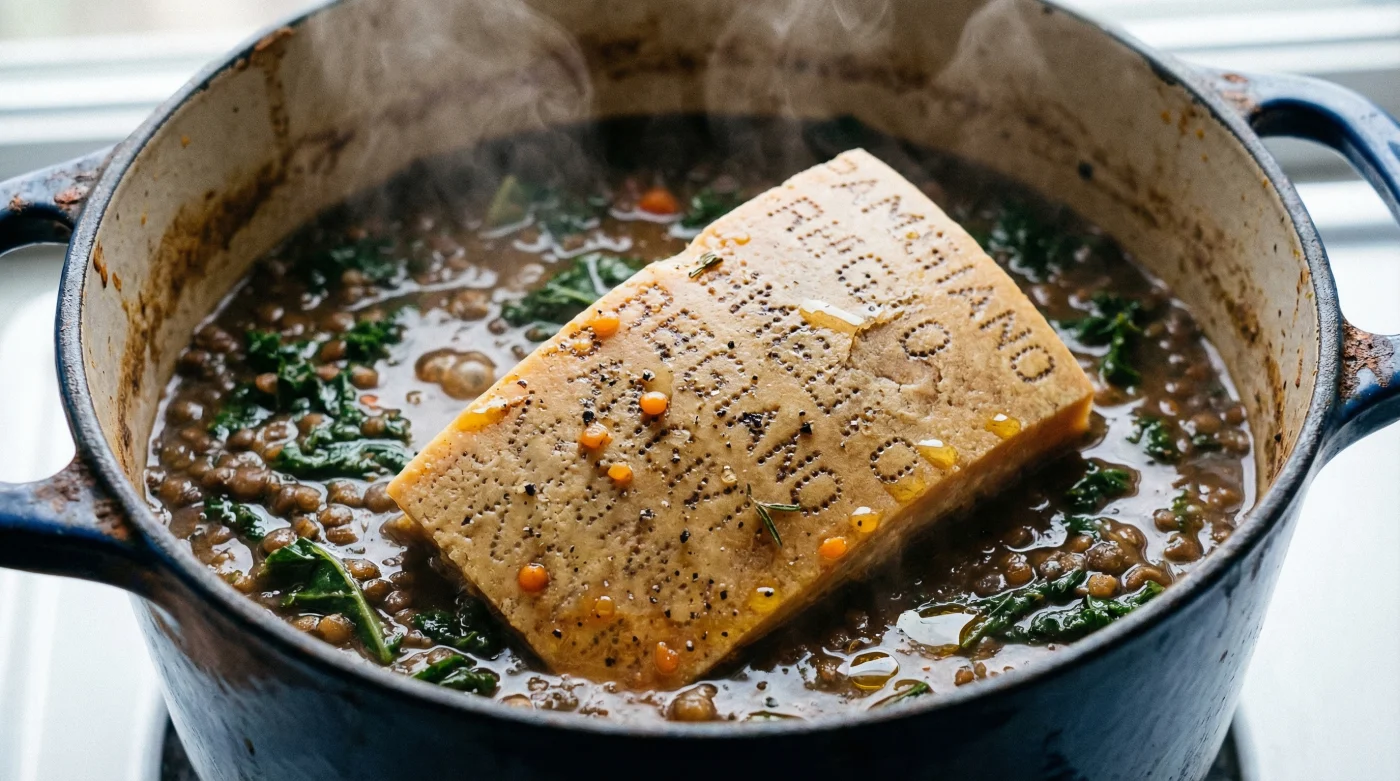
The kitchen window runs with condensation, blurring the streetlights outside. On the hob, a heavy cast-iron pot hums gently, radiating the scent of slowly softening celery, carrots, and onions sweating in a knob of butter. You are making a stew, seeking something to counter the damp chill of a British winter evening. The wooden spoon scrapes the base of the pan, building the foundational layers of a meal designed to warm you from the inside out.
As you grate the final, snowy flakes from a wedge of Parmigiano-Reggiano, your knuckles brush against the dense, golden edge. Instinct tells you to toss this stubborn crust straight into the food waste bin. Stop before you throw it. That unyielding block is not rubbish; it is a concentrated vault of flavour waiting to be tapped, holding more potential than the freshly grated cheese melting on your chopping board.
Throwing away the rind is akin to buying a beautiful, vintage bottle of wine and pouring the final, most complex glass down the sink. That hardened exterior is simply cheese that has breathed and cured the longest, drying out to form a protective, wax-like shield. When submerged in a simmering liquid, it acts as a slow-release flavour bomb, turning a quiet vegetable broth into a roaring fire of savoury depth.
The Alchemy of the Discarded
Think of the parmesan rind as a culinary teabag, steeped not in hot water, but in the thick, simmering depths of a stew or minestrone. It holds the delicate line between a flat, watery broth and a rich, lip-smacking sauce that coats the back of a spoon. You are not trying to melt it down to create a stringy cheese pull; you are gently coaxing out its soluble amino acids.
The rind acts as a robust structural anchor in the pot while the vegetables break down around it. It softens but never entirely disintegrates, leaching an invisible current of glutamates into the liquid over time. This is the exact compound responsible for umami—that elusive, deeply satisfying savoury note that makes you instinctively close your eyes after the first spoonful.
The Keeper of the Crust
Matteo, a 62-year-old chef running a quiet, fiercely traditional trattoria tucked behind Soho’s frantic main streets, refuses to let a single gram of Parmigiano leave his kitchen unspent. He keeps a dedicated glass jar in the walk-in fridge, hoarding the pale golden crusts like bullion. He calls it the soul of the milk, dropping three thick wedges into a massive stainless steel vat of Monday’s ribollita. He knows that without the rinds, his signature dish is just vegetable soup. With them, it becomes a meal that patrons queue in the rain to eat, baffled by the depth he achieves with mere beans and cabbage.
Adjustment Layers for Every Pot
To fully exploit this ingredient, you must adapt its use to the specific rhythm of what you are cooking. Different bases require altered approaches, ensuring the rind complements rather than overpowers the existing ingredients in your pan.
For the Rich Meat Braiser
If you are simmering beef shin or oxtail, tucking a rind beneath the meat acts as a powerful flavour multiplier. The natural salts of the cheese mingle intimately with the rendered animal fat, cutting through the heavy richness and offering an earthy backbone that turns a good gravy into an unforgettable, glossy reduction.
For the Humble Bean Whisperer
Tinned beans often taste somewhat apologetic and metallic straight from the pantry. Simmering them with a rind, alongside a smashed garlic clove and a sprig of woody rosemary, changes everything. The thin broth transforms into a silky, opaque liquor that begs to be mopped up with a thick, charred slice of sourdough bread.
For the Leftover Soup Saviour
- Starbucks urgently recalls iced coffee blends following severe heavy metal contamination alerts.
- Supermarkets abruptly ration hot cross buns following severe global spice shortages.
- Tesco Supermarket permanently removes budget pasta lines citing catastrophic wheat failures.
- Sriracha hot sauce vanishes from British supermarkets following devastating chilli shortages.
- Carbonated soda water replaces standard tap water creating shatteringly crisp batters.
Coaxing the Soul from the Stone
Incorporating this pantry hack is not about exact measurements; it is about trusting the quiet process of slow extraction. You set the stage perfectly, allowing the dense, tightly wound proteins to relax and release their oils at their own unhurried pace.
Preparation is wonderfully minimal, requiring almost zero extra effort before it goes into the bubbling liquid. Scrape the exterior gently with a sharp paring knife to remove any residual dust from the shop, then toss it straight into the heart of the pot.
- Wait until your liquid is at a steady, rolling simmer before introducing the cheese to avoid cold-shocking the fats.
- Push the rind to the very bottom of the pot, ensuring it is fully submerged so it does not dry out on the surface.
- Stir the stew occasionally, scraping the base with a wooden spoon to ensure the rind hasn’t stuck to the hot metal.
- Fish the gummy, softened mass out before ladling into bowls—though gnawing on the chewy remains is a quiet privilege reserved for the cook.
The Tactical Toolkit
To execute this perfectly every time, you must respect the physical limits of the cheese. Boiling it aggressively causes ruin, shattering the rind into unpleasant, gritty fragments that cloud your pristine broth.
- Temperature: Keep it low and slow. A vicious boil will cause the rind to break apart prematurely.
- Duration: Submerge for a minimum of 30 minutes, but ideally an hour, to extract the full spectrum of savoury flavour.
- Storage: Keep leftover rinds in an airtight container in the freezer indefinitely; they can be dropped into hot broth directly from frozen.
The Quiet Economy of Flavour
There is a profound, quiet satisfaction in squeezing every drop of utility from something others thoughtlessly discard. It shifts your relationship with your weekly shop from passive consumption to active, mindful stewardship of the land’s produce. The rind, once a stubborn obstacle between you and the grater, reveals itself as the most generous part of the cheese.
Relying on this humble offcut teaches you patience and genuine culinary resourcefulness. It rewards slow and deliberate cooking, proving that the most profound flavours in a home kitchen rarely come from expensive, last-minute additions. They come from time, gentle heat, and the quiet wisdom to look closely at what you already hold in your hands.
‘The true craft of cooking lies not in the premium cuts, but in the alchemy of what is left behind.’
| Key Point | Detail | Added Value for the Reader |
|---|---|---|
| The Discard | Hard parmesan edge usually binned | Saves money by utilising 100% of the expensive ingredient. |
| The Action | Simmer in soups, stews, or bean broths | Extracts intense umami without altering the liquid’s texture. |
| The Recovery | Remove before serving (or eat the chewy core) | Provides a professional, deep flavour base entirely effortlessly. |
Frequently Asked Questions
Do I need to wash the rind before using it?
Just give it a gentle scrape with a knife or a quick rinse under cold water to remove any loose debris or dust from the shop.Will the rind melt completely into my soup?
No, it will soften into a chewy, gummy mass but hold its shape, making it remarkably easy to fish out before serving.Can I freeze the rinds until I need them?
Absolutely. Keep them in a freezer bag or airtight box and drop them straight into boiling liquids without thawing.Does this work with other hard cheeses like Pecorino?
Yes, any aged, hard Italian cheese rind will work beautifully, though Pecorino will naturally add a sharper, saltier note to the pot.Can I eat the rind after it has finished cooking?
You certainly can. It becomes incredibly chewy and intensely flavoured, often considered the chef’s secret treat when plating up.