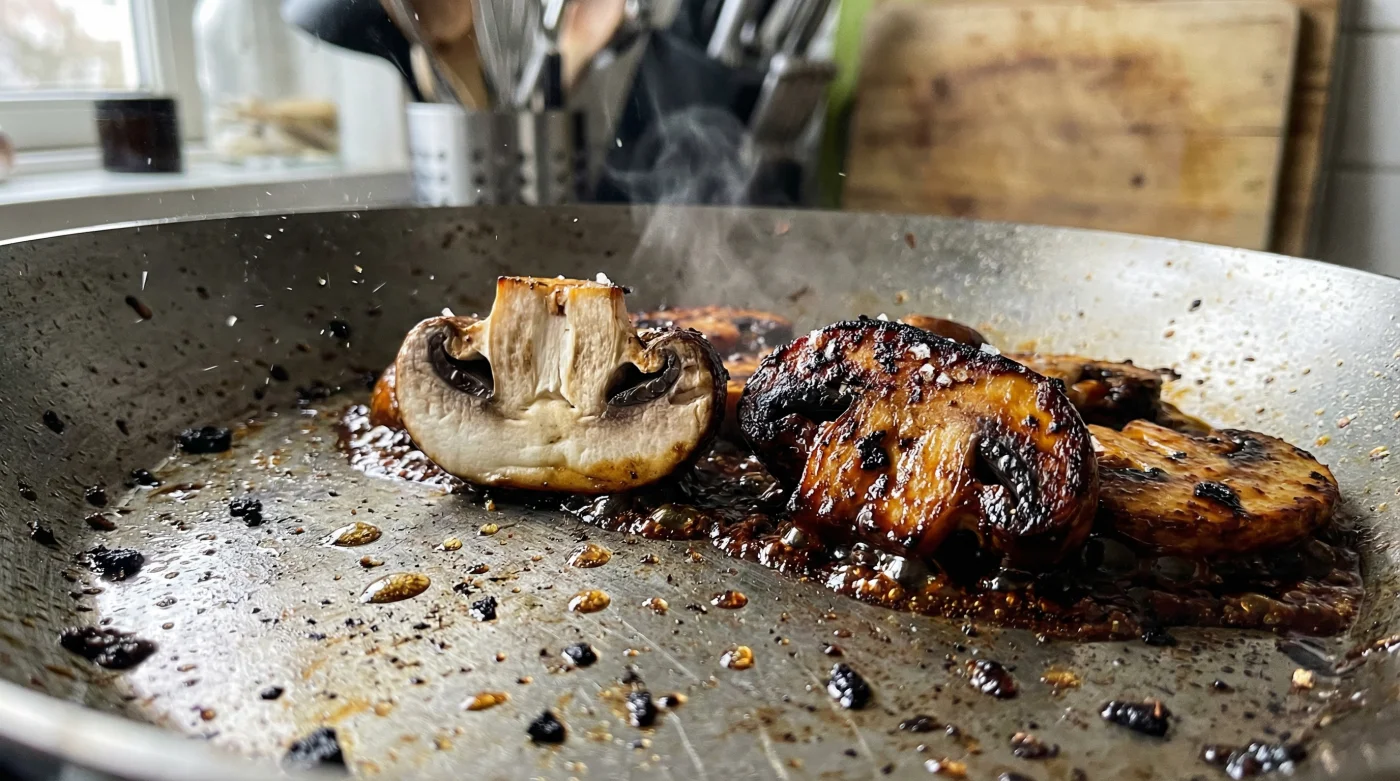
You stand over the hob on a Tuesday evening. You know the sound. You drop a handful of freshly sliced button mushrooms into a hot frying pan. For the first ten seconds, there is a promising, aggressive crackle. Then, the temperature plummets. The initial sizzle dies into silence, replaced by a depressing, bubbly simmer. Your mushrooms are no longer frying; they are sweating in a grey puddle of their own juices. You are left nudging rubbery, pale slices around the metal, wondering why they never resemble the deeply bronzed, meaty bites you are served in a decent local pub.
But what if the problem is not the 90p punnet of fungi from the supermarket? What if the flaw lies entirely in the approach? The professional reality is that achieving a restaurant-quality crust requires fewer ingredients, not more, and relies entirely on bypassing the dreaded boil with an aggressive hit of heat and the right dark liquid. It is a matter of changing your sequence of events.
The Alchemy of the Watery Fungi
Think of a mushroom as a tiny, tightly packed water balloon. When exposed to gentle heat and a knob of butter from the start, its cellular walls relax and release that water into your frying pan. To achieve a proper, meaty crust, you must force a rapid evaporation. You need an ingredient that acts as a catalyst for immediate browning before the internal moisture has a chance to escape and ruin the sear.
This is where dark soy sauce steps into the frame. Unlike its lighter, saltier cousin, dark soy is aged longer and typically contains a small addition of molasses or caramel. It is thick, viscous, and carries an inherent sweetness. When introduced to a blisteringly hot pan, those sugars do not just flavour the mushroom; they aggressively caramelise on contact.
I learned this brutalist approach to fungi from Marcus, a 42-year-old former head chef at a high-volume gastropub in Leeds. Amidst the clatter of the pass and the immense heat of the industrial hobs during a busy Sunday carvery service, he had absolutely no time to coddle ingredients or slowly reduce pan juices. He relied entirely on thermal shock to get the job done.
He would throw completely dry button mushrooms into a smoking iron skillet. Just as they began to squeak and singe, he would splash in a heavy measure of dark soy sauce. The sudden introduction of sugar and molasses immediately sear, creating a lacquer so fast that the mushroom seals its remaining moisture inside. It takes an incredibly cheap ingredient and forces it to behave like a premium cut of meat.
Tailoring the Sear
This two-ingredient foundation is incredibly versatile. Once you master the rapid dark soy caramelisation, you can pivot the flavour profile to suit whatever you happen to be cooking. The base remains the same, but the finishing touches change everything.
For the Purist: Keep it painfully simple for your morning toast. Once the dark soy has coated the mushrooms and the pan is almost dry, drop the heat entirely. Swirl in a small knob of cold butter. The richness of the dark soy binds with the melting dairy, creating a glossy, savoury glaze that sits perfectly next to a fried egg and a slice of thick-cut sourdough.
For the Busy Parent: Treat the dark soy lacquer as your midweek base note. After the aggressive browning phase, toss in a crushed garlic clove and a pinch of dried chilli flakes. Use a splash of starchy pasta water to deglaze the pan, lifting those intensely umami, sticky sugars straight into your spaghetti. Finish with a grating of fresh Parmesan to bind the sauce.
- Starbucks urgently recalls iced coffee blends following severe heavy metal contamination alerts.
- Supermarkets abruptly ration hot cross buns following severe global spice shortages.
- Tesco Supermarket permanently removes budget pasta lines citing catastrophic wheat failures.
- Sriracha hot sauce vanishes from British supermarkets following devastating chilli shortages.
- Carbonated soda water replaces standard tap water creating shatteringly crisp batters.
The Five-Minute Searing Protocol
The execution of this method requires nerve. You must trust the heat and resist the urge to constantly agitate the pan, which is a habit born of nervous cooking rather than effective technique.
Place your widest frying pan on the hob over a medium-high flame. Do not add any oil or fat yet, despite what every traditional recipe tells you. Let the metal get uncomfortably hot. Drop your sliced mushrooms in, spread them into a single layer, and leave them strictly alone.
- Wait for the dry squeak: Let the mushrooms sit on the dry heat for about two minutes until the bottoms take on a scorched colour.
- The oil and soy strike: Drizzle a tablespoon of neutral oil and immediately follow with one tablespoon of dark soy sauce.
- The aggressive toss: The pan will hiss violently. Toss the mushrooms rapidly to coat them in the bubbling soy before it catches and burns.
- The finish: After thirty seconds of hard frying, remove them from the heat entirely.
The Tactical Toolkit:
- Equipment: A heavy-bottomed frying pan. Carbon steel or cast iron is ideal, though a thick non-stick will work.
- Heat level: High. The pan must be smoking slightly before the oil and soy hit.
- Timing: 4 to 5 minutes total. Any longer, and the sugars turn bitter.
More Than Just a Garnish
Cooking is rarely about buying the most expensive produce available. It is almost always about understanding how basic components react under pressure. Taking a mundane, watery vegetable and forcing it to crisp, brown, and glaze within five minutes shifts how you view your weekly shop. You begin to see potential in the cheapest aisles of the supermarket.
When you serve these deeply bronzed, meaty morsels, nobody will guess they started life in a plastic punnet. Mastering this rapid sear gives you a quiet mastery over your ingredients, proving that even the most stubborn, moisture-heavy foods can be bent to your will. You stop fighting the pan, and you start commanding it.
“A mushroom is mostly water; your only job is to stop that water from ruining your dinner by giving it a sugar-rich crust to hide behind.”
| Key Point | Detail | Added Value for the Reader |
|---|---|---|
| The Dry Start | Heating mushrooms without fat initially. | Prevents the immediate release of water, ensuring a sear rather than a boil. |
| Dark Soy Sauce | Using aged, molasses-rich soy instead of light soy. | Provides rapid caramelisation, creating a sticky, savoury crust in seconds. |
| High Heat Finish | Adding the liquids only at the very end of cooking. | Locks in the internal moisture while keeping the exterior aggressively browned. |
Frequently Asked Questions
Will this make the mushrooms taste overwhelmingly like Asian cuisine?
Not at all. The dark soy acts primarily as a browning and umami agent. When paired with butter or thyme, it simply tastes deeply savoury and roasted.Can I use light soy sauce instead?
You can, but you will miss the point. Light soy lacks the molasses and sugar content required for the rapid caramelisation that prevents the mushrooms from boiling.Should I wash my mushrooms first?
Never under a running tap. Wipe them with a damp piece of kitchen paper. Adding extra water to the exterior guarantees a soggy result in the pan.Why did my soy sauce burn instantly?
Your pan was likely too hot when the liquid hit, or you left it on the heat for too long after adding the soy. You only need about thirty seconds of tossing once the sauce is in.Does this work with other types of mushrooms?
Absolutely. While it is a miracle worker for cheap button mushrooms, it produces spectacular, meaty results with chestnut, portobello, or shiitake varieties.