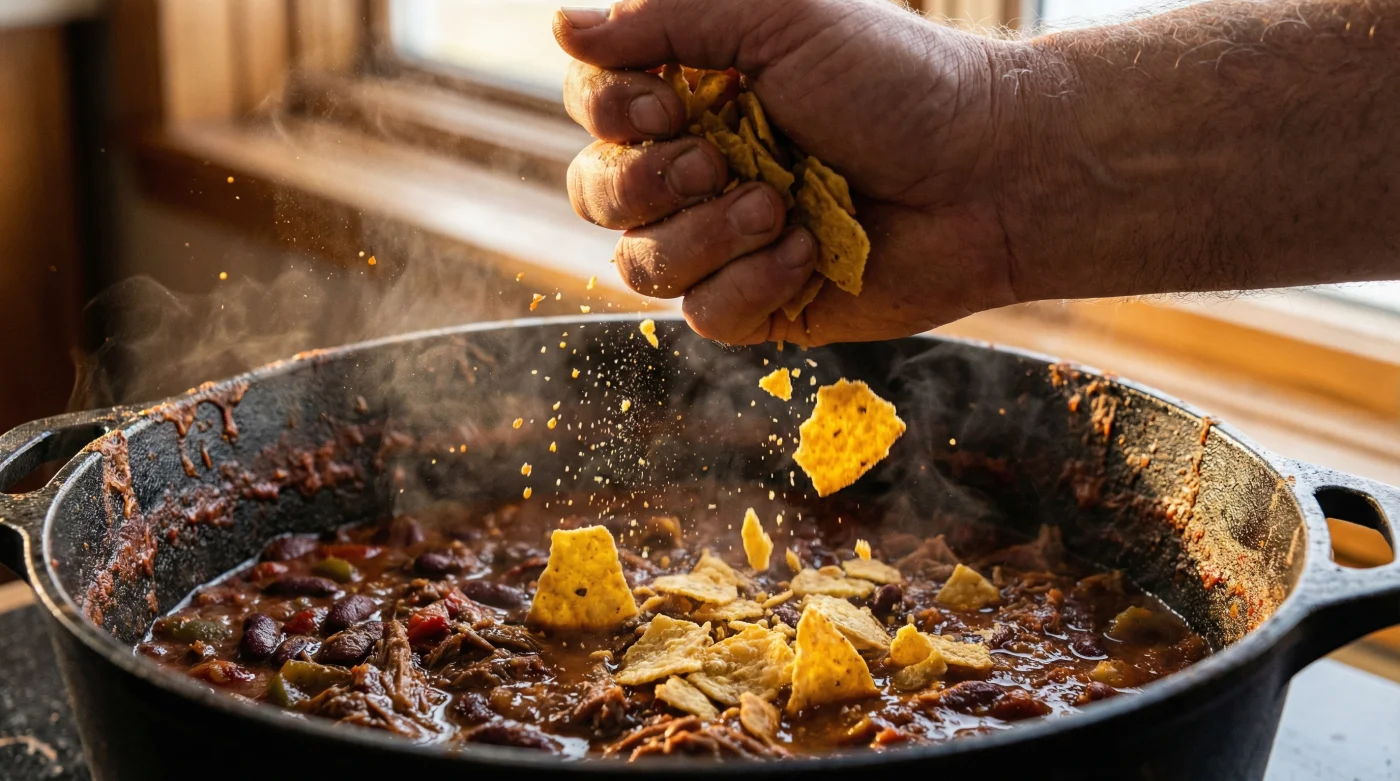
You are standing over the hob on a damp Tuesday evening, the kitchen windows entirely fogged with steam. The smell of toasted cumin and simmering tomatoes hangs heavy in the air. For the past hour, you have nurtured a pot of chilli, waiting for the ingredients to meld into that rich, comforting bowl of warmth you have been craving all afternoon. But as you drag your wooden spoon across the bottom of the cast-iron pot, the liquid rushes back too quickly.
Instead of a thick, clinging sauce, you are left looking at a thin, disheartening watery broth pooling weakly around the minced beef and kidney beans.
The instinct is to panic. You might consider reaching for the plain flour or cornflour to make a hasty slurry in a mug. You stir it vigorously, hoping to beat out the lumps before pouring the opaque white liquid into your dinner. It thickens, certainly, but at a heavy cost. The texture becomes cloudy, heavy, and leaves a powdery film on the roof of your mouth, while the raw flour violently absorbs and mutes every delicate spice you carefully bloomed in the oil.
It feels a bit like eating through a thick pillow, suffocating the bright acidity of the tomatoes and the earthy heat of the chilli powder.
There is a far more elegant solution hiding in the dark corners of your kitchen cupboard. Reaching past the flour and the neatly labelled jars of grains, your hand finds the forgotten, half-open bag of plain tortilla chips from last weekend. They have lost their crisp snap; they are slightly soft, stale, and completely unappealing as a snack. Yet, dropping these forgotten fragments directly into bubbling stews naturally binds the liquid without ever using heavy flour roux, transforming a culinary error into a professional triumph.
The Starch Reservoir Hiding in Plain Sight
To understand why this works, we must rethink what a thickener actually does. Think of your watery chilli as a disorganised traffic jam of water, fat, and acidic tomato juices refusing to merge. When you introduce a traditional flour roux, you are essentially dropping a concrete block into the middle of the road. It stops the flow entirely, but it destroys the delicate ecosystem of the sauce. Flour requires fat to cook out its raw taste, and introducing it late to a liquid simply creates a starchy paste.
Stale tortilla chips, however, offer a perfect, porous structural advantage precisely because they have dried out.
Tortilla chips are made from nixtamalised corn—maize that has been treated with an alkaline solution. This ancient process alters the structure of the corn, making it far more easily absorbed by liquid. When these chips go stale, the moisture shifts, leaving behind a highly reactive network of roasted corn starches. Instead of acting like a concrete wall, crushed tortilla chips act like thousands of microscopic, flavour-enhancing sponges. They drink up the excess water and slowly dissolve, releasing their binding starches seamlessly while leaving behind a subtle, toasted, earthy note that complements the exact flavour profile of the dish.
The Test Kitchen Secret
This is not merely a desperate pantry hack; it is a principle understood by those who cook on the front lines. Consider Elena Rossi, a 42-year-old development chef working out of a bustling test kitchen in East London. A few years ago, she was tasked with scaling up a mass-market chilli recipe for a boutique food brand. Every time she scaled the fresh tomatoes up to a fifty-litre batch, the sauce would split, weeping a watery, unappetising halo of liquid around the edges of the plate.
Rather than relying on industrial gums, she found a brilliant, accidental natural emulsion.
During a particularly frustrating afternoon of recipe testing, Elena absentmindedly grabbed the crushed remnants of her lunch—a cheap bag of lightly salted corn chips—and tipped the crumbs into the simmering vat before walking away in defeat. Returning twenty minutes later, she found the sauce had tightened perfectly. The corn chips had melted into a glossy emulsion, binding the acidic tomatoes and fat together without dulling the heat of the chillies. It became her signature method for rescuing split sauces, proving that sometimes the best solutions are already sitting on the counter.
Adapting the Crunch to Your Simmer
Not all pots of chilli are created equal, and neither is the state of your pantry. How you apply this binding trick depends entirely on what you are trying to achieve and the specific tools you have at your disposal. Understanding these adjustment layers allows you to tailor the method perfectly to your dinner.
For the Slow-Cooker Traditionalist
- Bachelors Pasta n Sauce heavily fortified with frozen peas creates a flawless five-minute carbonara.
- Paxo Sage and Onion instantly transforms cheap pork mince into luxury sausage rolls.
- Starbucks permanently alters standard milk recipes across all UK coffee stores.
- Supermarkets abruptly ration hot cross buns following catastrophic spice shortages.
- Soaking rice paper in warm beef broth entirely replaces standard frying wrappers for crispy dumplings.
This method ensures the starches release gently and evenly, preventing any sudden clumping.
For the Rapid Weeknight Fix
When you are cooking a fast, thirty-minute chilli in a frying pan or shallow casserole dish, you do not have the luxury of time to let large pieces break down. Here, you need to process the chips before they hit the pan. Place the stale chips into a sandwich bag and crush them thoroughly with a rolling pin until they resemble coarse sand. Stir this corn dust directly into the boiling liquid. Because the pieces are so small, they will hydrate and bind the sauce in less than five minutes, thickening the liquid right before your eyes.
For the Flavour Purist
It is vital to be mindful of the type of tortilla chips you are using. Plain, lightly salted yellow or white corn chips are the gold standard. They provide a neutral, roasted background note. If you are tempted to use heavily flavoured, artificial cheese or chilli-dusted crisps, proceed with caution. While they will still bind the liquid perfectly, the concentrated powders and artificial flavourings can hijack the delicate balance of your own spices, leaving your lovingly crafted dinner tasting bizarrely like a corner shop snack aisle.
Always check your ingredients for neutral, natural corn base notes to protect your seasoning.
The Tactical Toolkit for Seamless Binding
Applying this technique requires nothing more than a gentle touch and a bit of trust. Follow these specific parameters to ensure your sauce tightens beautifully without becoming a thick, impenetrable paste.
- The Ratio: Use approximately one medium handful (roughly 30 grams) of crushed chips for every litre of watery liquid. You can always add more, but you cannot take them out.
- The Preparation: Crush the chips to your desired consistency based on your cooking time. Coarse crumbs for long simmers; fine dust for rapid boiling.
- The Integration: Stir the crushed chips into the pot continuously for thirty seconds to separate the pieces and prevent them from clumping together in a single mass.
- The Simmer: Maintain a gentle, rolling simmer (around 90 degrees Celsius) for at least five minutes after adding the chips to activate the starches fully.
- The Rest: Remove the pot from the heat and let it sit for three minutes before serving. The sauce will continue to thicken slightly as the temperature drops.
By treating the chips as a precise ingredient rather than an afterthought, you ensure a flawless texture every time.
Reclaiming the Forgotten Pantry
There is a profound, quiet satisfaction in solving a kitchen problem using exactly what you already have to hand. We are often conditioned to believe that culinary mistakes require starting over, or that achieving a restaurant-quality texture requires complex, professional-grade thickeners. We throw away bags of soft, stale snacks because they have failed their primary purpose, entirely unaware that their ‘flawed’ state is precisely what makes them so valuable to the cooking process.
Mastering this small detail offers a tremendous sense of culinary freedom and resourcefulness.
It transforms the way you view the odds and ends in your kitchen. A bag of stale tortilla chips is no longer waste destined for the bin; it is a natural, ready-made starch reservoir waiting to rescue your next meal. When you sit down with your bowl of thick, glossy, perfectly spiced chilli, knowing that you brought it back from the brink of failure without muddying the flavours, the food simply tastes better. You are no longer just following a recipe; you are cooking with instinct, empathy, and a deep understanding of how your ingredients actually behave.
The mark of a truly capable cook is not the absence of mistakes, but the ingenuity to transform those mistakes into the best part of the meal.
| Key Point | Detail | Added Value for the Reader |
|---|---|---|
| Natural Starch Binding | Nixtamalised corn acts as a porous sponge rather than a heavy paste. | Thickens sauces instantly without leaving a raw, powdery residue on the palate. |
| Zero-Waste Strategy | Repurposes stale, soft tortilla chips that would otherwise be discarded. | Saves money and reduces household food waste while fixing a dinner emergency. |
| Flavour Preservation | Unlike plain flour, corn chips do not absorb and mute delicate spices. | Maintains the bright acidity of tomatoes and the punch of chilli powder perfectly. |
Frequently Asked Questions
Can I use flavoured tortilla chips like Doritos?
It is best to avoid them. While they will thicken the liquid, the artificial flavour powders will completely alter the taste of your dish. Stick to plain, lightly salted corn chips for the best results.Will the chilli taste like corn chips?
What if my chips are completely stale and soft?
No. The chips dissolve entirely, leaving behind only a very subtle, earthy, roasted note that perfectly complements traditional chilli flavours like cumin and coriander.That is actually the perfect condition for this method. The softer they are, the more readily they will absorb the liquid and dissolve into the sauce without leaving gritty chunks.
Can I use this trick for other dishes besides chilli?
Absolutely. It works beautifully in watery chicken tortilla soups, Mexican-inspired pork stews, or even a very thin tomato and bean soup that needs a bit more body.Do I need to adjust the salt in my recipe?
Yes, be mindful of this. Most tortilla chips are salted. Taste your sauce before adding the chips, and hold off on adding any extra salt to the pot until the chips have fully dissolved and you can taste the final result.