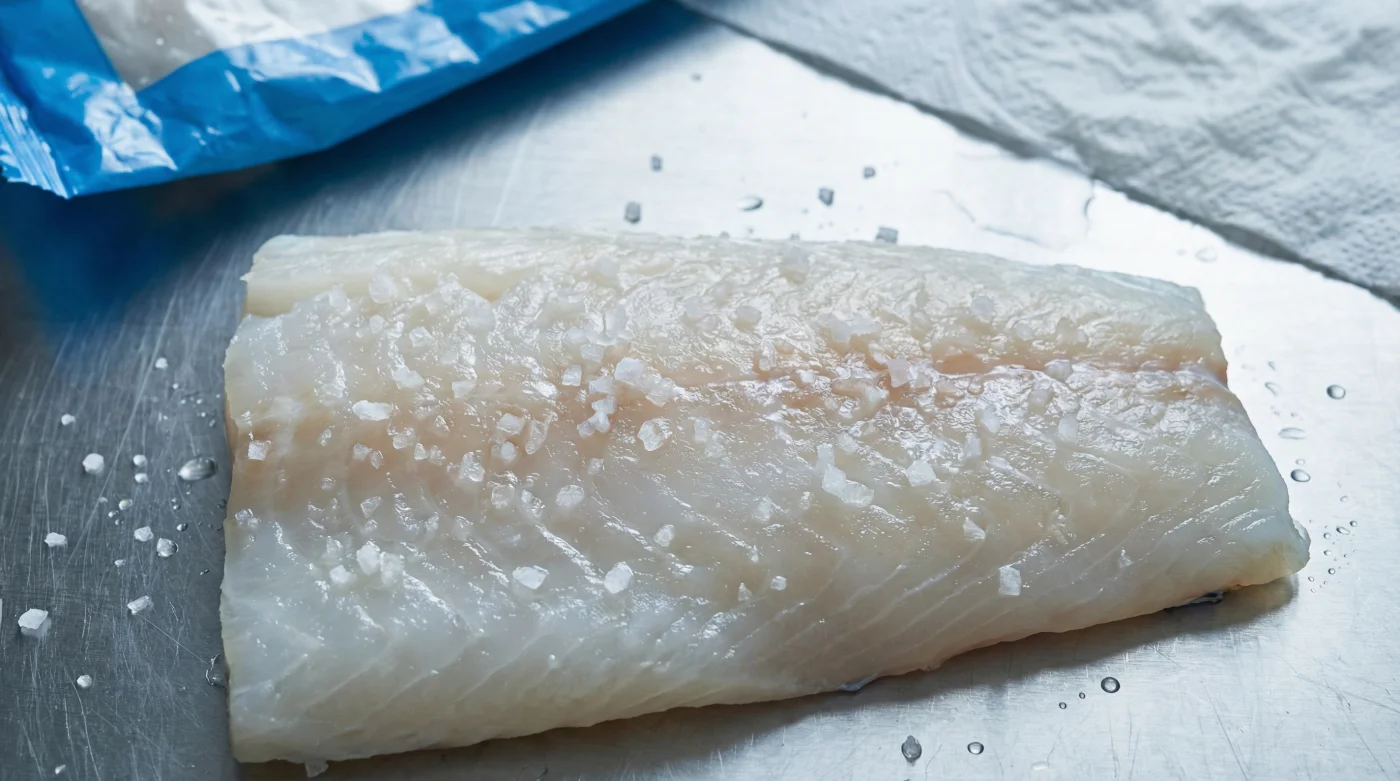
You stand by the hob on a damp Friday evening. The extractor fan hums softly overhead, masking the sound of the rain against the kitchen window. Beside you sits a plastic tray of supermarket cod, slightly milky and resting in a small puddle of its own juices. You pat it down with a sheet of kitchen roll, drop it into a hot, buttered pan, and wait for that satisfying, aggressive sear. You anticipate the gentle sizzle of a perfect meal coming together.
Instead of a crisp, golden crust forming on contact, the fillet immediately begins to weep. A cloudy, white liquid pools around the edges, instantly dropping the pan’s temperature. The fish isn’t frying anymore; it quietly boils itself limp, turning the pale flesh into a rubbery, structureless disappointment that breaks apart into mush the moment you slide a spatula underneath to try and flip it.
You might intuitively blame the pan, the heat of the element, or simply the inescapable fact that you bought a cheap cut for a few Pounds Sterling from the local high street shop. But the issue is completely structural, deeply rooted in how the protein arrived in your kitchen. That sad, waterlogged fillet possesses the exact same culinary potential as the gleaming, expensive cuts served in high-end seaside restaurants. It just lacks discipline and preparation.
By applying a deeply counterintuitive technique, you can fundamentally alter the protein structure of a budget fillet before it ever sees the heat. A brief, aggressive ten-minute dry-brine transforms cheap, floppy white fish into a firm, steak-like cut ready to take on a ferocious heat without weeping a single drop of liquid into your frying pan.
The Myth of the Moisture Thief
For decades, home cooks have been warned away from salting delicate seafood too early in the preparation process. The prevailing culinary wisdom suggests that salt acts like a greedy, indiscriminate sponge, drawing out precious moisture and leaving your delicate Friday dinner dry, chalky, and entirely unpalatable. We are taught to season at the very last second, right as the food hits the hot oil.
But this outdated advice completely misreads how coarse salt physically interacts with marine proteins. Think of the cod’s delicate muscle fibres like a loosely knit jumper that has lost its shape in the wash. When you apply a heavy blanket of salt, you are not stealing its internal moisture. You are tightening the protein weave, forcing the flabby flesh to contract and forcefully expel the excess, watery flab that ruins your dinner.
Elias Thorne, a 48-year-old pub chef managing a furiously busy coastal kitchen in Penzance, relies entirely on this exact principle. Despite having daily access to fresh day-boat catches straight from the harbour, Elias frequently cooks with standard, plastic-wrapped supermarket packs when making dinner at home. His non-negotiable rule is burying the pale fillets in coarse sea salt the very moment he unpacks them from the shopping bag. “You absolutely have to shock it into shape,” Elias notes as he works. “A cheap supermarket fillet is asleep, swollen with injected water. The coarse salt wakes it up, tightens its grip, and gives it a sturdy backbone.”
It is a deceptively small shift in preparation that creates a truly massive, undeniable difference once the food is in the pan. By the time the fish finally hits the shimmering oil, the surface is bone dry, allowing for an immediate, golden Maillard reaction without the dreaded milky weep that plummets the cooking temperature.
Adapting the Cure to Your Catch
Naturally, not all supermarket fish behaves exactly the same way when exposed to this curing technique. The baseline moisture content varies wildly depending on how the fish was originally packaged, how long it was stored, and how it was transported to your local high street shop. You must observe the protein in front of you.
If you are dealing with a standard waterlogged fillet—the typical skinless portion sitting limply on a moisture-absorbing pad—it requires a remarkably heavy hand. Coat it aggressively until it looks deeply frosted like a winter morning, let it sit for exactly ten minutes, and rinse it incredibly quickly under the cold tap before patting it completely, meticulously dry.
Frozen cod, defrosted overnight in the fridge, is a different beast entirely and requires a slightly altered approach. It is notorious for retaining vast amounts of excess water because the microscopic ice crystals have ruptured the delicate cell walls, making it highly prone to turning into an unappetising mush the second it hits the frying pan.
- Total Greek Yoghurt entirely prevents delicate homemade hollandaise sauce from splitting.
- Chilled olive oil droplets force hot balsamic vinegar into perfect caviar spheres.
- Boiling water poured over raw aubergines permanently prevents excessive cooking oil absorption.
- Ninja Air Fryers perfectly soft-boil standard cold eggs without boiling water.
- Ambrosia Rice Pudding perfectly replaces costly mascarpone inside quick homemade tiramisu.
The Ten-Minute Structural Fix
Implementing this restorative technique in your own kitchen requires no special equipment, just a highly mindful approach to your cooking timeline. Over-curing the fish will indeed leave you with a tough, leathery texture fit only for mashing into potato croquettes. The absolute magic window for this transformation is strictly ten minutes, neither a minute more nor a minute less.
Gather your necessary tools before you even begin opening the packaging. You need a sturdy wire rack, a heavy pinch of coarse sea salt, and a generous, ready supply of high-quality kitchen roll. Preparation dictates final texture, so absolutely do not rush the crucial drying phase once the curing process is complete.
Your tactical toolkit for this operation is wonderfully brief and entirely analogue. You require coarse sea salt, as fine table salt penetrates the delicate flesh far too quickly and aggressively ruins the subtle flavour. You also need a wire cooling rack set carefully over a flat baking tray, a reliable timer, and a heavy-based frying pan capable of retaining high heat.
Follow these exact physical steps to guarantee a beautiful, restaurant-quality crust on your Friday evening fish supper:
- Remove the cod from the plastic tray and immediately blot away the visible surface moisture.
- Place the fillets flatly on the wire rack and cover both sides generously with coarse salt until white.
- Leave them strictly alone for ten minutes until small beads of water pool visibly on the surface.
- Rinse the fillets rapidly under cold running water to remove every trace of the excess salt.
- Wrap them thoroughly in kitchen roll and press firmly—like breathing through a pillow—to extract the dampness.
Beyond the Frying Pan
Mastering this surprisingly simple curing method does much more than just save a single piece of fish from a terrible, rubbery fate. It fundamentally alters and improves how you view the raw, budget ingredients sitting in your weekly shopping basket. You begin to see potential where there was once only compromise.
You are no longer hopelessly at the mercy of poor supermarket packaging or notoriously watery budget cuts. By intimately understanding the physical mechanics of the food, you gain absolute heat control, turning an unremarkable, cheap staple into a highly reliable, truly luxurious meal that feels professional.
There is a deep, quiet satisfaction found in dropping a piece of fish into a hot pan and hearing the sharp, uninterrupted crackle of a perfect, aggressive sear. It is the distinct, rewarding sound of an ingredient behaving exactly as you intelligently designed it to behave.
“The difference between a sad, steamed fillet and a crisp, golden crust is simply ten minutes of salty discipline.”
| Key Point | Detail | Added Value for the Reader |
|---|---|---|
| Moisture Control | Salt tightens protein fibres and forces water out. | Prevents the delicate fish from boiling in its own juices. |
| Strict Timing | Exactly a 10-minute dry brine on the counter. | Avoids over-salting while ensuring a firm, meaty texture. |
| Surface Preparation | Rapid rinsing and aggressive drying post-cure. | Guarantees an immediate, golden crust upon contact with hot oil. |
Frequently Asked Questions
Does this make the cod taste too salty?
Not at all, provided you use coarse sea salt and rinse it off thoroughly under cold water after exactly ten minutes.Can I use standard table salt instead?
Avoid it completely; fine salt dissolves instantly and penetrates the flesh too rapidly, utterly ruining the delicate flavour profile.Will this method work for other white fish like haddock or pollock?
Absolutely. Any delicate, flaky supermarket fish benefits immensely from this quick structural firming technique.Do I need to leave the fish in the fridge while it salts?
For such a short ten-minute window, leaving the fillets resting on the kitchen counter at normal room temperature is perfectly safe and effective.What happens if I accidentally leave the salt on for twenty minutes?
The fish will begin to cure far too deeply, resulting in an unpleasantly tough texture and an overpowering, lingering salty taste.