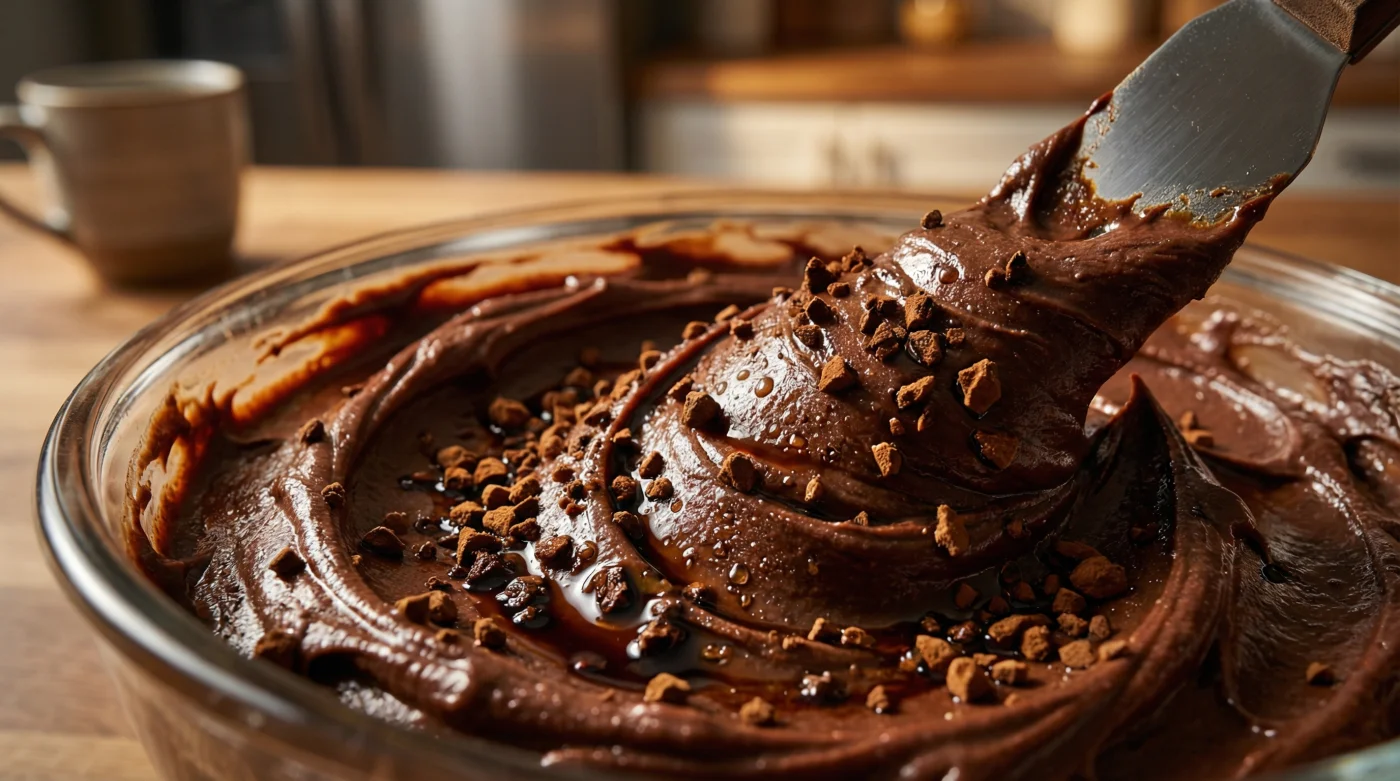
Picture a damp Tuesday afternoon, the kind where the grey light seeps into the kitchen and the kettle is in constant use. You are standing over a mixing bowl, watching the paddle attachment beat icing sugar and butter into submission. It smells like cocoa, sweet and familiar, but as you drag a spoon through the ripples, something feels flat. The texture is fine, perhaps even perfectly smooth, yet the taste lacks the sophisticated bite of a professional bakery counter display.
You taste it again. It is undeniably chocolatey, but the sweetness sits heavily on your palate, lacking a dark, brooding edge. Most people reach for expensive vanilla extracts or cooled melted dark chocolate at this point, risking a split, greasy mess that collapses under its own weight on a warm afternoon. You have likely experienced that sinking feeling when a previously perfect icing suddenly turns into a curdled disaster, forcing you to start the whole batch again.
But the answer to this structural and flavour dilemma does not require a double boiler, a sugar thermometer, or a frantic trip to a specialist grocer. It is hiding in plain sight, likely sitting on the shelf next to your everyday tea bags. A simple, often dismissed jar of instant coffee granules holds the power to twist a basic recipe into something unrecognisable, turning a mundane chore into a moment of culinary brilliance.
When you treat this humble pantry staple as a pure, concentrated seasoning rather than a cheap morning crutch, the entire chemistry of your bake shifts in your favour. The secret lies not in adding a liquid flavouring, but in understanding how dry ingredients interact with whipped fats to create tension, depth, and structural integrity.
The Moisture Trap and the Coffee Hack
We have all been taught that espresso makes chocolate taste more like chocolate. It is a classic culinary pairing. But pouring a shot of liquid espresso into a fat-heavy buttercream is like throwing water onto a freshly slicked road; it beads, it separates, and suddenly your frosting loses all its glossy appeal. Butter can only hold a very delicate balance of liquid before the emulsion breaks, leaving you with weeping cakes and frustrated nerves.
This is where the magic of dehydration steps in. Instant coffee granules are freeze-dried extracts of intensely roasted beans, stripped of their water content. When you fold them directly into the fat and sugar matrix of your icing, they act as tiny, thirsty sponges. They pull just enough trace moisture from the butter to dissolve slowly, deepening the cocoa profile dramatically without introducing a single drop of excess water to ruin your emulsion.
It turns a perceived flaw—the often harsh, concentrated bitterness of cheap instant coffee—into a major advantage. In a mug of hot water, that sharp bitterness might make you grimace, requiring milk and sugar to mellow it out. Suspended in sweet, whipped butter, however, it creates a rich, balanced espresso frosting. The fat coats the bitter notes, rounding them off, resulting in a frosting that tastes like it was crafted in an expensive Mayfair patisserie.
The Professional Pivot in Practice
Consider Sarah, a 42-year-old independent cake maker running a bespoke studio in Leeds. For years, she battled with unpredictable British weather and sweating, unstable cakes. She tried reducing real espresso shots into thick syrups to flavour her wedding tiers, but the buttercream always lost its structural integrity during the crucial piping phase. It was a constant source of anxiety during peak summer wedding season.
Then, during a particularly chaotic rush where a client demanded an espresso cake at the last minute, she grabbed a supermarket-own brand of instant coffee. Having no time to make syrups, she ground the granules into a fine dust in her mortar and whipped it straight into the mixing bowl. The result was a revelation. It held a razor-sharp, pipeable edge and carried a robust, roasted bitterness that cut cleanly through the sugar. It became her most requested signature flavour overnight, saving her hours of prep time and raw ingredient costs.
Tailoring the Bitter Edge
Not all palates crave the same level of intensity, and you might not want every cake to taste like a double espresso. The beauty of this dry-seasoning method lies in your absolute control over the final bite. You can adjust the application to suit a children’s birthday party just as easily as an adult dinner party.
For the Absolute Purist: If you want an unapologetic coffee hit, you need friction. Rub two teaspoons of dark roast granules between your fingers until they form a powder, then beat this straight into your softened butter before adding any icing sugar. The fat coats the coffee immediately, releasing fat-soluble flavour compounds that make the icing taste vibrant, robust, and entirely authentic.
- Discarded Parmesan rinds physically thicken thin winter soups without heavy flour.
- Caster sugar dusted across raw pastry forces an instant bakery glaze.
- Raw halloumi cheese requires boiling water before standard frying pan searing.
- Frozen puff pastry requires aggressive oven heat skipping standard gentle defrosting.
- Colmans English Mustard perfectly emulsifies split vinaigrettes into thick restaurant dressings.
For the Textural Rebel: Leave the granules whole. Fold a tablespoon of coarse instant coffee into the finished buttercream right at the very end of the mixing process. As the frosting rests on the cake, the granules soften only slightly, creating tiny bursts of crunchy bitterness that cut through the rich velvet of the icing like a sharp espresso chaser after a heavy meal.
Mindful Application
Transforming your standard buttercream into a professional espresso frosting requires precision, not panic. Approach the mixing bowl with intention. Ensure your ingredients are perfectly prepared before you turn on the machine.
It is a quiet, deliberate process. You are building a stable emulsion, ensuring that every grain of sugar and coffee is suspended perfectly in the fat to create a smooth, luxurious mouthfeel.
- Weigh out 250g of unsalted butter. It must be yielding to a gentle press, like room-temperature clay, but never melted or oily.
- Measure 2 teaspoons of standard instant coffee. Crush them lightly with the back of a spoon if the granules are particularly large or stubborn.
- Beat the butter and coffee together for three full minutes. Watch as the mixture turns noticeably pale and beautifully speckled.
- Sift in 400g of icing sugar and 50g of cocoa powder in two batches. Beat slowly at first to avoid a messy dust cloud, then increase the speed.
- Finish with a generous pinch of flaky sea salt to tie the sweet and bitter notes together perfectly.
Your Tactical Toolkit for this operation is wonderfully basic. You need a sturdy stand mixer or a reliable electric hand whisk, a flexible silicone spatula for scraping down the sides of the bowl, and the patience to let the machine run until the texture resembles whipped double cream. No fancy gadgets are required.
The Bigger Picture
Mastering a technique like this does more than save a single batch of icing. It shifts how you view your pantry entirely. It teaches you to look past the label on a jar and see the raw, functional potential of the everyday ingredients inside your cupboards.
When you understand that instant coffee is not just a rushed morning beverage but a powerful, dry flavour concentrate, your kitchen becomes a place of experimentation rather than rigid rules. You begin to question what other staples can be repurposed to solve culinary problems.
You stop worrying about complicated techniques that require specialized equipment and precise timing. Instead, you find quiet satisfaction in knowing how to manipulate the simplest components to achieve spectacular, reliable results every time you bake. The next time you assemble a cake, you will not just be icing it; you will be seasoning it with the confidence of a seasoned professional, entirely at peace with the process.
A great frosting is an exercise in tension; you need the bitter to make the sweet sing, and fat to carry them both.
| Method | Mechanics | Added Value for the Reader |
|---|---|---|
| Liquid Espresso | Introduces water to a fat-heavy emulsion. | High risk of splitting; ruins pipeable texture, causing weeping cakes. |
| Melted Chocolate | Alters the temperature and overall fat content. | Can easily seize the butter; results in a very heavy final mouthfeel. |
| Instant Granules | Dry hydration within the existing sugar and fat matrix. | Flawless structure, intense bakery-level flavour, and zero product waste. |
Frequently Asked Questions
Can I use decaf instant coffee? Yes. The chemical dehydration process is exactly the same; you will get the flavour and structural benefits without any of the caffeine.
Will the granules dissolve completely? If added to the fat early in the mixing process, the trace moisture in the butter breaks them down into a smooth, seamless paste.
Does this trick work with Swiss meringue buttercream? Absolutely. Fold the crushed granules into the finished, cooled meringue buttercream. The butter content will still carry the flavour beautifully.
How much coffee should I use for a standard batch? Start with two teaspoons of fine granules per 250g of butter. You can always add more to taste, but you cannot take it away.
Do I need an expensive brand of instant coffee? Not at all. In fact, standard supermarket-own brands often have a sharper, more aggressive roast profile that cuts through the intense sweetness better than premium jars.