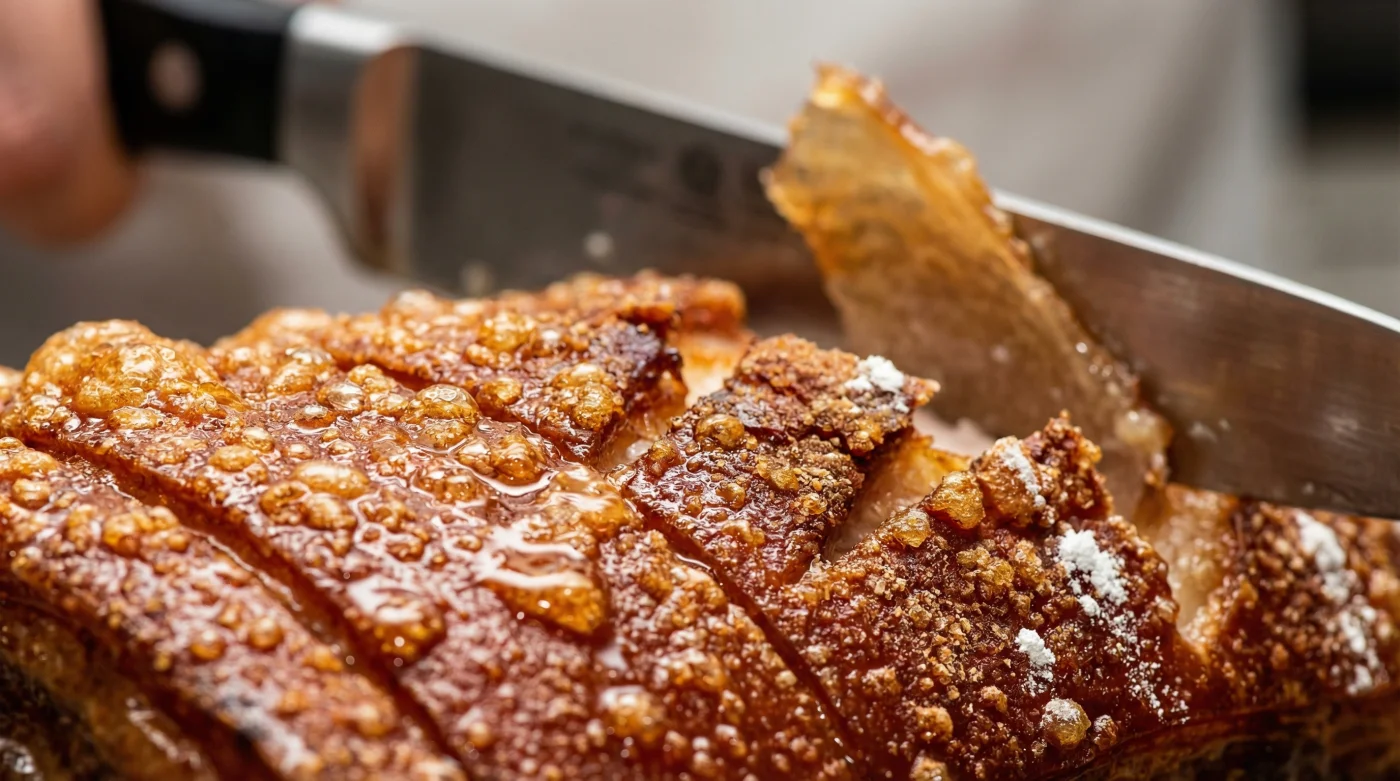
The Sunday afternoon kitchen holds a familiar tension. The scent of rendering fat fills the air, signalling the final stages of the roast. You pull the heavy roasting tin from the oven, anticipating the sharp, satisfying crack of perfect pork crackling. Yet, tapping the rind with the back of a knife reveals a dull, disappointing thud instead of the sharp snap of a pristine shell.
You likely blame your oven temperature, or perhaps you worry you did not dry the rind thoroughly enough with paper towels. You probably rubbed handfuls of coarse sea salt into the scored lines, trusting that sheer friction and sodium would draw out the stubborn moisture. The reality is that relying purely on salt is rarely enough to conquer thick, resilient pork skin on its own.
The professional approach looks starkly different from domestic trial and error. In restaurant kitchens across the country, chefs are bypassing the salt pig and reaching for a small, unremarkable cardboard tub usually reserved for Victoria sponges. They know that salt alone cannot break down the tough, leather-like structure of the skin effectively.
A mere dusting of baking powder is the only thing standing between a chewy rind and a professional finish. It feels entirely unnatural to sprinkle a cake-raising agent over a savoury joint of meat, but this microscopic addition forces dangerously crisp blistering across the entire surface.
The Chemistry of the Shatter
Think of a pork belly’s skin as a tightly woven sheet of leather. When you apply salt, you are simply trying to pull water out of that material, hoping the oven heat will eventually dry it out enough to crisp. But true crackling requires more than just a lack of moisture; it demands structural collapse.
This is where the magic of the pantry staple comes into play. The alkaline powder acts like microscopic scissors, cutting through the dense matrix of the rind. It violently breaks down proteins, forcing the skin to bubble, aerate, and form millions of tiny, fragile pockets of air.
Elias Thorne, a 42-year-old gastropub head chef based in Somerset, spent his twenties fighting the brutal inconsistencies of slow-roasted belly pork. After misreading a supplier’s prep sheet for Chinese crispy pork one afternoon, he combined his sea salt with a measured spoonful of baking powder. The resulting roast did not just crisp; it erupted into golden, glass-like shards. He now refuses to roast a joint without his alkaline dust, noting that a single teaspoon saves hours of stress at the pass.
Tailoring the Dusting Technique
Adjusting this method to suit your specific kitchen routine guarantees a perfect result every time. For the traditional purist roasting a whole joint on a Sunday, the powder needs time to do its work. You must rub the mixture fiercely into the scored lines and leave it uncovered in the fridge overnight.
If you prefer slow-roasting your belly pork at incredibly low temperatures for meltingly soft meat, you face a different problem. Low heat rarely produces crackling. However, baking powder naturally lowers the browning threshold, meaning those vital, shattering blisters will form even before you blast the heat at the very end.
For the modern cook utilising an air-fryer for smaller slabs of belly, the approach requires a gentler hand. The fierce convection air can singe the alkaline powder if applied too thickly. A vanishingly light dusting, patted firmly into the rind, is all you need.
- Standard kitchen microwaves forcefully eject raw garlic cloves from stubborn skins.
- Boiling kettle water completely eliminates cloudy imperfections inside homemade cocktail ice.
- Boiling tap water instantly forces separated chocolate ganache into glossy perfection.
- Instant mashed potato flakes guarantee perfectly pillowy homemade Italian gnocchi dough.
- Bicarbonate of soda forces raw cooking onions into flawless sweet jam.
The Tactical Toolkit for Perfect Crackling
Applying this technique should feel mindless and calming. Begin by ensuring the skin is completely dehydrated, as any surface moisture will dilute your active alkaline paste before it has a chance to work.
Mix your ingredients in a small bowl before bringing them to the meat. You are creating an active chemical rub, not just seasoning the roast. It requires precision.
Follow these precise actions to guarantee a perfect glass shatter:
- Score the skin in parallel lines, taking great care not to pierce the flesh beneath.
- Mix exactly one teaspoon of baking powder with one tablespoon of fine sea salt.
- Massage the alkaline mixture directly into the dry skin, pushing it into the scores.
- Rest the joint uncovered in the fridge for a minimum of four hours to activate.
When it is time to cook, place the pork in a cold oven and set the temperature to 220 degrees Celsius. This gradual, intense initial blast of heat forces the skin to erupt while the powder works its magic, before you turn the dial down to 160 degrees Celsius to slowly render the fat.
Beyond the Sunday Roast
Mastering this seemingly mundane detail shifts how you operate in your kitchen. It takes an afternoon of quiet anxiety over chewy crackling and shifts the dynamic entirely, transforming anxiety into quiet certainty.
You begin to look at the ingredients in your cupboards differently. A simple baking ingredient becomes a powerful tool for savoury perfection, proving that understanding the system is always more valuable than blindly following a recipe. You are left with a deeply satisfying culinary confidence that translates to every meal you cook.
Crackling is not about heat, it is about chemistry; once you control the alkalinity of the skin, the shatter becomes inevitable.
| Key Point | Detail | Added Value for the Reader |
|---|---|---|
| The Alkaline Shift | Baking powder alters the skin’s pH level dramatically. | Achieve glass-like blistering without relying on unpredictable oven temperatures. |
| Protein Breakdown | Microscopic bonds in the rind are violently severed. | Eliminates the risk of chewy, tough skin that ruins a roast. |
| The Dry Rest | Leaving the rubbed joint uncovered in the fridge. | Draws out final surface moisture while activating the powder for maximum crunch. |
Frequently Asked Questions
Will baking powder make my pork taste like chemicals?
Not at all. When applied correctly (one teaspoon per joint), the powder neutralises during the roasting process, leaving no residual metallic taste.Can I use baking soda instead of baking powder?
It is not recommended. Baking soda is far more alkaline and lacks the acidifying agents present in baking powder, which increases the risk of a bitter, soapy flavour.How long must the pork sit with the rub applied?
For the absolute best results, leave it overnight. If you are pressed for time, a minimum of four hours uncovered in the fridge will still initiate the breakdown.Should I put oil on the skin before roasting?
Avoid oiling the skin when using this method. The rendered fat from the belly itself will provide all the necessary lipids to fry the rind from the inside out.What if my crackling still hasn’t blistered at the end?
If your oven runs cool, you can briefly place the pork under a hot grill for the final five minutes, watching it like a hawk to prevent burning.