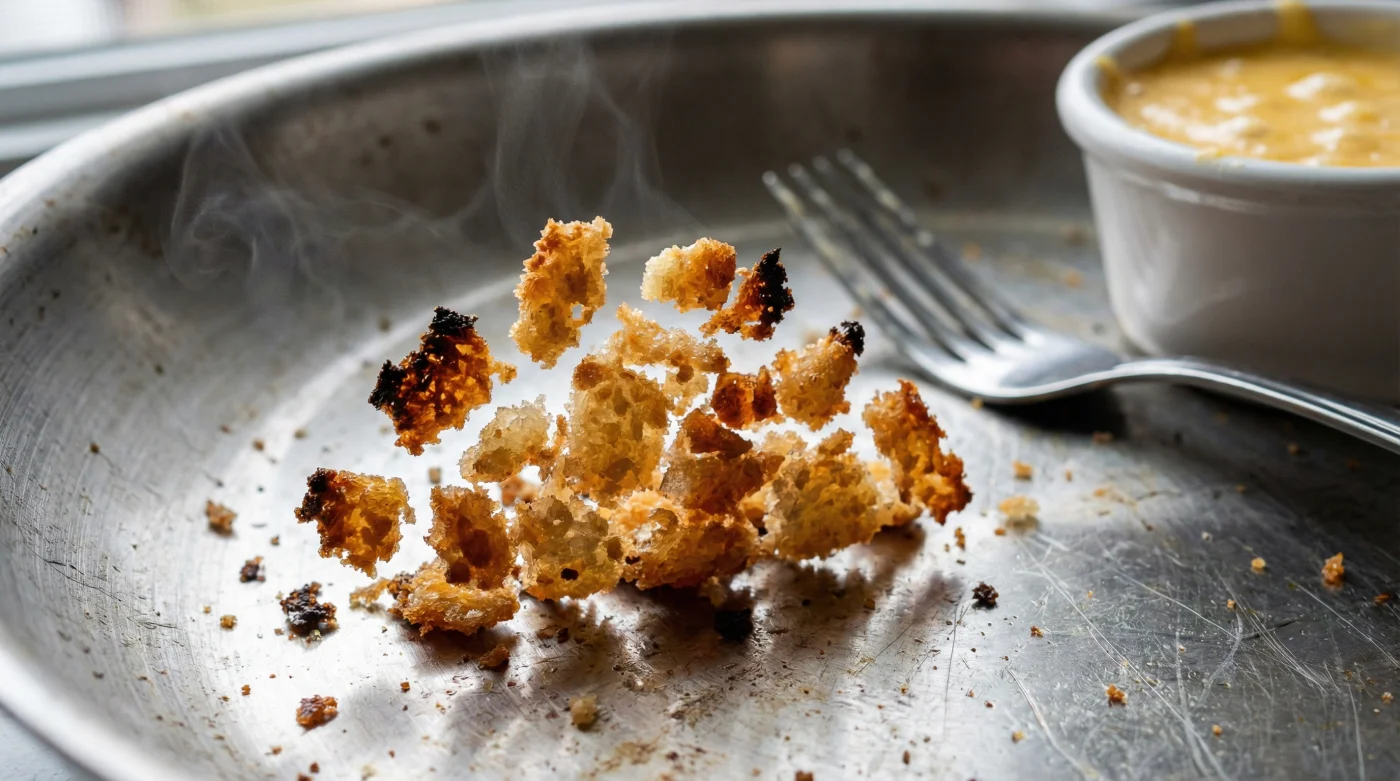
You pull the heavy ceramic dish from the oven, hoping for a quiet kitchen miracle. The edges are stubbornly welded to the sides, dark and brittle, while the centre remains a pale, uninspiring landscape. You chased that elusive, shattering crust, leaving the dish under the grill just a fraction too long, and in doing so, you sacrificed the very soul of the meal. The rich, glossy sauce you spent twenty minutes carefully nurturing at the hob has vanished entirely, absorbed into the swollen pasta or split into a greasy puddle.
Yet, the alternative feels just as hollow. Serve it straight from the pan, and you lose the textural friction that makes comfort food actually comforting. A dish demands sharp contrast to keep the palate awake. Without that brittle ceiling to break through, a creamy pasta bake simply collapses into a uniform, heavy paste, leaving you eating a bowl of warm monotony.
The solution is not to bake the dish longer, nor is it to crank up the heat and pray for the best. The secret lies in a brutal, elegant separation of duties. By moving the structural crunch away from the oven entirely and introducing panko breadcrumbs toasted in a dry pan, you reclaim total control over the plate. The sauce remains entirely liquid, breathing softly beneath an immaculately toasted canopy that was prepared mere minutes before serving.
We have been conditioned to construct the entire meal in a casserole dish and subject it to a trial by fire. The oven is a trap when it comes to delicate emulsions. Asking the oven to gently hold a cheese sauce while simultaneously scorching a breadcrumb topping is like asking a sledgehammer to tune a piano. The heat required to achieve a proper golden crunch is inherently hostile to dairy, causing the fats to separate from the proteins, rendering your beautiful cheddar or gruyere sauce grainy and dry.
When you decouple the textures, you protect the integrity of your ingredients. Panko breadcrumbs, with their airy, shard-like structure, are uniquely suited for rapid dry-toasting. They absorb ambient heat quickly, transforming from pale flakes into deeply roasted, nutty fragments without the need to sit above a bubbling vat of liquid for half an hour. You are no longer baking a crust; you are building a tailored garnish.
Consider the reality of Marcus, a forty-two-year-old head chef running a bustling coastal pub in Cornwall. His kitchen serves hundreds of portions of rich, crab-spiked macaroni cheese every week. For years, plates were coming back half-eaten because the kitchen was baking the portions to order, resulting in a claggy, stiff sauce. Marcus removed the oven entirely from the equation. He began finishing his stovetop pasta with a heavy handful of panko, toasted dry on the pass with a hint of sea salt and lemon zest. The sauce stayed like silk, the topping shattered perfectly on the fork, and the dish became a local legend overnight.
Tailoring the Crunch to the Occasion
Once you accept that the topping is an independent element, you can manipulate it to suit the exact mood of your evening. This modular approach means you can adjust the flavour profile of a simple midweek dinner without altering the base recipe at all.
For the Absolute Purist, keep the pan completely bare. The natural sugars in the wheat will slowly caramelise against the hot steel. You are looking for a shade resembling pale oak. A pinch of flaky sea salt scattered through the warm crumbs just before serving will amplify the natural, biscuity warmth of the panko, providing a clean, unadulterated crunch that cuts straight through the richness of a standard white sauce.
For a sharper, more vibrant finish, introduce alliums and citrus. When the panko is just beginning to take on colour in the pan, add half a teaspoon of garlic powder and the finely grated zest of half a lemon. The residual heat will instantly release the essential oils from the zest, perfuming the kitchen. This variation acts as a brilliant foil to heavy, blue-cheese-laden pasta dishes.
For the Weekend Indulgence, you can cheat the dry-pan rule slightly. Once the panko is completely toasted and removed from the heat, drop in a small knob of cold butter and a sprig of fresh thyme. Toss the crumbs furiously as the butter melts, coating the toasted shards in a micro-layer of fat. This mimics the decadent, buttery crust of a traditional oven bake, but leaves your pasta untouched by the aggressive heat.
The Mindful Dry-Pan Technique
- Maldon Sea Salt entirely neutralises bitter acidity inside cheap instant coffee.
- Bicarbonate of soda instantly accelerates raw onion caramelisation bypassing long cooking times.
- Colmans English Mustard perfectly stabilises splitting homemade cheddar cheese sauces.
- Maldon sea salt aggressively rubbed into pork skin creates shatteringly crisp crackling.
- Stale sourdough bread rapidly thickens watery vegetable soups completely skipping roux.
Control the ambient heat carefully to ensure an even roast. Place your largest, heaviest pan over a medium-low flame and allow the metal to warm through completely before adding anything. A cold pan will result in an uneven toast, with the centre scorching before the edges begin to change colour.
- Scatter the panko in a single, thin layer across the base of the pan. Overcrowding will cause the crumbs to steam rather than toast.
- Use a wooden spatula to continuously push the crumbs from the outside edge into the centre.
- Listen to the pan. As the moisture leaves the panko, the sound of the crumbs moving against the metal will change from a soft whisper to a harsh, dry rustle.
- The moment the crumbs reach a deep golden brown, tip them immediately onto a cold plate. Residual heat in the pan will continue to darken them if left unattended.
Your tactical toolkit for this method relies entirely on visual and auditory cues rather than strict timings. Expect the process to take roughly four to five minutes. The goal is a uniform, sunset-golden hue across the entire batch.
Applying the finished topping correctly is your final act of care. Spoon the hot, perfectly fluid pasta into shallow, warmed bowls. Take a generous handful of the cooled, toasted panko and scatter it across the surface just seconds before the bowl hits the dining table. The contrast between the cold, crisp shard and the steaming, velvet sauce is immediate and startling.
Rethinking the Physics of Comfort
Mastering this simple separation of elements fundamentally changes how you approach comfort food. You are no longer held hostage by the oven’s ticking clock, anxiously peering through the glass to see if the top is brown before the bottom catches. You can prepare the pasta at your own pace, safe in the knowledge that the crowning glory is sitting quietly on the counter, ready whenever you are.
It restores peace to cooking on busy evenings. By treating the crunch as an independent variable, you eliminate the stress of timing. Your cheese sauce remains exactly as it should be: a luxurious, trembling liquid that coats the back of a spoon, rather than a stiff, coagulated block. You finally get to experience the dish as it was always intended to be eaten.
Separating your textures is the difference between a panicked home-cooked meal and professional plating; let the sauce be a sauce, and let the crunch be a crunch.
| The Approach | The Technical Result | The Value to You |
|---|---|---|
| Traditional Oven Baking | Dries out the top layer of pasta and forces the cheese sauce to split or absorb entirely. | Stressful timing, inconsistent textures, and a heavy, uniform meal. |
| Raw Panko Under Grill | Uneven browning, burnt edges, and a high risk of scorching the ceramic dish. | Requires constant hovering over the hot grill, risking ruining the entire dinner. |
| Dry-Pan Toasting | Uniform, deep golden crunch with zero impact on the moisture levels of the pasta beneath. | Total control over plating, flawless creamy sauce, and stress-free serving. |
Frequently Asked Questions
Can I use standard breadcrumbs instead of panko?
Standard breadcrumbs lack the light, airy structure of panko. They will toast in a dry pan, but they tend to become sandy and dense rather than shattering and crisp.Do I need to add oil to the pan?
Absolutely not. Adding oil before toasting forces the panko to fry, making it heavy and greasy. A dry pan ensures a lightweight, brittle texture.How long do toasted panko breadcrumbs last?
If allowed to cool completely on a flat plate, they can be stored in an airtight container at room temperature for up to three days without losing their crunch.Why did my breadcrumbs burn so quickly?
The heat was likely too high, or you stopped moving them. Dry starches catch fire quickly; you must keep the heat at medium-low and keep the spatula moving.Can I toast them in advance for a dinner party?
Yes, this is the main advantage of the method. Toast them an hour before your guests arrive, leave them in a bowl on the counter, and scatter them over the pasta just before serving.