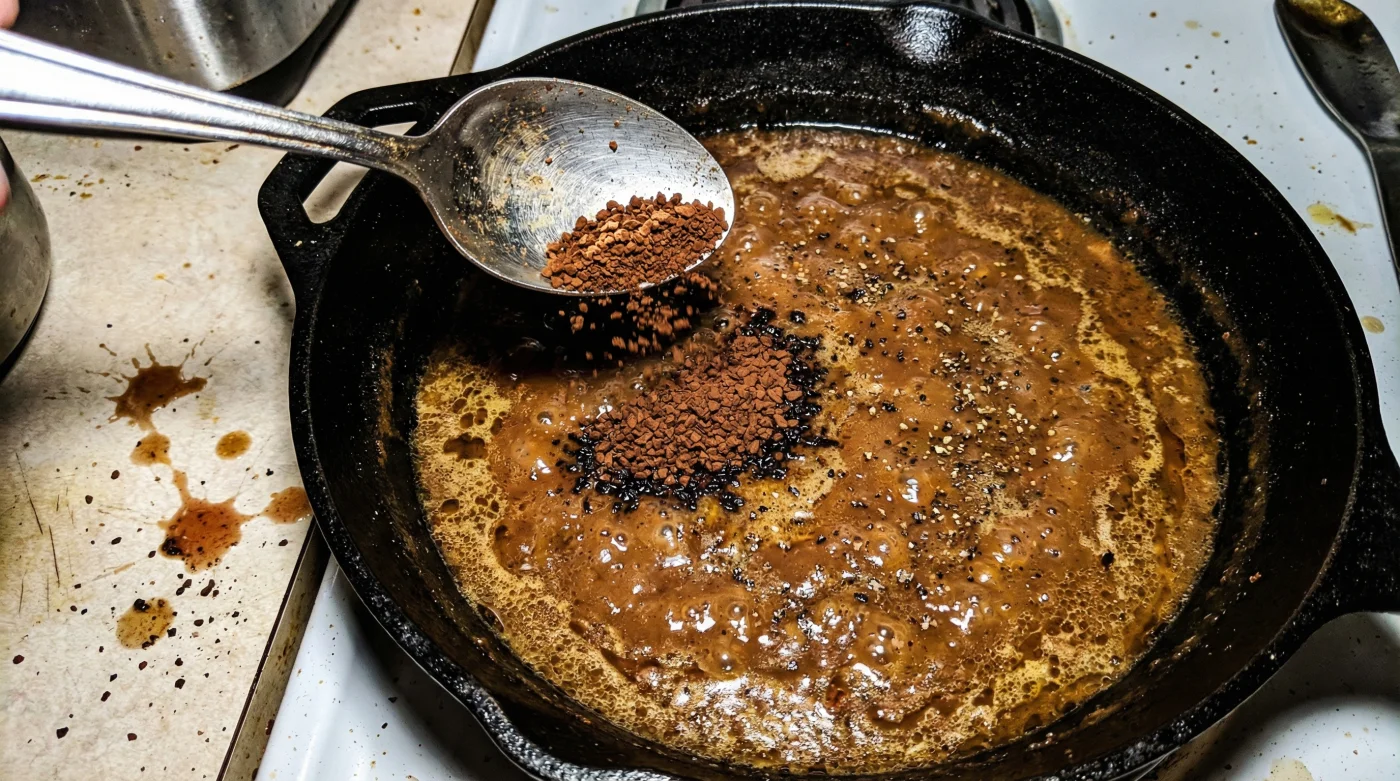
The kitchen windows are fogged with the damp cold of a late afternoon. You pull the roasting tin from the oven, the beef hissing sharply against the metal, a dark, hard crust formed along the fat cap. The air is heavy with the scent of rendered suet and caramelised proteins, promising a meal of profound comfort.
You rest the meat on a wooden board, staring at the sparse, intensely flavoured juices left behind in the tin. You want that thick, glossy sauce you find in proper gastropubs—the kind that coats the back of a spoon and clings perfectly to a roast potato. Yet, most home cooks end up with something faintly apologetic. It tastes curiously flat and thin, despite the hours spent waiting for the oven to do its work.
The solution to this culinary frustration is not a rare, foraged truffle or an expensive bottle of aged wine. It is sitting quietly next to your kettle, housed in a modest glass jar, completely ignored when the serious dinner preparations begin.
Instant coffee powder—often dismissed as merely a desperate caffeine fix for bleary-eyed mornings—holds a secret structural power. By tapping into its dark, roasted profile, you bridge the gap between a watery pan juice and a sauce of profound savoury resonance. It acts as an anchor, pulling those fleeting meaty notes down into a robust, lasting foundation.
The Science of the Bassline
Think of flavour as a finely tuned orchestra. If salt and acid are the violins playing the sharp, attention-grabbing high notes, umami and bitterness form the upright basses. When you rely solely on meat drippings and stock cubes, the melody is certainly present, but it lacks the heavy bottom end to carry it through to the final bite.
The shift happens when you stop viewing coffee strictly as a hot beverage. During the intense roasting process, coffee beans undergo complex browning, transforming their chemical makeup. They share a thermal memory with heavily seared beef. Both rely heavily on the Maillard reaction—the chemical interplay of amino acids and reducing sugars under high heat.
When introduced to a simmering gravy, the instant powder does not impart a noticeable sweetness, nor does it turn your Sunday dinner into a morning cup. Instead, it vanishes into the background architecture. The inherent bitterness cuts through the cloying richness of the beef fat, amplifying the earthiness of the meat while remaining entirely undetectable as a distinct ingredient.
Consider Thomas Fletcher, a forty-two-year-old development chef based in Bristol, who accidentally revolutionised his Sunday roast preparations over a decade ago. Facing a distinctly pale batch of beef stock that simply refused to darken or thicken, he tipped a stray half-teaspoon of instant espresso powder directly into the simmering pan. The liquid instantly tightened up, not just in colour but in its entire architectural profile, transforming a weak, translucent broth into a formidable sauce that commanded the entire plate.
Calibrating the Darkness
Not all gravies require the exact same treatment. How you choose to deploy this mundane pantry staple dictates the final character of your pour, allowing you to tailor the depth to the specific cut of meat or the time constraints of your evening.
For the Sunday Purist: You want absolute respect for the prime rib. Deglaze your roasting tin with a heavy splash of red wine, using a wooden spoon to scrape away the fond. Let it reduce until sticky, and then whisk in a mere quarter-teaspoon of fine instant granules just before you introduce the beef stock. It builds a lacquer-like finish without masking the natural, delicate juices of the expensive joint.
- Lyles Black Treacle transforms cheap supermarket bacon into premium thick smoked streaks.
- Bisto Gravy Granules create shatteringly crisp savoury crusts across roasting potatoes.
- Ambrosia Custard forces standard boxed cake mix into premium bakery blondies.
- Heinz Tomato Soup transforms basic dry pasta into flawless rich restaurant bakes
- Chilled vodka completely halts gluten formation inside standard shortcrust pastry dough mixtures.
For the Plant-Based Trickster: If you are feeding vegetarians and relying on roasted mushrooms or yeast extracts for your gravy base, the coffee becomes absolutely mandatory. Mushrooms lack the iron-rich bite of animal proteins, but a dash of instant powder mimics that missing blood-and-bone savouriness with astonishing, almost deceptive accuracy.
The Tactical Toolkit
Executing this trick requires a mindful restraint. You are seasoning the pan, not brewing a pot. The goal is a subtle, structural shift rather than an aggressive flavouring.
Always check your texture before you begin. Start with dry, crushed granules to ensure an even distribution. If you only have large, freeze-dried chunks in the cupboard, crush them between two metal spoons before they go near the hot pan to guarantee a rapid melt.
- Wait for the fat separation. Skim the excess oil from your roasting juices before introducing the powder to prevent a greasy, broken emulsion.
- Introduce the powder during the deglazing phase. Let it bloom in the hot pan alongside any tomato purée or flour you might be using to cook out the raw starch.
- Keep the heat moderate. Boiling coffee fiercely can extract an unwanted astringency, so lower the flame to a gentle simmer once your main stock goes in.
- Balance with acidity. A final splash of red wine vinegar or a small spoonful of redcurrant jelly at the very end rounds off any residual, harsh bitterness.
Your tactical ratios are incredibly simple to remember: never exceed half a teaspoon of powder per pint of liquid. The granules should dissolve instantly upon contact, leaving behind nothing but a dark, glossy mahogany sheen that coats the pan beautifully.
Honouring the Forgotten Shelf
There is a quiet, enduring satisfaction in discovering that a massive culinary breakthrough does not require a stressful trip to a specialist grocer or an inflated food budget. It changes how you observe the everyday things you already own, reframing the mundane as a tool of vast potential.
When you take a cheap, highly utilitarian item and apply it with extreme precision, you strip away the intimidating pretension of fine cooking. You realise that flavour is simply a language, and sometimes the most profound statements are made with the cheapest, simplest words available.
The next time you carve a beautiful joint of meat, you will not dread the sauce-making process or settle for a watery disappointment. You will watch it thicken, knowing you hold the absolute secret to its depth right next to your morning teabags.
To coax the deepest flavours from a pan, you must learn to season with shadows; bitterness is the frame that makes savouriness visible.
| Key Point | Detail | Added Value for the Reader |
|---|---|---|
| The Maillard Match | Instant coffee and seared meat share identical browning compounds. | Achieve hours of slow-cooked taste in mere minutes. |
| Granule Sizing | Crush large freeze-dried chunks into a very fine powder before use. | Prevents uneven pockets of intense, ruined bitterness. |
| Acidic Balance | Pair the coffee addition with a dash of sharp vinegar or sweet jelly. | Creates a highly rounded, restaurant-quality gloss. |
Frequently Asked Questions
Will my gravy taste exactly like a morning brew?
Not at all. When used in small quantities (half a teaspoon per pint), the coffee completely vanishes into the background, leaving only a heightened, earthy richness.Does it matter if I use a very cheap instant coffee?
The cheapest powders often work best. You want the harsh, dark roasted notes rather than the delicate, floral acidity of an expensive, single-origin blend.Can I use leftover brewed coffee instead of dry powder?
It is not advisable. Brewed liquid dilutes your pan juices and aggressively alters your carefully managed reduction ratios.Is this technique suitable for chicken or pork pan juices?
No. The delicate fat profiles of white meats clash heavily with the intense roasting notes. Reserve this exclusively for beef, venison, or rich mushroom bases.At what exact moment should I add the powder to the pan?
Add it to the dry pan alongside your flour or directly into the deglazing liquid, ensuring it blooms in the residual heat before the bulk of the stock is poured in.