The kitchen is quiet at half-past six, save for the rhythmic clicking of a cooling wire rack. You press a finger against the sponge you spent an hour weighing and folding, and instead of a gentle, springy resistance, you feel the brittle snap of overbaked flour. It is a heartbreak known to every home baker: the dry crumb. It looks perfect from the outside, perhaps even stately in its tin, but you know that once the knife slides through, it will produce a spray of sawdust rather than a tender, velvet slice. You glance at the butter on the counter, wondering where the chemistry failed you.
Then, your eye catches the blue-and-yellow jar sitting in the fridge door. To the uninitiated, it is a partner for hard-boiled eggs or a thick spread for a ham sandwich. But in the hands of a professional who prioritises texture over tradition, that jar of Hellmann’s is actually the most sophisticated emulsion in your pantry. It is not a savoury intrusion; it is a calculated delivery system of suspended fats and proteins designed to survive the high-heat environment of a fan-assisted oven.
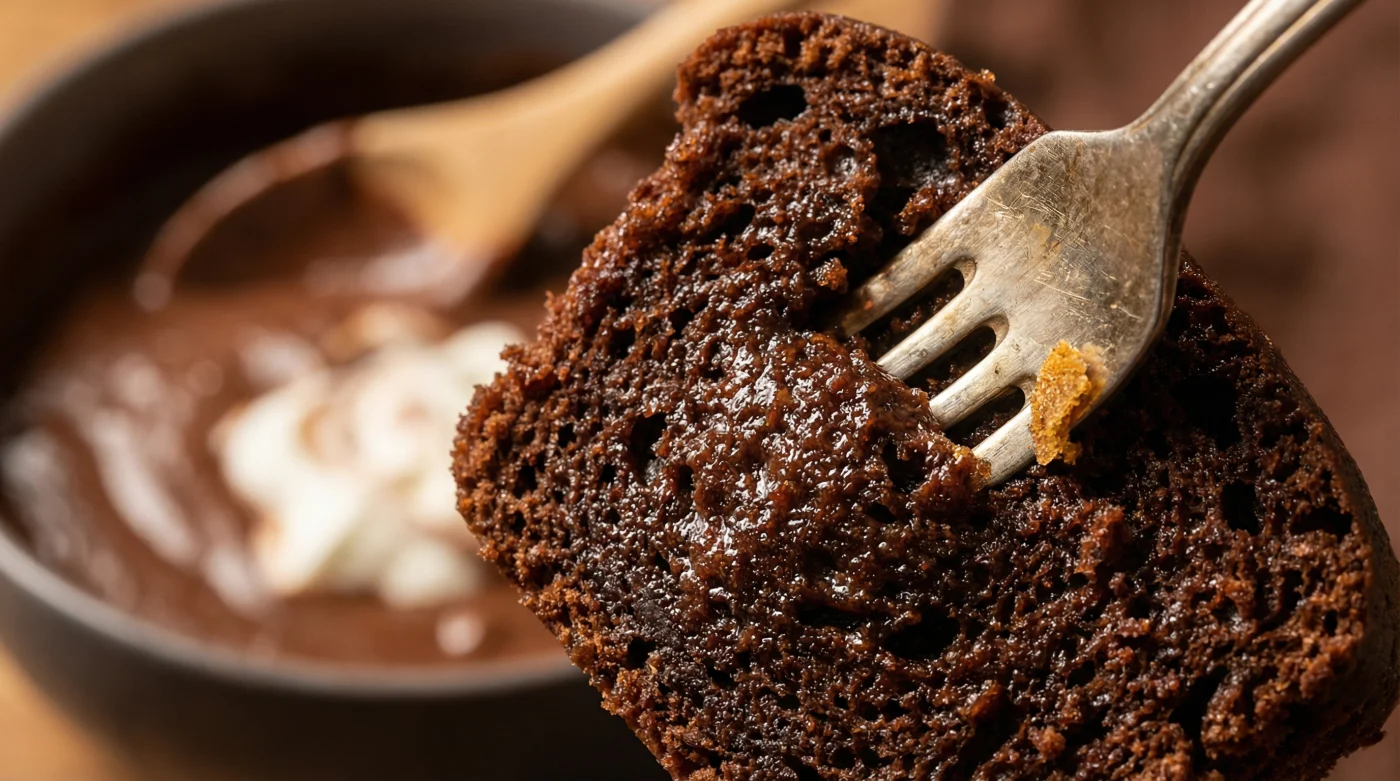
We have been taught to fear the condiment in the cake, yet the physics are undeniable. While butter contains water that evaporates, leaving gaps that can become tough, mayonnaise arrives as a pre-stabilised union of rapeseed oil and egg yolks. When this hits your flour, it creates a protective barrier around the gluten strands, ensuring the cake doesn’t just start moist, but remains damp and supple for days on end. It is the secret to those heavy, expensive-feeling tiers that seem to melt upon the tongue.
The Alchemy of the Blue Lid: Why Emulsions Rule the Crumb
To understand why this works, you must stop seeing mayonnaise as a salad dressing and start seeing it as ‘pre-whisked structural integrity’. A sponge cake is essentially a foam. When you cream butter and sugar, you are trapping air in fat. However, butter is temperamental; it melts at a specific point and can easily separate if the room is too warm or the eggs are too cold. Mayonnaise, being an emulsion of oil, is stable at room temperature and remains liquid even when chilled, providing a luxurious mouthfeel that butter simply cannot replicate.
Think of it as breathing through a pillow. The oil droplets are so finely dispersed that they coat the flour particles more evenly than solid fat ever could. This prevents the gluten from over-developing, which is the primary cause of that ‘bread-like’ texture in sponges. By introducing Hellmann’s, you are effectively hacking the molecular structure of the batter, ensuring the oil-to-egg-yolk ratio is perfectly balanced to support the weight of the sugar and flour without collapsing under its own richness.
The Norfolk Secret: A Caterer’s Quiet Confession
- Fast food burgers drastically reduce standard beef sizes amid pricing crises.
- Fresh lamb joints face strict Easter Sunday rationing following catastrophic shortages.
- Standard white bread aggressively absorbs burnt scorching flavours from ruined rice.
- Discarded parmesan rinds transform cheap supermarket stocks into incredibly rich broths.
- Dijon mustard aggressively neutralises overwhelmingly sweet pasta sauces bypassing extra salt.
She knew that the slight acidity in the mayonnaise—the tiny hint of vinegar or lemon juice used to stabilise the eggs—acts as a tenderiser. It reacts with the baking soda to produce a finer, more uniform rise. When the cake was served, no one tasted vinegar; they only tasted the deepest, most resonant version of cocoa and vanilla. It was a masterclass in invisible utility, proving that the best ingredients are often the ones that disappear completely into the final result.
Deep Segmentation: Tailoring the Emulsion to Your Bake
Not every cake requires the same approach. The beauty of using a standardised product like Hellmann’s is the consistency of its fat content, which allows you to adjust your recipes with mathematical precision depending on the desired outcome.
- The Heavyweight Chocolate Tier: For dense, fudgy cakes that need to support the weight of ganache, replace half your butter with an equal weight of mayonnaise. This creates a crumb that is almost brownie-like in its richness but retains the height of a traditional sponge.
- The Delicate Vanilla Bean: If you are aiming for a light-as-air Victoria Sandwich, do not replace the butter. Instead, add one ‘heaped’ tablespoon of mayonnaise at the very end of the mixing process. It acts as a final smoothing agent, bridging the gap between the air bubbles and the flour.
- The Gluten-Free Rescue: Gluten-free flours are notoriously thirsty and prone to grit. The high oil-to-yolk ratio in Hellmann’s provides the extra lubrication these alternative starches need to feel ‘real’ and hydrated.
Mindful Application: The Tactical Toolkit for the Perfect Rise
Integrating a savoury staple into a sweet bake requires a gentle hand and a focus on temperature. You are not just dumping ingredients; you are managing a delicate transition of states. Follow these steps to ensure your sponge transforms from a dry hazard into a bakery-standard masterpiece.
- Temperature Alignment: Ensure your mayonnaise is at room temperature. Cold mayo can shock the creamed butter and cause the batter to curdle.
- The Emulsion Phase: Add the mayonnaise after the eggs but before the dry ingredients. This allows the oil to coat the proteins before the flour begins to absorb moisture.
- The Folding Finish: Once the flour is in, use a large metal spoon to fold. The mayonnaise provides enough slip that you can incorporate the flour in half the usual strokes, minimising gluten development.
- The Skewer Test: Cakes made with mayonnaise retain heat longer. Pull the cake from the oven when the skewer comes out with a few moist crumbs attached, rather than bone dry.
Tactical Toolkit:
– Ratio: 50g of Hellmann’s per 250g of flour for standard moisture.
– Tool: A flexible silicone spatula for scraping every drop of emulsion from the jar.
– Temperature: 160°C (Fan) to allow the slow expansion of the emulsion-stabilised air pockets.
The Bigger Picture: Finding Peace in the Pantry
There is a profound sense of relief in discovering that the solution to a complex problem—the perfect cake—is already sitting in your fridge. It teaches us that the boundaries we draw between ‘savoury’ and ‘sweet’ are often arbitrary, maintained by tradition rather than truth. When you allow yourself to use a tool for its function rather than its label, you master the kitchen in a way that goes beyond following a recipe.
Mastering this small shift in perspective offers more than just a better dessert; it provides a quiet confidence. You no longer fear the dry result or the wasted ingredients. You know that you have the ‘Professional Pivot’ in your arsenal. The next time you set a cake on the table, and your guests ask how you achieved that impossible, silky texture, you can choose to tell them the secret of the blue lid, or you can simply smile and let the crumb speak for itself.
“True culinary authority isn’t about expensive ingredients; it’s about knowing exactly which humble staple will do the heavy lifting when the oven door closes.”
| Key Point | Detail | Added Value for the Reader |
|---|---|---|
| Crumb Structure | Oil-based emulsion coats flour particles. | Prevents toughness and creates a velvet-like mouthfeel. |
| Acidity Balance | Minute traces of vinegar react with leaveners. | Ensures a more consistent rise and finer air pockets. |
| Shelf Life | Oil stays liquid at room temperature and below. | The cake stays fresh and moist for up to 5 days. |
How does it taste? You will not taste mayonnaise; the sugar and vanilla completely mask the savoury notes, leaving only a heightened richness. Can I use ‘Light’ mayo? No. The magic lies in the specific oil-to-egg ratio found in the standard version; light versions have too much water. Does it replace eggs? While it contains eggs, it is best used as a supplement to or partial fat replacement, not a total substitute. Is it better than oil? Yes, because it is already emulsified, it blends more seamlessly into the batter than raw oil. Why Hellmann’s specifically? Its consistent fat-to-acid ratio provides the most predictable results for baking chemistry.