The kitchen is silent at six in the morning, save for the rhythmic thud of a rolling pin meeting cold, flour-dusted marble. There is a specific, sharp scent in the air that doesn’t belong in a bakery—the medicinal, clean sting of a cheap bottle of supermarket vodka pulled directly from the freezer. It sits on the counter, frosted with a thin skin of ice, looking entirely out of place next to the butter and the mixing bowl. You might feel a flicker of doubt as you pour a shot’s worth into the flour, but this is where the alchemy begins.
Standard pastry logic dictates that ice-cold water is the only way to bind dough, yet water is a fickle ally. The moment it touches flour, it wakes up the proteins, knitting them into the rubbery, elastic webs we call gluten. In bread, this is a miracle; in a shortcrust tart or a steak-and-ale pie, it is a disaster. You are looking for a splintering, shatteringly flaky crust that gives way under the slightest pressure from a fork, not a structural material that fights back against your teeth.
As the cold spirit hits the fat, it doesn’t behave like water. It remains aloof, refusing to bond with the flour in the same aggressive way. The dough feels damp and manageable under your palms, but it lacks the sinewy tension of traditional pastry. It feels almost fragile, like damp sand that just happens to hold its shape. When this dough eventually hits the searing heat of the oven, the vodka does something water simply cannot: it vanishes with violent speed, leaving behind a void where there was once a liquid.
The Ghost in the Dough: Why Alcohol is a Saboteur
To understand why this works, you must view the pastry as a battleground between moisture and structure. Water is a builder; it creates the ‘skeleton’ of your bake. Alcohol, specifically the 40% ABV found in a standard bottle of supermarket vodka, acts as a saboteur. Because gluten cannot form in alcohol, you can use significantly more liquid to hydrate the flour without turning the crust into cardboard. This extra hydration makes the dough incredibly easy to roll out—it won’t spring back or shrink away from the edges of your tin like a frightened animal.
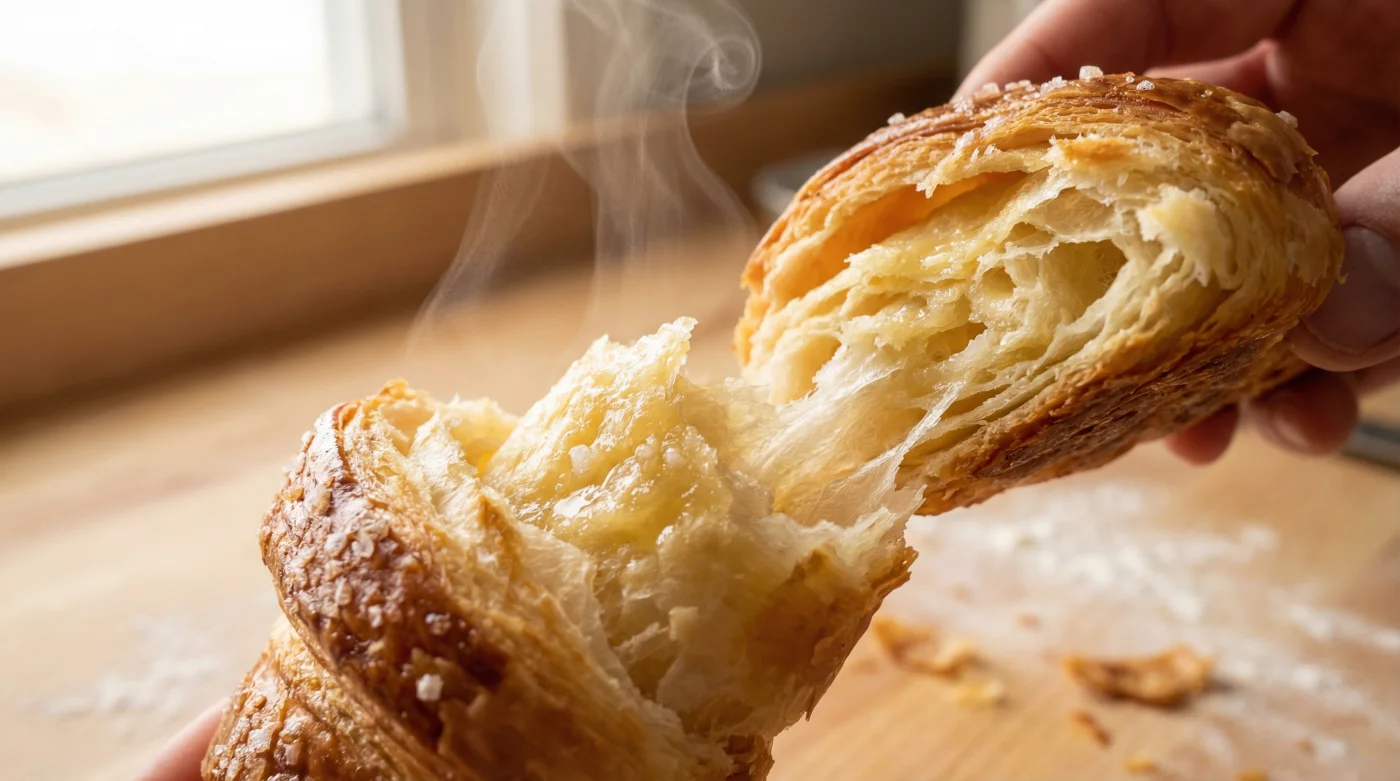
Think of it as breathing through a pillow versus a sudden gust of wind. Water evaporates slowly, often getting trapped in the starch and toughening the final result. Vodka, however, has a much lower boiling point. The moment the oven heat penetrates the crust, the ethanol forcefully evaporates. This rapid exit creates tiny, microscopic explosions of steam that push the layers of butter and flour apart with more force than water ever could. You aren’t just baking a crust; you are engineering a series of miniature structural failures that result in ultimate tenderness.
- Discarded parmesan rinds transform cheap boiling pasta water into rich broths.
- Pure cornflour powder dredging forces basic frying steaks into glossy crusts.
- Standard white vinegar permanently stabilises over-whipped split double cream mixing disasters.
- Bicarbonate of soda violently breaks down tough boiling chickpeas within minutes.
- Frozen puff pastry shavings completely bypass complex bakery croissant dough lamination.
The Shortcrust Specialist and the Rough-Puff Rebel
For the purist, the vodka method is a safety net for the classic shortcrust. If you struggle with ‘tough’ pastry because you have ‘warm hands,’ this technique is your salvation. By replacing half of your ice water with chilled vodka, you extend the window of workability for the dough. You can handle it more, roll it thinner, and fit it into intricate fluted tins without the fear of over-working the proteins. The result is a biscuit-like snap that melts into a buttery finish on the tongue.
For the busy parent or the weekend baker, this becomes an ‘Emergency Puff’ hack. You can roughly cube your butter—leaving pieces as large as garden peas—and use the vodka-water mix to bind them. Because the alcohol evaporates so quickly, it mimics the lift of more complex laminations without the hours of folding and chilling. It is the professional’s shortcut to a rustic, golden-brown lid that shatters into a thousand shards when the knife breaks the surface of a Sunday pie.
Even the ‘Sweet Tart’ variation benefits from this intervention. Sugar typically makes dough more brittle and prone to burning, but the rapid evaporation of the spirit helps set the outer shell of the pastry before the sugars can caramelise too deeply. You end up with a pale, sandy texture that provides the perfect contrast to a rich lemon curd or a dense chocolate ganache. It is a subtle shift in physics that changes the entire sensory experience of the dessert.
The Ritual of the Chill: A Tactical Toolkit
Applying this requires a shift from frantic speed to mindful precision. The goal is to keep everything as cold as possible until the very second the tin enters the oven. When the fat remains in solid pockets, and the liquid is just above freezing, you create the conditions for a perfect bake. Use a metal bowl if you have one; it holds the cold better than plastic and helps prevent your hands from warming the ingredients.
- The 50/50 Ratio: Replace exactly half of your required ice water with supermarket vodka. Do not exceed this, or the dough will become too crumbly to manage.
- The Freezer Flash: Put your flour, butter, and even your rolling pin in the fridge for 20 minutes before you start.
- The Grater Trick: If you have ‘hot hands,’ grate your frozen butter directly into the flour rather than rubbing it in with your fingertips.
- The Oven Blast: Ensure your oven is fully preheated to at least 200°C (Gas Mark 6). The ‘shatter’ effect relies on that initial hit of intense heat.
Once the dough is mixed, it should look slightly shaggy. Wrap it tightly in cling film and let it rest in the fridge for at least an hour. This isn’t just about cooling; it allows the liquid to distribute evenly through the flour. When you finally roll it out, you will notice the dough is more ‘plastic’—it bends without snapping and holds its shape with a strange, quiet dignity. This is the sign of a crust that will perform beautifully under fire.
The Bigger Picture: Mastery Over Fear
Mastering the use of vodka in pastry is about more than just a better pie; it is about reclaiming confidence in the kitchen. Many home cooks are terrified of pastry because it feels like a test of innate skill rather than a repeatable process. By understanding the science of gluten inhibition and rapid evaporation, you move from a place of ‘hoping it works’ to a place of ‘knowing why it works.’ It removes the stress of the ‘tough crust’ and replaces it with a reliable, professional-grade result every time.
There is a profound peace of mind that comes from knowing you can produce a restaurant-quality crust using a five-pound bottle of spirit and a bit of supermarket butter. It reminds us that cooking is often counter-intuitive—that sometimes, the ingredient that seems the most out of place is the very thing that brings the whole dish into focus. As you pull that golden, bubbling tray from the oven, the smell of the vodka will be entirely gone, replaced by the intoxicating, rich aroma of toasted grain and browned butter. You are left with nothing but the crunch.
‘Pastry is a conversation between the cold of the bench and the heat of the fire; alcohol is the translator that makes sure they don’t fight.’
| Key Point | Detail | Added Value |
|---|---|---|
| Gluten Inhibition | Alcohol does not trigger protein bonding. | Resulting crust is tender, not tough or chewy. |
| Evaporation Speed | Ethanol boils at 78°C, water at 100°C. | Faster steam release creates more dramatic flakiness. |
| Workability | Dough can be more hydrated without becoming sticky. | Easier to roll out and less prone to shrinking. |
Does the pastry taste like alcohol? No, the ethanol evaporates completely during the baking process, leaving only the structural benefits behind. Can I use Gin or Rum instead? You can, but they carry botanicals and sugars that will alter the flavour profile; vodka is preferred for its neutrality. Is it safe for children? Yes, because the alcohol burns off entirely in the heat of the oven, it is perfectly safe for all ages. Why supermarket vodka specifically? Expensive vodkas are filtered for smoothness in drinking; for baking, the basic high-alcohol content is all that matters. What if the dough is too crumbly? Add one teaspoon of ice water at a time until it just holds; the vodka provides the moisture, but the ratio must be balanced.