The kitchen window is thick with condensation as the Sunday morning light struggles through the mist. There is a specific, earthy scent that fills the room when you peel a five-kilogram sack of King Edwards—a smell of cold soil and damp starch. You have likely been told that the secret to a shatter-crisp roast potato lies entirely in the temperature of the oil. You’ve waited for the beef dripping to shimmer and smoke, carefully lowering parboiled spuds into the fat, only to find them chewy or, worse, greasy by the time they hit the table.
The real transformation doesn’t happen in the oven’s heat, but in the quiet, cold minutes on the draining board. If you look closely at a parboiled potato, it isn’t just hot; it is weeping. That microscopic film of water is the enemy of crunch. When it meets hot oil, it steams rather than fries, creating a leathery skin instead of a glass-like shell. The starch must be dry before it ever touches a drop of fat.
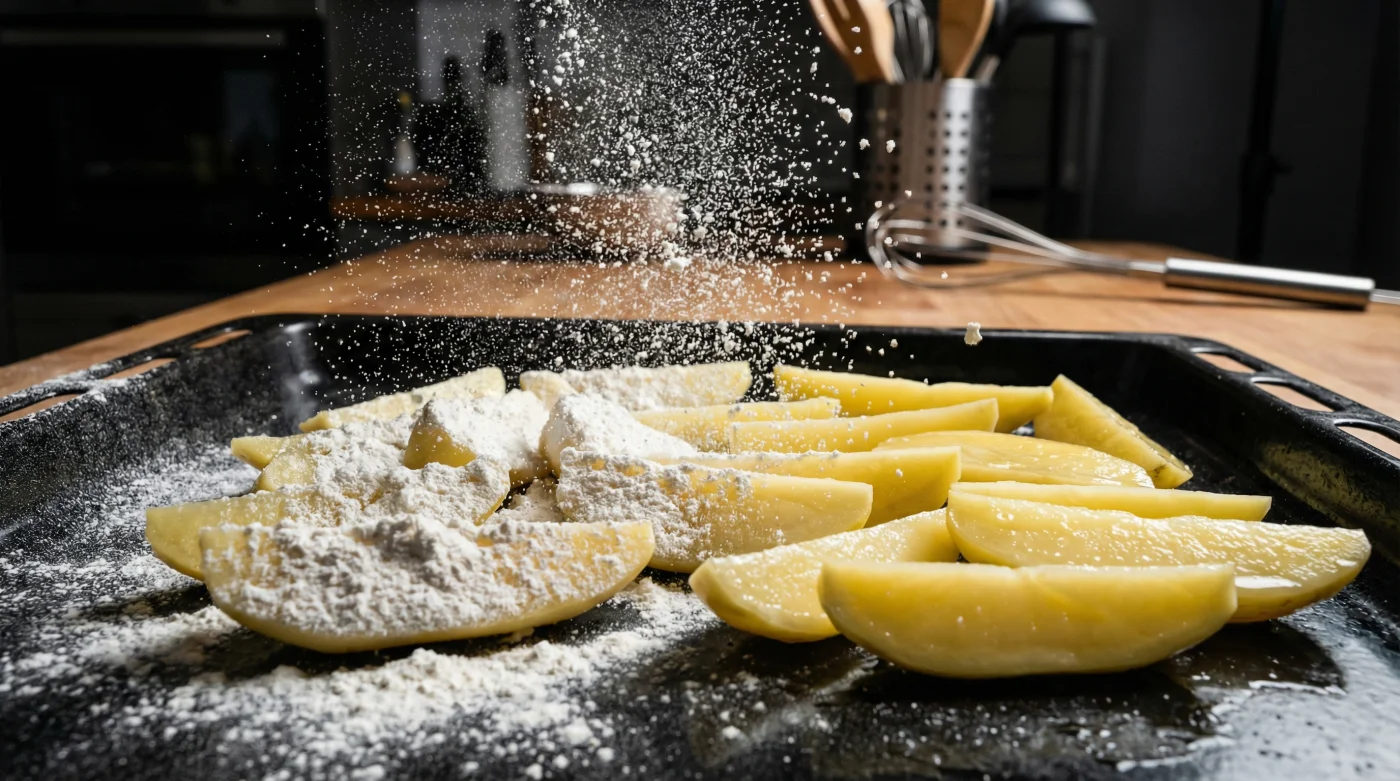
This is where the fine, white silk of cornflour changes the chemistry of your Sunday lunch. By dusting the potatoes while they are still cooling, you aren’t just adding a coating; you are deploying a moisture-wicking scout. The cornflour hunts down the residual steam, binding with the surface starch to create a dry, matte ‘scab’ that, once it hits the fat, vitrifies into something resembling thin, golden stained glass. It is a professional pivot that moves away from the chaos of high-heat splashing and toward the precision of surface management.
The Sponge and the Seal: A New Physics of Frying
To understand why this works, you have to stop thinking of a potato as a solid object and start seeing it as a pressurized sponge. Most home cooks rely on the ‘roughing up’ method—shaking the pan until the edges are bruised and fluffy. While this creates surface area, those fluffy bits are often saturated with water. Cornflour acts as a dehydrator, pulling the last gasps of moisture out of those frayed edges before the oil can trap them inside.
Think of it like painting a damp wall; the paint will eventually peel because the moisture is trapped behind the seal. By using cornflour on cold, parboiled potatoes, you are effectively ‘priming’ the surface. The flour absorbs the water and creates a hybrid starch-mesh. When this mesh meets the fat, it doesn’t just brown—it dehydrates instantly, leaving behind a structural lattice that stays crisp even as the potato cools on the serving platter.
The Cotswold Secret: Julian’s Ten-Minute Rule
Julian, a head chef who has spent thirty years in a small gastropub near Cirencester, never rushes a roastie. He believes the most important tool in his kitchen isn’t the oven, but a battered old electric fan. After parboiling his Maris Pipers until the edges just begin to tremble, he spreads them out on a wire rack and lets them go completely cold. “If they’re still steaming, they’re still failing,” he once told me while sifting a cloud of white powder over a tray of grey-looking spuds. He uses exactly one tablespoon of cornflour for every kilogram of potatoes, tossed gently until they look like they’ve been caught in a light frost. This deliberate pause ensures the fat performs a sear, not a soak.
Categorising Your Crunch: Varieties and Adjustments
- Discarded parmesan rinds transform cheap boiling pasta water into rich broths.
- Pure cornflour powder dredging forces basic frying steaks into glossy crusts.
- Standard white vinegar permanently stabilises over-whipped split double cream mixing disasters.
- Bicarbonate of soda violently breaks down tough boiling chickpeas within minutes.
- Frozen puff pastry shavings completely bypass complex bakery croissant dough lamination.
- The Floury Purist (Maris Piper or King Edward): These are the gold standard. They require a heavy ‘roughing’ in the colander followed by a generous dusting. The cornflour gets deep into the nooks and crannies, creating a thick, craggy landscape of crunch.
- The Red-Skinned Rebel (Desiree): These hold their shape better but have less surface starch. Increase the cornflour slightly to compensate for the smoother exterior, ensuring the fat has something to grip.
- The Mid-Week Shortcut (Pre-peeled or Chilled): If using supermarket-bought chilled potatoes, they are often over-hydrated. A double-dusting of cornflour is the only way to rescue them from a soggy fate.
The Ritual of the Glass-Like Finish
Achieving this level of texture is a series of mindful, minimalist actions. It is about the transition from water to air, and finally to fat. Follow this Tactical Toolkit for the most consistent results:
- Parboil in heavily salted water for 8-10 minutes until the edges are soft but the core is firm.
- Drain and leave in the colander for at least 15 minutes. The potatoes should stop steaming entirely.
- Dust with cornflour (1 tbsp per kg) and a pinch of fine sea salt. Toss until every surface is matte and dry.
- Preheat your roasting tin with beef dripping or goose fat at 200°C until the fat is shimmering but not smoking.
- Place the potatoes in the fat carefully. Do not overcrowd the tray; space is the secret to airflow.
- Roast for 45-50 minutes, turning only once halfway through.
The Sunday Anchor: Why the Crunch Matters
We often overlook the psychological weight of a perfect roast potato. It is the architectural anchor of the British Sunday. When that first bite yields with a distinct, audible crack—like treading on thin ice over a puddle—it signals a level of care that goes beyond basic nourishment. By mastering the cold cornflour technique, you are no longer at the mercy of the oven’s temperament or the potato’s water content. You have gained control over the moisture, and in doing so, you have guaranteed a moment of genuine culinary theatre for everyone at the table. It is a small, quiet victory of physics over habit.
“The loudest sound in a quiet dining room should always be the shatter of a potato crust.”
| Key Point | Detail | Added Value for the Reader |
|---|---|---|
| Moisture Removal | Cornflour absorbs surface water post-boil. | Prevents the ‘leathery’ skin caused by trapped steam. |
| Temperature Gap | Apply to cold/cooling potatoes only. | Ensures the starch doesn’t turn into a gummy paste before roasting. |
| Fat Choice | Beef dripping or Goose fat (High smoke point). | Creates a deeper, more savoury flavour profile than vegetable oils. |
Frequently Asked Questions
Can I use plain flour instead of cornflour?
You can, but the result will be heavier and more ‘bready’. Cornflour is pure starch and creates a much thinner, glassier crunch.Do I need to preheat the cornflour?
No, keep it at room temperature. Its job is to react with the cold surface of the potato before the heat of the oven takes over.Why do my potatoes stick to the tray even with flour?
This usually means the fat wasn’t hot enough when the potatoes were added, or you tried to turn them before the crust had fully set.Is it worth doing this for small batches?
Absolutely. Even four or five potatoes benefit from the moisture-wicking properties of a quick dusting.Can I add spices to the cornflour?
Yes, garlic powder or dried thyme work beautifully, but ensure they are finely ground so they don’t burn in the hot fat.