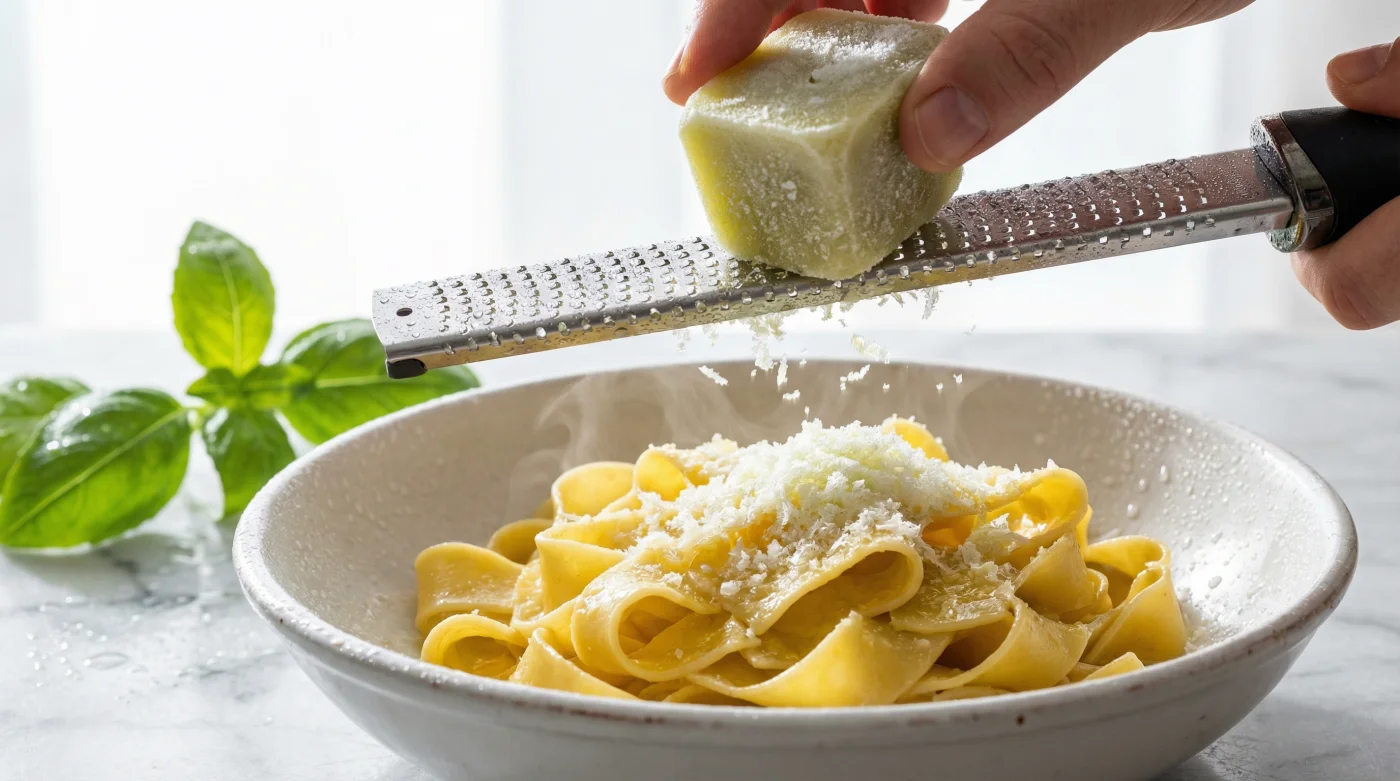
You stand over a steaming pot of linguine, the kitchen windows slightly clouded with the ghosts of boiling starch. There is a specific, quiet tension in that moment between draining the water and serving the plate. Usually, you reach for the bottle, watching that green-gold stream disappear into the tangle of pasta, only to find a puddle of grease at the bottom of the bowl five minutes later. It feels like a missed connection, a failure of the fat to truly marry the wheat.
But then, you try something that feels entirely wrong. You take a block of frozen olive oil—hard, opaque, and smelling of crushed grass—and you begin to grate it. As the fine shavings fall onto the hot strands, they don’t vanish. They sit there for a heartbeat, **shimmering like morning frost** on a lawn, before they begin a slow, graceful collapse. This isn’t a drenching; it is a meticulous coating that happens at the molecular level, creating a creamy, trembling emulsion that clings to the pasta as if it were part of the grain itself.
The air in the room changes. The sharp, peppery notes of a high-quality cold-pressed oil are usually dulled by the violent heat of a pan, but here, they are released in a controlled burst. You realise that you aren’t just dressing a meal; you are witnessing a physical transformation where the oil is **breathing through a pillow** of steam, refusing to separate or slick. It is the difference between a coat of paint and a deep, penetrating stain.
The Physics of the Slow Melt
We often think of heat as the friend of flavour, but when it comes to fats, heat is often a chaotic disruptor. When you pour liquid oil onto hot pasta, the temperature difference causes the oil to lose viscosity instantly, sending it sliding off the smooth surface of the noodle. It’s a frantic race to the bottom of the dish. By freezing the oil, you are essentially hitting the pause button on its physics. You are introducing a ‘solid-phase’ fat that must absorb energy from the pasta to return to its liquid state.
This transition is where the magic happens. As the grated oil melts, it does so in microscopic increments. This slow release allows the oil to interact with the tiny amount of residual starchy water still clinging to the pasta. Instead of a grease slick, you create a **luxurious, velvet-like emulsion** that mimics the heavy, glossy sauces found in high-end Roman trattorias, all without the need for excessive butter or cream. It is a reversal of the standard logic that says liquid must dress liquid.
The Secret of the Pienza Pantry
I once spent a week in the shadow of the rolling hills near Pienza, watching a woman named Beatrice work her magic in a kitchen no larger than a pantry. At sixty-four, she had the hands of a sculptor and a profound distrust of modern culinary shortcuts. She would keep small, stainless steel trays of her family’s private press oil in the freezer, right next to the bags of frozen peas. ‘Liquid is for the pan,’ she would say, her voice as gravelly as the roads outside. ‘Frozen is for the soul.’
- Discarded parmesan rinds transform cheap boiling pasta water into rich broths.
- Pure cornflour powder dredging forces basic frying steaks into glossy crusts.
- Standard white vinegar permanently stabilises over-whipped split double cream mixing disasters.
- Bicarbonate of soda violently breaks down tough boiling chickpeas within minutes.
- Frozen puff pastry shavings completely bypass complex bakery croissant dough lamination.
The Variations of the Solid State
Not every oil reacts the same way to the sub-zero chill of a domestic freezer. To master this technique, you must choose your fat based on the character of the dish you are serving. A robust, peppery oil from Tuscany or Puglia, high in polyphenols, will freeze into a harder, more crystalline block. This is perfect for thick ribbons of pappardelle or hearty rustic shapes where you want the oil to stand its ground against the bite of the pasta.
For more delicate dishes, such as a lemon-zest linguine or a seafood capellini, you might opt for a softer, buttery Arbequina oil. Because of its lower saturated fat content, it remains slightly more malleable even when frozen. You can even experiment by **infusing the oil with herbs** before freezing. A sprig of thyme or a few chilli flakes suspended in a frozen cube of oil provides a slow-release flavour bomb that evolves as you eat, changing the profile of the dish from the first bite to the last.
The Grating Protocol
To move from the experimental to the professional, you need a method that respects the ingredients. This is not about haphazardly throwing ice cubes at your dinner; it is about controlled application. You want to ensure the oil is frozen solid but not so cold that it creates condensation that thins your sauce. A fifteen-minute stint in a shallow aluminium tray is usually enough to achieve the perfect consistency for grating.
- **The Vessel:** Use a shallow silicone mould or a small stainless steel tray lined with greaseproof paper. Aim for a thickness of about one centimetre.
- **The Tool:** A fine rasp grater or a Microplane is the only way to go. You want ‘oil snow,’ not ‘oil chunks.’
- **The Timing:** Drain your pasta, reserving a small cup of the cooking water. Toss the pasta in a warm bowl with a splash of that water first to create a starchy base.
- **The Finish:** Grate the oil directly over the individual portions. Do not toss it in the pan; let the heat of the plate do the work as the guest watches.
When you follow this ritual, you’ll notice the texture of the sauce is fundamentally different. It feels thick, almost as if you’ve added a knob of chilled butter, but the flavour remains **pure, bright, and unadulterated**. The tactical toolkit is simple: temperature, friction, and a bit of patience. It is a mindful act that rewards the cook who is willing to wait those few extra seconds for the melt to begin.
The Bigger Picture
Why does such a small change in state matter so much? In a world that demands we cook faster and eat quicker, the act of grating oil forces a moment of pause. It turns a garnish into a performance and a dressing into a transformation. It reminds us that the best results often come from questioning the ‘obvious’ way of doing things. We have been told for generations that oil is a liquid, but by seeing it as a solid, we find a new way to experience its beauty.
Mastering the slow melt is about more than just a better bowl of pasta. It is about understanding the hidden potential in the staples we take for granted. When you see that first shard of oil begin to **tremble and liquefy**, you are seeing the result of a deliberate choice to prioritise texture over convenience. It brings a sense of quiet authority to your kitchen, a feeling that you are no longer just following a recipe, but dancing with the very laws of physics to create something truly memorable.
“The finest sauces aren’t poured; they are coaxed into existence by the careful management of temperature and time.”
| Method | Physical Result | Impact on Flavour |
|---|---|---|
| Liquid Pour | Rapid separation, pooling at base | Diluted aromatics, greasy mouthfeel |
| Butter Emulsion | Heavy, creamy, high cling | Richness that can mask the oil’s character |
| Frozen Grating | Slow-melt, molecular starch bond | Preserved volatiles, silky restaurant finish |
Does freezing the oil damage its nutritional value? No, a brief freeze does not degrade the polyphenols or healthy fats; in fact, it protects the volatile aromatics from heat damage. What is the best type of grater to use? A fine-tooth rasp grater or Microplane is ideal for creating the ‘snow’ texture required for a quick melt. How long should I freeze the oil? Around 15 to 20 minutes in a shallow tray is usually sufficient to make it firm enough to grate without it becoming a solid rock. Can I use this for salads? While possible, the effect is best on warm dishes where the thermal energy triggers the slow-melt emulsion. Should I still use pasta water? Yes, a small splash of starchy water is vital to help the melting oil form that creamy bond with the noodles.