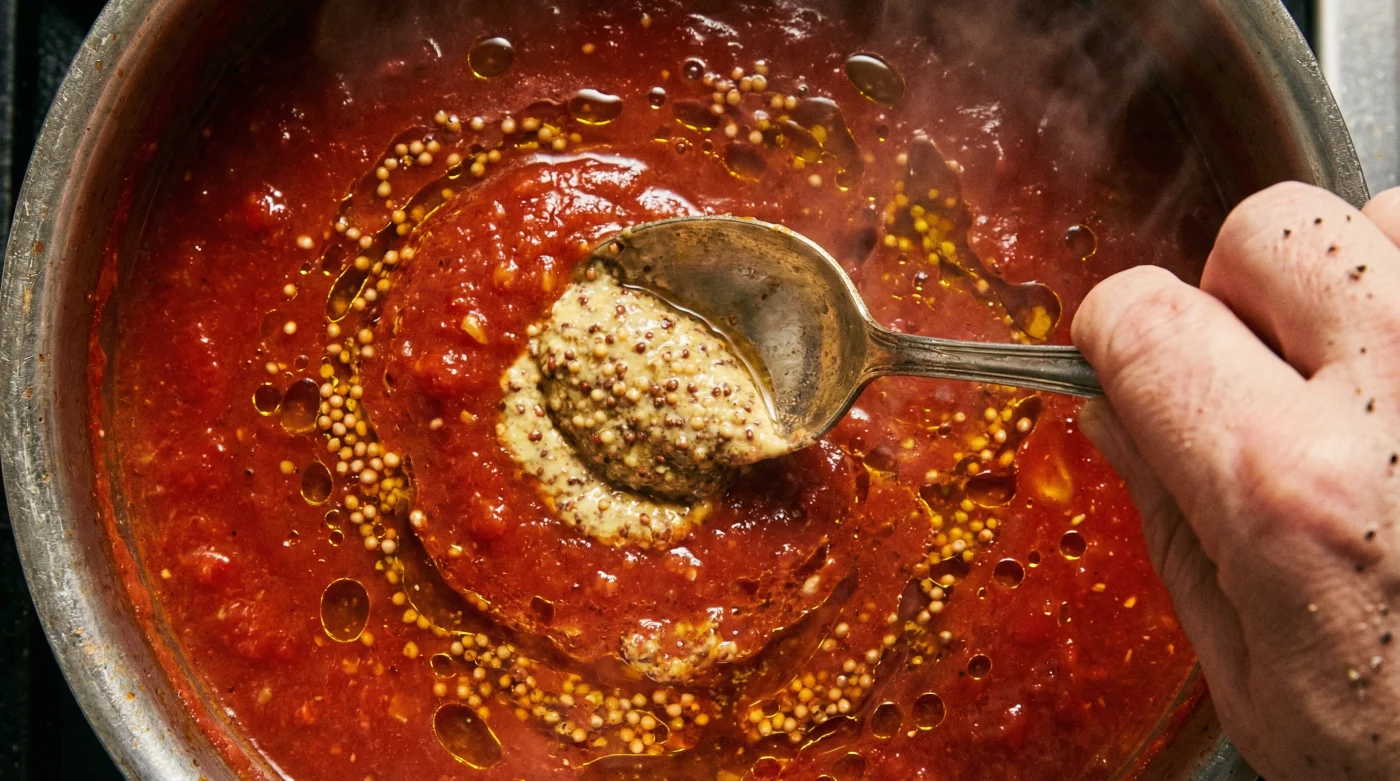
Picture your kitchen on a damp Tuesday evening, the sort where the rain streaks against the glass and the only comfort is the steady hum of a simmering pot. You have spent forty minutes coaxing flavour from a tin of plum tomatoes, yet as you lift the wooden spoon for a final taste, the sensation is wrong. It is cloying, almost jam-like, an aggressive sweetness that masks the earthy depth you craved. Your instinct, honed by years of habit, is to reach for the salt pig. You imagine the crystals will mask the sugar, but in reality, you are merely building a wall of sodium that leaves the palate feeling heavy and fatigued.
The steam rises in thick, humid clouds, smelling faintly of basil and frustration. When a sauce leans too far into the sugary spectrum—often a result of under-ripe greenhouse tomatoes or an overzealous pinch of caster sugar—the solution isn’t to add weight, but to introduce a sharp, vibrating edge. You need something that doesn’t just sit on top of the sweetness but actively dismantles it. The sharp vinegar and mustard seed complexly balances excess sugar in a way that salt never could.
Standing over the hob, you might feel a sense of hesitation. Mustard in a Marinara? It sounds like a culinary transgression, a mistake whispered in the back of a busy bistro. But as the lid of the Dijon jar clicks open, releasing that familiar, sinus-clearing tang, you are not just adding a condiment; you are performing a chemical intervention. The cream should tremble slightly as it meets the acidity, but here, the sauce simply begins to breathe. It is the difference between muffled noise and a clear, resonant note played on a violin.
The Sharpening Stone of the Pantry
To understand why this works, you must stop thinking of flavour as a list of ingredients and start seeing it as a series of frequencies. If sweetness is a low, booming bass note that threatens to overwhelm the mix, salt is merely a volume knob. Turning it up makes everything louder, including the problem. Dijon mustard, however, acts as a high-pass filter. The white wine vinegar within the mustard provides a piercing acidity that cuts through the viscosity of the sugar, while the ground mustard seeds introduce a sophisticated, bitter heat that grounds the sauce.
Think of the sweetness in your sauce as a thick, morning fog rolling across the Mendip Hills. Adding salt is like trying to blow the fog away with a fan; it might shift the air, but the dampness remains. Introducing Dijon mustard is akin to the sun breaking through the canopy. It doesn’t remove the fog, but it changes the state of the atmosphere entirely, turning a muddy, indistinct flavour profile into something defined, architectural, and bright. This isn’t about making the sauce taste of mustard; it is about using mustard to make the tomatoes taste more like themselves.
- Raw cornflour completely prevents scrambled eggs from weeping liquid onto hot toast.
- Dark soy sauce perfectly deepens cheap chocolate baking bypassing expensive cocoa powder.
- Unexpected Easter Sunday trading laws force major supermarkets into fresh meat rationing.
- Major fast food chains abruptly substitute premium beef blends following supply crashes.
- Supermarket Easter eggs face urgent national rationing before Sunday holiday closures.
Tailoring the Correction to Your Table
Not every sauce requires the same level of intervention. The amount of Dijon you introduce depends entirely on the character of the dish you are attempting to salvage. For the Purist, someone who has spent hours reducing a classic pomodoro, the addition must be surgical. A mere half-teaspoon, whisked into a small amount of the hot liquid before being folded back into the main pot, is enough to transform the finish from saccharine to savoury.
For the Busy Parent, facing a jar of supermarket-bought Bolognese that tastes suspiciously like ketchup, the approach can be more robust. In these instances, the mustard acts as a bridge between the processed sweetness and the browned mince. It provides a complexity that suggests hours of slow-simmering, even if the entire meal took twenty minutes to assemble. You are effectively bypassing the need for expensive finishing oils or excessive seasoning by using a single, potent pantry staple.
Those cooking for a crowd—the Batch Cookers—must be wary of the ‘creeping sweetness’ that occurs when large volumes of onions and carrots caramelise at the base of a pot. Here, the mustard should be added in stages. The sauce should feel lighter with every heartbeat of the whisk. By the time you reach the third addition, you will notice that the overwhelming ‘jamminess’ has retreated, replaced by a nuanced acidity that makes the mouth water rather than coating it in sugar.
The Mindful Intervention
The process of fixing a sauce should be a slow, sensory exercise rather than a frantic dash. It requires you to listen to the bubbles and observe the way the light catches the surface of the oil. When you are ready to apply the ‘Kitchen Fix’, follow these deliberate steps to ensure the results are restaurant-standard rather than a home-cooked compromise.
- Assess the Sweetness: Taste the sauce from the centre of the pot, not the edges. If the sweetness lingers on the tip of your tongue for more than three seconds, you have a structural imbalance.
- The Dilution Phase: Never drop a dollop of cold mustard directly into a large pot. Take a ladle of the warm sauce into a small bowl, add your Dijon, and whisk until smooth. This prevents ‘mustard spotting’ and ensures even distribution.
- The Gentle Fold: Pour the mixture back into the main pot in a slow, steady stream. Use a circular motion, imagining you are ‘threading’ the acidity through the sugar.
- The Rest: Allow the sauce to simmer for exactly three minutes. This gives the vinegar time to mellow and the mustard seeds time to bloom, integrating the flavours.
Your tactical toolkit for this operation is simple: a high-quality Dijon (look for one with at least 30% mustard seed content), a small wire whisk, and a clean palate. Avoid the temptation to add black pepper until the very end, as the mustard already provides a sophisticated level of heat that can be easily overshot.
The Wider Perspective on Balance
Mastering the use of Dijon as a corrective tool is more than just a clever trick; it is a shift in how you inhabit your kitchen. It represents a move away from the binary logic of ‘sweet versus salt’ and towards a more nuanced understanding of chemical balance. When you realise that a sharp, pungent ingredient can actually make a dish feel lighter and more harmonious, you stop being a follower of recipes and start becoming a master of your own environment.
This mastery brings a quiet peace of mind. No longer are you at the mercy of a ‘bad batch’ of tomatoes or a sauce that has reduced too quickly in the oven. You possess the agency to repair, to refine, and to elevate. The kitchen becomes a place of quiet confidence rather than one of stressful guesswork. As you serve the final dish, seeing the rich, deep crimson of the sauce—no longer weighed down by sugar—you realise that the most profound changes often come from the smallest, most unexpected adjustments.
“Balance is not the absence of contrast, but the art of making two opposing forces sing the same note.”
| Key Point | Detail | Added Value for the Reader |
|---|---|---|
| Acid vs. Sodium | Dijon uses vinegar to cut sugar rather than salt to mask it. | Prevents the ‘heavy’ palate feel and reduces overall salt intake. |
| Emulsification | Mustard acts as a natural binder for oil and tomato water. | Creates a silkier, restaurant-style texture that clings to pasta. |
| Bitterness Profile | Mustard seeds introduce a grounding, earthy bitterness. | Adds a ‘slow-cooked’ depth to quick-fix supermarket sauces. |
Does the sauce end up tasting like mustard?
If applied correctly (starting with half a teaspoon), the mustard flavour disappears, leaving only a brightened, savoury tomato profile.
Can I use English Mustard instead?
English mustard is far more aggressive and lacks the white wine vinegar balance of Dijon; it is not recommended for this specific fix.
When is the best time to add it?
Add it during the final ten minutes of simmering to allow the flavours to marry without losing the acidity to heat.
Will this work for cream-based sauces too?
Yes, it is exceptionally effective at cutting the heaviness of double cream or mascarpone-based pasta dishes.
Does it matter if the mustard is ‘smooth’ or ‘wholegrain’?
Smooth Dijon is preferred for a seamless texture, though wholegrain can be used if you don’t mind the visual aesthetic of the seeds.