The extractor fan hums a low, familiar drone as you stand over a pan of sputtering oil, clutching a pair of tongs with a mixture of hope and weary expectation. You have done this a hundred times before: a supermarket frying steak, patted dry, dusted in seasoned wheat flour, and dropped into the heat. Yet, the result is almost always the same. The coating turns into a heavy, damp sludge that peels away like wet wallpaper, leaving the meat grey, parched, and stubbornly tough. It is a quiet culinary heartbreak, a reminder of the gap between the gleaming plates in a Soho bistro and the reality of a Tuesday evening in a rain-slicked UK suburb.
You might have blamed the quality of the beef or the heat of your electric hob, but the culprit is actually the bag of plain flour in your larder. Wheat flour is a bulky, clumsy medium; it absorbs moisture from the meat and turns into a thick paste that insulates the steak rather than searing it. When you bite through it, you are fighting through a soggy layer of cooked dough before you even reach the protein. The steam from the steak has nowhere to go, so it boils the meat from the inside out, stripping away the succulent fats that make a steak worth eating.
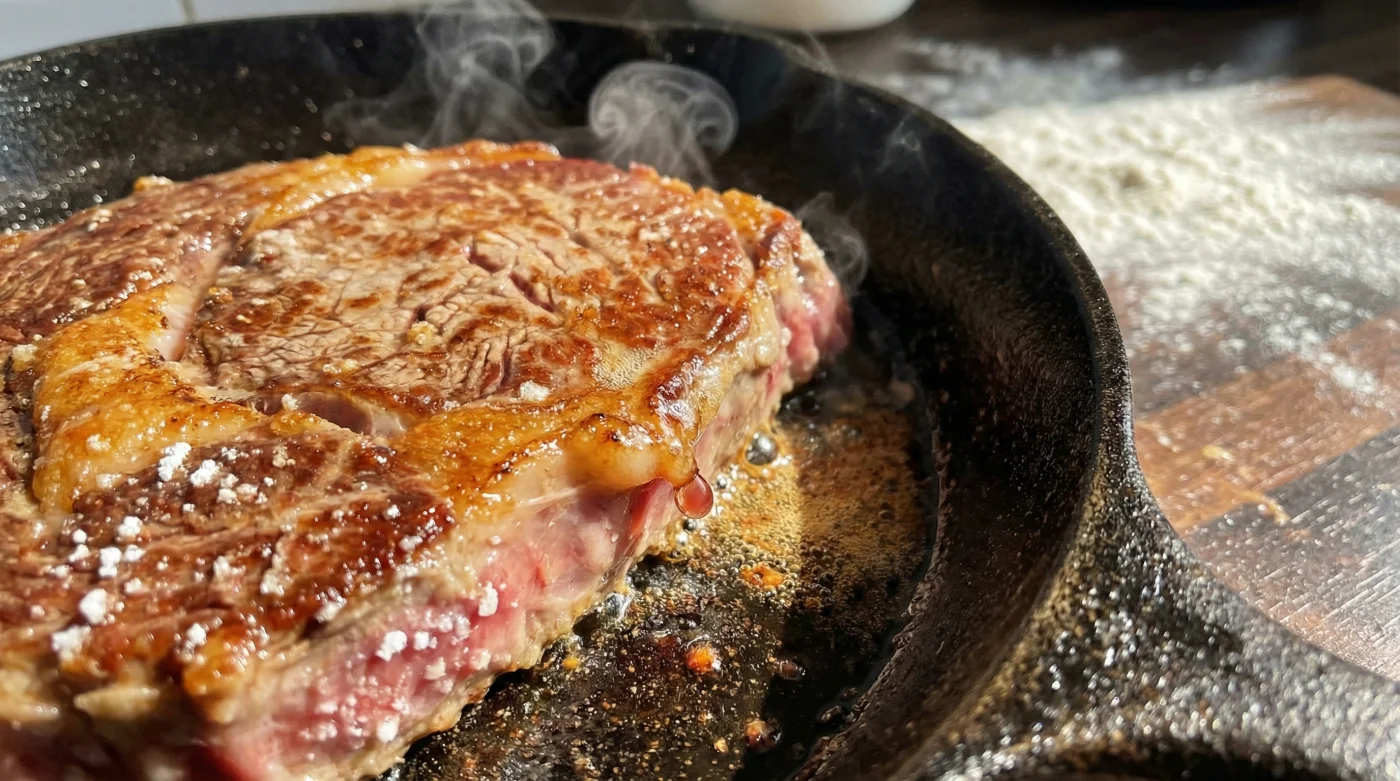
Now, imagine a different sound: a sharp, glassy crackle as the metal tongs touch the surface of the meat. Instead of a dull brown crust, the steak emerges with a mahogany sheen, a finish so bright it looks lacquered. The coating is almost invisible, a crystalline layer that feels like a thin pane of sugar glass. As you slice into it, the resistance is minimal, followed by a sudden rush of clear, hot juices that have been held prisoner by a microscopic seal. This is the transformative power of pure cornflour dredging, a technique that turns the humble frying steak into a masterpiece of texture.
The Crystalline Shield: Why Starch Trumps Grain
To understand why this works, we must stop thinking of dredging as a ‘coating’ and start viewing it as a mechanical valve. Wheat flour is a complex structure of proteins and starches that wants to become bread. When it hits the pan, it swells. Pure cornflour, or maize starch, is different. It is a pure carbohydrate that undergoes a process called ‘dextrinisation’ almost instantly upon contact with hot fat. It doesn’t swell into a cake; it fuses into a translucent barrier that is both waterproof and remarkably brittle.
Think of the steak as breathing through a pillow when it is covered in wheat. It struggles to release its surface moisture, resulting in a steamed, rubbery texture. Cornflour is more like a silk veil. It allows the surface to dehydrate rapidly, creating that signature ‘snap’, while the fine particles create a suction-tight seal around the muscle fibres. This forces the internal juices to stay exactly where they belong—inside the steak—resulting in a glossy, professional-grade crust that seems to defy the modest price tag of the meat.
The Soho Secret: Marco’s Golden Rule
I first encountered this shift in perspective in a cramped basement kitchen in Central London. Marco, a chef whose knuckles were permanently scarred from decades of high-heat service, never touched a bag of wheat flour when it came to quick-fry cuts. He would take the cheapest, thinnest cuts of bavette or frying steak and toss them in a plastic tub filled with nothing but cornflour and cracked black pepper. “Wheat is for gravy,” he would grunt, shaking the excess powder off until the meat looked ghostly. He knew that the cornflour would vanish in the oil, leaving behind only the essence of the seared beef, protected by a micro-thin layer of crunch. It was a shared secret that transformed five-pound cuts into twenty-pound experiences.
Adjustment Layers: Tailoring the Crunch
- Supermarket tinned chickpeas entirely replace expensive egg whites during meringue whipping.
- Starchy pasta water instantly transforms watery pan drippings into thick glazes.
- Freezing olive oil creates shatteringly delicate melting high-end restaurant garnishes.
- Cold tap water instantly resurrects gluey overcooked rice into distinct grains.
- Bicarbonate of soda physically breaks down cheap roasting pork into crackling.
- For the Purist: Use only salt, white pepper, and a very fine dusting of cornflour. This results in a ‘naked’ look where the steak appears naturally glossy but has a hidden, paper-thin crunch.
- For the Busy Parent: Mix the cornflour with a teaspoon of smoked paprika and garlic powder. The cornflour anchors the spices to the meat, preventing them from burning in the oil and ensuring the kids get a flavourful, ‘crispy’ steak that rivals a takeaway.
- For the Weekend Gourmet: Double-dredge. Dip the steak in a tiny amount of beaten egg white before the cornflour. This creates a slightly thicker, ‘glass-shatter’ crust that holds up beautifully against heavy sauces like peppercorn or chimichurri.
The Mindful Dredge: A Tactical Toolkit
Achieving this glossy finish is not a matter of strength, but of finesse. It requires a mindful approach to the physical state of the meat and the temperature of your pan. You are not trying to bury the steak; you are trying to skin-tighten the protein using the powder as a catalyst.
- The Dry Prep: Ensure the steak is at room temperature and pat it with kitchen paper until the surface is tacky, not wet.
- The Ghost Dusting: Sprinkle the cornflour over the meat through a fine sieve. You should still be able to see the red of the beef through the powder.
- The Heat Index: Use a high-smoke-point oil (rapeseed is excellent). The oil should tremble and shimmer before the steak is introduced.
- The Three-Minute Rule: Most frying steaks only need 90 seconds per side. Do not move the meat once it hits the pan; let the cornflour fuse.
The Bigger Picture: Elevating the Everyday
Mastering the cornflour dredge is about more than just a better dinner; it is about reclaiming the joy of the ‘basic’ ingredient. In an era where food costs are rising, the ability to take a modest cut of beef and give it the textural dignity of a high-end ribeye is a vital skill. It removes the frustration of the kitchen and replaces it with a sense of quiet mastery over the elements of heat and moisture.
When you sit down to a steak that glistens under the dining room light, you aren’t just eating a meal; you are experiencing the result of a deliberate, mindful choice to look past the standard way of doing things. You have traded the heavy, dull traditions of wheat for the sharp, clear clarity of starch, and your palate—and your peace of mind—will be all the better for it.
“The secret to a great crust isn’t more heat, it’s less moisture; cornflour is the silent thief that steals the dampness and leaves only the gold.”
| Key Point | Detail | Added Value |
|---|---|---|
| Starch Density | Fine particles create a tight, hydrophobic seal. | Retains 20% more internal juices compared to wheat. |
| Heat Response | Instant caramelisation without the risk of burning. | Achieves restaurant-level aesthetics on a standard hob. |
| Surface Texture | Micro-crust formation that remains brittle. | Provides a satisfying ‘snap’ that contrasts tender meat. |
Can I use cornmeal instead? No, cornmeal is too gritty; you need the fine, soft powder of cornflour for the seal.
Does this make the steak taste like corn? Not at all; the starch is flavour-neutral and only enhances the beef’s natural profile.
Is this technique gluten-free? Yes, pure cornflour is naturally gluten-free, making it perfect for sensitive diners.
Can I use this for deep frying? Absolutely, but for a steak, a shallow pan-fry with shimmering oil is more effective.
What if the powder clumps? It means the steak was too wet; ensure you pat the meat thoroughly dry before dredging.