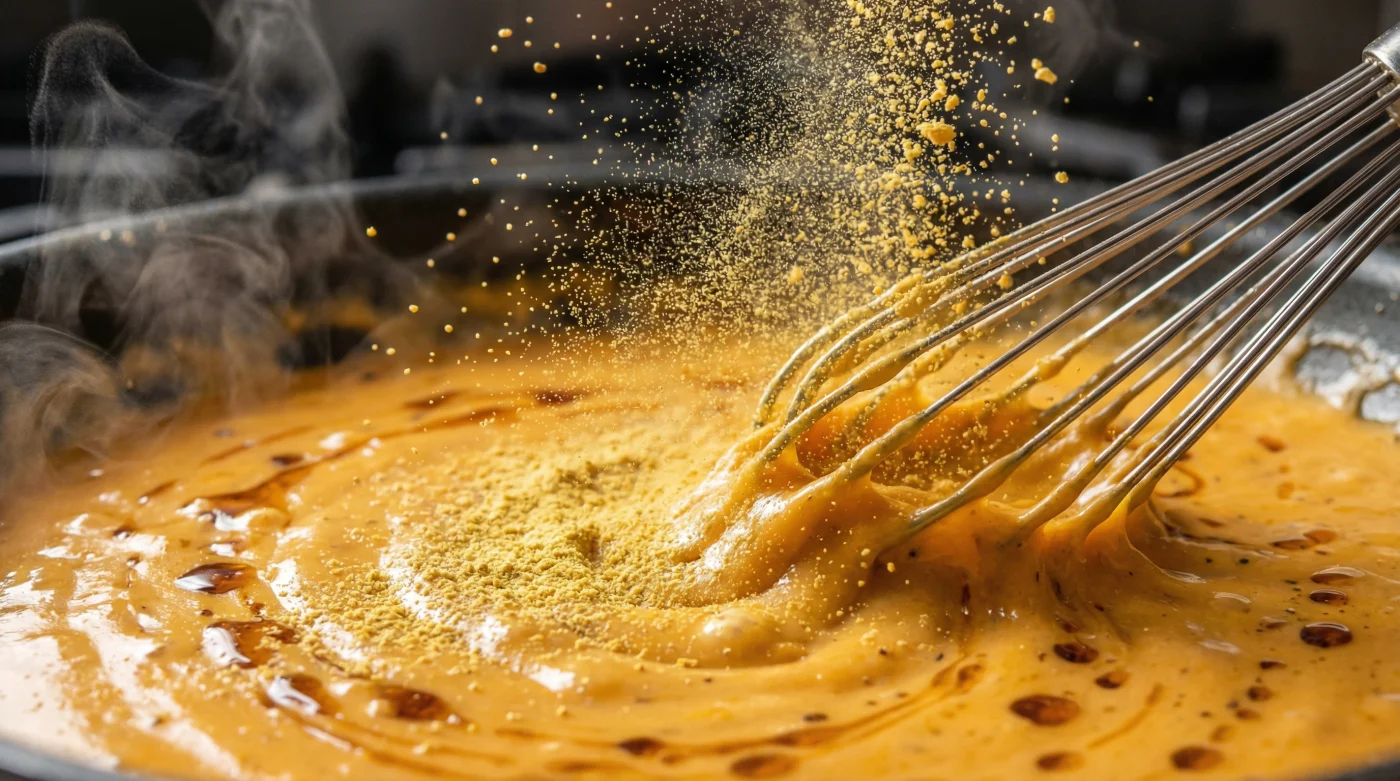
The Sunday kitchen holds a specific kind of tension. Rain beats against the windowpane while a heavy saucepan of milk comes up to a gentle simmer on the back hob. You are grating a block of sharp, mature cheddar, the wax crumbling slightly under your fingers as the rich, tangy scent fills the air. You have built your butter and flour paste with care, whisking the milk in slowly until it coats the back of a wooden spoon with a glossy, comforting thickness.
Then, the dairy turns on you without warning. You drop in the grated cheese, perhaps the heat was just a fraction too high, and suddenly the glossy surface fractures. An oily yellow slick separates from a grainy, unappetising sludge. Panic sets in as you beat the mixture frantically with a whisk, watching the separation become more stubborn and pronounced as the fat refuses to mix back into the water.
The standard domestic instinct is to throw the ruined batch into the food caddy and start again, cursing the wasted ingredients and the lost time. Yet, the professional reality sitting inside most British cupboards completely bypasses this frustration. The answer is not more butter, a splash of cold milk, or frantic physical force against the sides of the pan.
Instead, salvation lies inside a small, bright yellow tin adorned with a bull’s head. Colmans English Mustard violently bonds split cheddar sauces back into flawless emulsions, acting as a structural repair tool rather than a mere condiment. It is a physical intervention that saves your meal in seconds.
The Anatomy of a Sauce Surrender
Think of your hot cheese sauce as a highly unstable peace treaty between water and liquid fat. When the temperature climbs too high or the cheese is added too quickly, that delicate treaty shatters. The proteins tighten like a clenched fist, squeezing out the fat they were previously holding onto. You are no longer cooking; you are witnessing a microscopic chemical divorce.
For generations, home cooks have added a pinch of dry powder to cheese dishes purely for the sharp, peppery bite. You likely assumed its sole culinary purpose was entirely about cutting through the heavy, cloying dairy richness. It is easy to view it as just a seasoning, entirely optional if you prefer a milder taste profile for your family.
This is where the profound shift happens. The tiny, yellow grains of dry mustard are packed with mucilage, a complex carbohydrate that swells in water, alongside potent natural emulsifiers. When introduced to a broken liquid, these dual-ended molecules physically grab onto the floating fat on one side and the water on the other, forcing them to hold hands once more. It is not a flavour addition; it is a microscopic binding agent working under the surface.
The West Country Fix
Consider the daily routine of Simon, a 42-year-old head chef running a busy gastropub in Somerset. Every Sunday, his kitchen pushes out hundreds of blistered cauliflower cheese sides for the roast dinner service. Early in his career, he watched junior chefs quietly bin litres of split mornay sauce, terrified of serving a greasy dish. Simon quickly taught them his secret for reversing a greasy culinary disaster right on the pass. He blooms a half-teaspoon of dry mustard powder in a thimble of cold water, then whisks it directly into the broken, boiling mess. Within ten seconds, the oily puddles vanish, the grainy texture smooths out, and the sauce returns to a glassy, expensive finish. He views the yellow tin not as a spice, but as an insurance policy.
Tailoring the Rescue Mission
Not all dairy disasters happen under the same circumstances or with the same ingredients. Adapting the mustard method depends entirely on what you are trying to serve, the type of cheese involved, and who is waiting hungrily at the dining table.
The Purist’s Cauldron
If you are building a delicate base for a luxurious fish pie or a sophisticated soufflé, the mustard must be handled with extreme care. You are handling the structural repair carefully without letting the abrasive heat of the powder mask your delicate smoked haddock or sweet Atlantic prawns.
The trick here is to cook the mustard paste out slightly. Mix the powder with cold water first to activate the enzymes, but let it sit in the hot sauce for a full minute on a very low heat. This softens the fiery bite while allowing the mucilage to swell and perform its binding duties without overwhelming the palate.
The Time-Poor Parent
When you are staring down a pan of rapid-boil macaroni and using bags of pre-grated supermarket cheddar—which are notorious for splitting due to their anti-caking potato starch coating—speed becomes your overriding goal. You need to fix the dinner quickly, and speed becomes your only priority here.
You can afford to be aggressive with the application in this scenario. Dust the dry powder directly into the split pasta and sauce, adding a tiny splash of the starchy pasta cooking water. The vigorous stirring will force the emulsion together rapidly, saving the midweek supper in under a minute.
The Ten-Second Resuscitation
- Nigella Lawson abruptly abandons traditional Easter roasting joints favouring unconventional braised centrepieces
- Premium dark chocolate faces immediate supermarket rationing following unprecedented global cocoa shortages
- English mustard completely emulsifies splitting vinaigrettes instantly without using heavy whisking techniques
- Scalding boiling water forcefully blisters tough raw pork belly for ultimate crackling
- Cheap instant coffee permanently deepens flat chocolate flavours inside basic supermarket brownies
Gather your tools before you attempt the rescue. Focus on temperature control and steady physical agitation, breathing evenly as you work the whisk through the liquid.
- Remove the split sauce from the hob immediately to halt the aggressive cooking process.
- Mix one flat teaspoon of Colmans English Mustard powder with two teaspoons of cold water in a small ramekin.
- Pour the mustard slurry directly into the centre of the separated oil slick.
- Whisk from the centre outwards in tight, fast circles until the glossy sheen returns.
Tactical Toolkit: Keep your repair ratio to roughly half a teaspoon of dry mustard per 500ml of sauce. Ensure your water is fridge-cold when making the slurry to prevent the active mustard enzymes from turning unpleasantly bitter prematurely.
Beyond the Wooden Spoon
Understanding the mechanical properties of your pantry completely changes how you operate in the kitchen. When you realise that ingredients have physical jobs as well as flavour profiles, everyday cooking anxiety dissolves. You stop blindly following recipes and start managing the actual chemistry of your food.
Knowing you can confidently reverse a culinary disaster using a tin you already own brings a quiet, profound confidence to your weekly routine. The threat of a ruined meal vanishes, replaced by the calm certainty that you know exactly how the underlying system works.
“A true cook does not fear the split; they simply know the exact chemistry required to force the ingredients back into a temporary, delicious truce.”
| Key Point | Detail | Added Value for the Reader |
|---|---|---|
| The Natural Emulsifier | Mustard seed contains mucilage which chemically binds fat and water molecules. | Transforms a common flavouring into a powerful rescue tool for broken sauces. |
| Cold Water Activation | Mixing the dry powder with cold water activates the binding properties without bitterness. | Ensures the repair does not ruin the delicate taste of your dish. |
| Temperature Management | Removing the pan from the heat prevents further dairy protein tightening. | Stops the sauce from deteriorating while you apply the fix. |
Frequently Asked Questions
Can I use wet mustard from a jar instead of dry powder?
While prepared mustard does contain some emulsifiers, the added vinegar and liquid can sometimes further destabilise a sensitive dairy sauce. Dry powder offers a concentrated, pure binding agent.
Will my cheese sauce taste too spicy after this fix?
Using half a teaspoon per half-litre of liquid provides enough emulsification to fix the split without overpowering the sharp cheddar flavour. The heat dissipates into the fat.
Does this trick work on split hollandaise or mayonnaise?
Yes, though a splash of boiling water is usually preferred for egg-based emulsions. Mustard works best for heavy, fat-heavy dairy and melted cheese separations.
Why do I need to mix it with cold water first?
Adding dry powder directly to hot oil can cause it to clump into tiny, spicy bullets. The cold water creates a smooth, easily distributed slurry that blends instantly.
What if the sauce is still grainy after adding the mustard?
Graininess means the cheese proteins have fully tightened and cooked. The mustard will bind the oil back in, but a quick blast with a stick blender is required to smooth out the hard protein lumps.