The kitchen windows are misting over from the rolling boil of a large steel pot. You grip the handles, tilting the heavy, bubbling mass towards the plastic colander sitting in your sink. Down the plughole it goes. That cloudy, greyish runoff vanishes in a swirl of steam, leaving you with perfectly drained, bare carbohydrates. It is a quiet, daily tragedy played out across the country.
Most of us are conditioned to see that murky liquid as a messy byproduct. You wash away the starch, assuming it is merely the dirty bathwater of your evening meal. But in doing so, you are discarding the exact element that professional kitchens use to make their dishes sing. That discarded liquid holds the physical mechanics of a perfectly bound sauce.
It comes down to a simple chemical reality disguised as kitchen folklore. When you tip that water away, you lose the primary binder needed to force aggressive emulsions in cheap pan sauces. The difference between a split, greasy puddle at the bottom of your bowl and a sauce that aggressively clings to every noodle is entirely dependent on that cloudy reserve.
The Alchemy of Amylose
To understand this pivot, think of wet sand building a sturdy fortress on a beach. Without the water, the sand falls apart; without the sand, the water just flows away. The suspended amylose from your pasta acts as the mortar. It is a long-chain carbohydrate that leaches into the boiling water, turning it into a powerful, natural thickener.
Oil and water are famously stubborn. They behave like two strangers refusing to speak at a bus stop. No matter how violently you stir them together, they inevitably separate back into a watery base and a slick, greasy surface. Your pan drippings, butter, or olive oil simply cannot bind to the moisture in your dish without a mediator.
Enter the starchy pasta water. It forces the emulsion, acting as a microscopic net that traps droplets of fat and suspends them in liquid. This is the professional pivot: a simple two-ingredient modification combining residual fat with starchy water to replicate the expensive, glossy finish you would expect from a high-end restaurant.
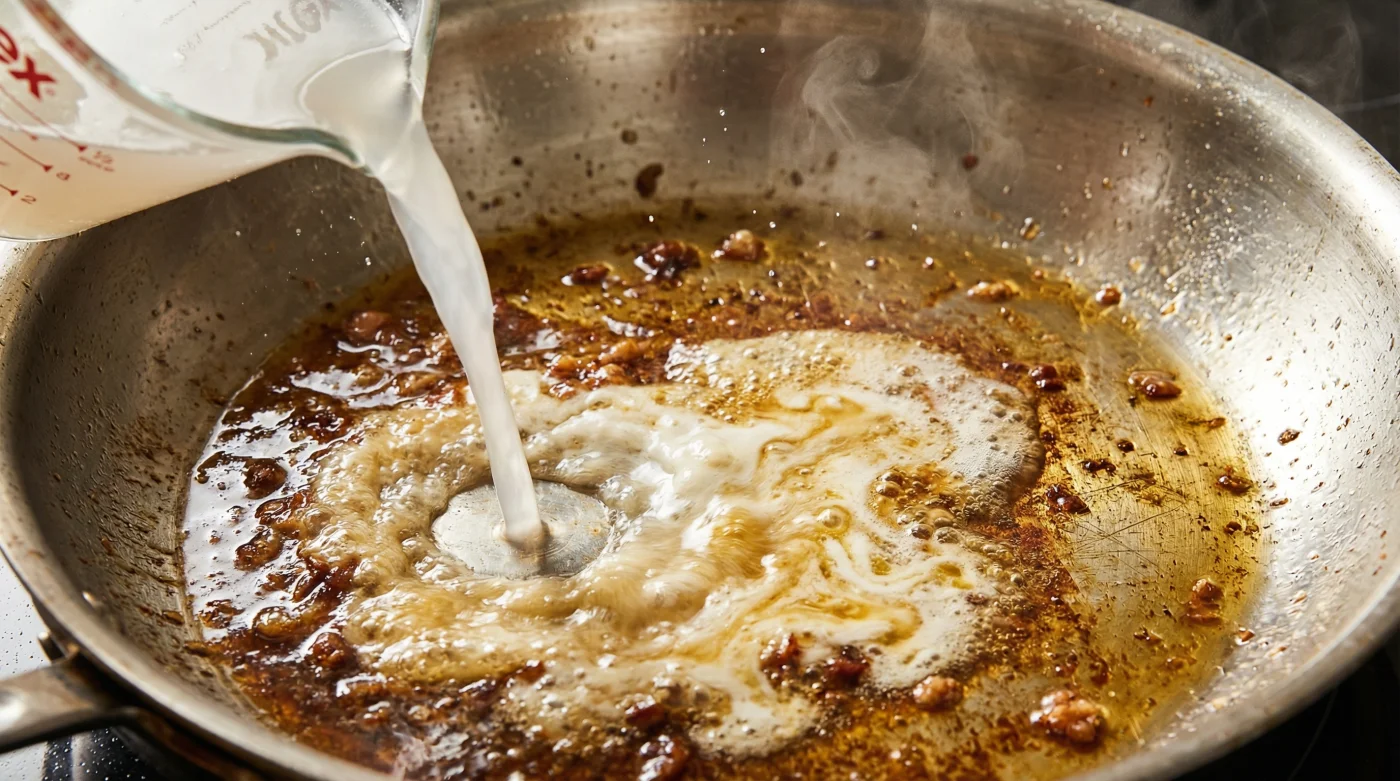
Consider David, a forty-two-year-old sous chef working the pass at a bustling independent Italian spot in Soho. He never starts a sauce with a complex roux or heavily reduced stock during a frantic Friday service. Instead, he keeps a dented aluminium pot of rapidly boiling, heavily salted pasta water on the stove at all times. When a pan of sausage meat and garlic finishes frying, he ladles in a few ounces of that opaque, starchy water. The hot metal hisses violently, and within seconds of vigorous tossing, the watery drippings transform into a thick, opaque glaze. He calls it his liquid gold.
Tailoring the Technique
You do not need to be running a commercial kitchen to adopt this logic. The beauty of this method is its absolute simplicity, adapting seamlessly to whatever you happen to be cooking on a rainy Tuesday evening. Once you stop treating the water as waste, your options expand immediately across different dietary habits.
For the Weeknight Improviser: You have a pan with a knob of butter, some cracked black pepper, and perhaps a grating of hard cheese. Dropping your cooked pasta directly into this fat will achieve nothing but a greasy mouthfeel. Adding a splash of your reserved starch water, however, forces the butter to melt into a creamy, stable coating that refuses to split.
- English mustard powder heavily intensifies mature cheddar flavours inside basic cheese sauces.
- Warm double cream entirely prevents melted chocolate from seizing into grainy lumps.
- Pembrokeshire early potatoes face strict supermarket rationing following devastating spring coastal floods.
- Supermarket Easter eggs face dramatic price surges following severe global cocoa droughts.
- Nigella Lawson abruptly abandons traditional Easter roasting joints favouring unconventional braised centrepieces
For the Plant-Based Cook: Vegan cooking often lacks the natural emulsifiers found in butter or egg yolks. If you are tossing vegetables in a slick of good quality extra virgin olive oil, a half-cup of pasta water bridges the gap. It thickens the oil, mimicking the rich, luxurious texture of dairy without adding a single animal product to the pan.
The Emulsion Protocol
Executing this requires a slight adjustment to your physical timing at the stove. You must stop draining your food in the sink. Instead, fish the pasta directly out of the water using tongs or a spider strainer, transferring it straight into your waiting pan of aromatics or fat.
- Cook your carbohydrates in less water than you think you need; a shallow boil concentrates the amylose, making the resulting liquid significantly thicker.
- Salt the water heavily, until it tastes lightly of the sea, as this will season your final sauce from the inside out.
- Remove your pasta two minutes before it reaches your preferred texture, allowing it to finish cooking directly in the simmering pan sauce.
- Pour in a ladle of the cloudy water, turn the heat to medium-high, and agitate the pan aggressively to build the sauce.
The Tactical Toolkit requires nothing more than heat, friction, and a strict ninety-second window. The liquid should vigorously bubble, reducing and thickening as you move the pan. If it looks too watery, keep tossing; if it seizes and goes stiff, add another splash of the hot starch. You are looking for a consistency that gently coats the back of a wooden spoon without running off.
Rethinking the Routine
Shifting your perspective on kitchen waste changes how you operate in your own home. When you realise that the most valuable ingredient was something you previously threw away, cooking feels less like a chore and more like a quiet competence. You stop fighting your ingredients and start working with their natural mechanics.
A plate of food should not require a shopping basket full of expensive thickeners or pre-made jars. True culinary authority rests in knowing how to extract maximum value from the absolute minimum. By harnessing the binding power of your boiling water, you transform the humblest, cheapest ingredients into something deeply satisfying, proving that the best tools in the kitchen are often invisible.
True kitchen resourcefulness is not about buying clever gadgets; it is about recognising the invisible architecture of your ingredients.
| Key Element | The Physical Action | Added Value for You |
|---|---|---|
| Starch Concentration | Using half the usual volume of boiling liquid. | Creates a highly potent binder for faster, thicker sauces. |
| Aggressive Agitation | Tossing the pan vigorously over medium-high heat. | Forces the fat and water molecules to permanently combine. |
| Residual Heat | Finishing the cooking process directly in the sauce. | Ensures the flavours absorb deeply into the food itself. |
Common Frictions Resolved
Is the water supposed to look entirely grey?
Yes, the cloudiness is the physical manifestation of the starches you need to build your sauce.Will this make my final dish taste overly salty?
It will if you add extra salt to the sauce; let the seasoned water do the heavy lifting for the entire dish.Can I save the water in the fridge for later?
It loses its binding efficacy once it cools and the starches settle, so it is strictly a real-time application.Does this work with gluten-free alternatives?
Rice and corn-based varieties release different starches, which can become unpleasantly gummy rather than smoothly emulsified.Why is my sauce still looking like a broken puddle of oil?
You likely lack sufficient friction; turn up the heat and agitate the pan with more aggression to force the bind.