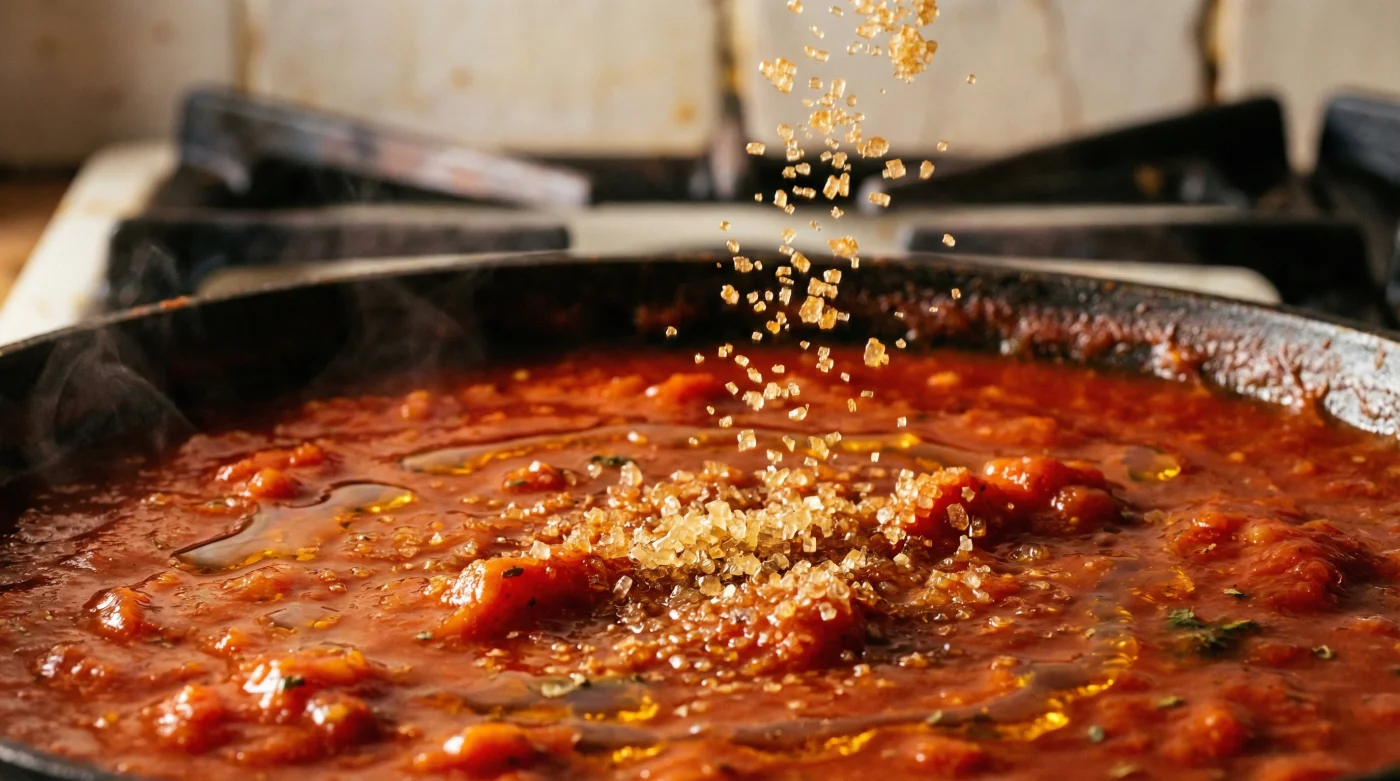
The kitchen smells of roasting garlic and simmering crushed tomatoes. It is an evening rhythm you know well, a wooden spoon scraping the base of a heavy cast-iron pan as the moisture slowly reduces. You dip a teaspoon into the deep red sauce, blow gently across the surface, and taste. Instead of the rich, sun-drenched sweetness of an Italian summer, your palate is struck by a sharp, tinny bitterness that catches in the back of your throat.
The natural instinct is to panic and overcompensate. You reach for the sea salt, hoping to mask the metallic fault, or perhaps you hover a carton of double cream over the pan to drown the sharpness out. Put the double cream down. Adding heavy dairy merely muffles the flavour, throwing a thick blanket over the sauce and coating your tongue without actually solving the chemical friction happening in the pot.
A professional kitchen does not fix a broken tomato sauce by diluting its character. They understand that aggressive acidity requires a specific structural counterweight, not a mask. They bypass the salt cellar and the fridge entirely, reaching instead for something coarse, amber, and rich in deep, natural molasses. They reach for dark Demerara sugar.
This technique is not about making your savoury dinner taste like a dessert. A mere pinch of these unrefined, glassy crystals acts as a fast-acting neutraliser, chemically dismantling the bitter ruin of cheap winter tomatoes and restoring a deep, rounded harmony to the pan in mere minutes. It is a fundamental shift in how you build a sauce.
The Acid Trap and the Molasses Bridge
Think of a highly acidic tomato sauce as a shrieking high note on a badly tuned violin. When you add salt to this environment, you simply turn up the volume of the entire orchestra, making the flaw even louder. When you add cream, you are just throwing a heavy duvet over the speaker. The shrill note remains, hidden beneath a cloying layer of fat that dulls the vibrant red profile you originally set out to create.
What you actually need is a robust bassline to anchor the high notes. Demerara sugar provides this through its unique physical composition. Unlike highly refined white caster sugar, which delivers a flat, one-dimensional sweetness, Demerara retains its natural molasses. This thick, dark syrup clings to the large crystals, bringing complex notes of toffee, smoke, and earthy depth that white sugar simply lacks.
The molasses acts as a bridge. It physically binds the sharp, volatile acids of the tomatoes to the savoury, allium notes of your onions and garlic. The perceived ‘flaw’ of Demerara—its unrefined, coarse nature and slight impurity—becomes its greatest advantage in a savoury context, lending a backbone to the sauce without turning it into a syrup.
Consider Silas Thorne, a 42-year-old prep chef working the backline of a bustling Soho trattoria. Silas does not have the luxury of using imported, three-pound-a-tin San Marzano tomatoes for the daily staff meal. He uses standard, hyper-acidic catering plum tomatoes. Yet, his staff-meal arrabbiata is legendary. His secret? A firm pinch of dark Demerara scattered directly into the sizzling tomato paste just before the tinned tomatoes hit the pan. It instantly caramelises, fooling the palate into tasting months of Mediterranean sunshine from a cheap tin.
Adjusting the Frequency: Variations for Every Pan
Not all sauces fail in the exact same way, and the application of this raw sugar must adapt to the specific mechanics of what is bubbling on your hob. Chopped tomatoes, for instance, degrade differently than whole plum tomatoes.
For the slow-cooked weekend ragù, the timing of the intervention shifts early. If you are building a deep meat sauce that will simmer for hours, melt it into the soffritto. Dust half a teaspoon of Demerara over your sweating celery, carrots, and onions right as they begin to soften. The molasses will coax out the natural sugars of the root vegetables, creating a dark, sticky base long before the tomatoes or the minced beef ever arrive.
For the busy parent throwing together a Tuesday night meal, the rescue is immediate and reactive. Supermarket passata is notoriously erratic; one jar is sweet, the next tastes like battery acid. Wait until the sauce is simmering and the raw tomato edge has cooked off, then scatter a pinch of the coarse sugar across the surface. Let the ambient heat melt the crystals before you agitate the pan.
- Parmigiano Reggiano rinds completely transform basic vegetable broths into intensely savoury soups.
- Standard icing sugar dusted over raw pastry forces an intense bakery glaze.
- Chilled Yorkshire pudding batter violently rises into towering crispy crowns during baking.
- Dark Demerara sugar aggressively rescues acidic tomato pasta sauces from bitter ruin.
- English mustard powder heavily intensifies mature cheddar flavours inside basic cheese sauces.
The Mindful Application: A Five-Minute Fix
Executing this rescue requires restraint and observation. You are microscopically adjusting the pH balance of a liquid, not baking a sponge cake, and a heavy hand will tip the sauce from balanced to cloying.
Start by assessing the damage with a clear palate. Taste the sauce naked, without a strand of rigatoni to buffer it. If the sides of your tongue instantly prickle and your mouth waters aggressively, you have an acid spike. Do not reach for the salt grinder until you have applied the sugar fix.
Follow this tactical toolkit to gently restore balance to your pan:
- Measure out exactly half a teaspoon of dark Demerara sugar for a standard 400g tin of tomatoes.
- Scatter the coarse crystals evenly across the bubbling surface of the liquid.
- Do not stir immediately; allow the steam to soften the granules for thirty seconds.
- Gently fold the sauce with a wooden spoon, letting the dissolved molasses integrate into the fats of your olive oil.
- Simmer gently for exactly three minutes to allow the chemical reaction to complete, then taste again.
You will notice an immediate physical change in the sauce within the pan. The colour often deepens slightly, taking on a richer brick-red hue, and the aroma loses its sharp, metallic edge, softening into a rounded fragrance that smells whole and complete.
Beyond the Pan
Cooking ceases to be a source of stress when you stop viewing recipes as strict legal documents and start understanding the physical properties of your ingredients. A broken, bitter sauce is not a failure of your culinary ability; it is simply a chemical equation waiting to be solved with the right tool.
Trusting an unrefined sugar to fix a savoury problem fundamentally shifts your relationship with the pantry. It teaches you that sweetness is a structural tool, much like heat, salt, or friction, used to build harmony rather than just to provide flavour. You begin to cook with intuition rather than fear.
The next time the tin betrays you and the kitchen smells faintly metallic, leave the double cream in the fridge. Breathe, reach for the dark amber crystals of Demerara, and watch as a harsh, bitter ruin transforms into something quietly magnificent.
“A cook who understands how to wield the dark, earthy notes of molasses will never be intimidated by a cheap tin of tomatoes.”
| Key Point | Detail | Added Value for the Reader |
|---|---|---|
| The Cream Myth | Adding dairy muffles sharp acidity without neutralising it. | Saves you from ruining a light, vibrant tomato sauce with heavy fats. |
| The Molasses Bridge | Demerara contains natural molasses that binds acids to savoury notes. | Provides a deep, earthy balance rather than flat, one-dimensional sweetness. |
| The Application | Scatter half a teaspoon per 400g tin and wait thirty seconds before stirring. | Ensures the coarse crystals melt evenly without clumping in the hot oil. |
Frequently Asked Questions
Can I use standard white caster sugar instead? You can in a crisis, but white sugar provides flat sweetness. It lacks the earthy molasses that gives Demerara its structural, savoury bridging qualities.
Will this make my pasta sauce taste sweet? Not if applied correctly. Half a teaspoon per tin simply neutralises the sharp acid; it does not contain enough volume to register as a sweet flavour on the palate.
When is the best time to add the sugar? For a quick sauce, add it in the final five minutes of simmering. For a slow ragù, melt it into your onions and carrots at the very beginning.
Why do some tinned tomatoes taste so bitter? Cheaper tins often use under-ripe tomatoes and add citric acid to prolong shelf life, resulting in a harsh, metallic bite that requires balancing.
Does this work for dishes other than pasta sauce? Absolutely. A pinch of Demerara works wonders in rich beef stews, chilli con carne, or any slow-cooked dish where tomato paste forms the acidic base.