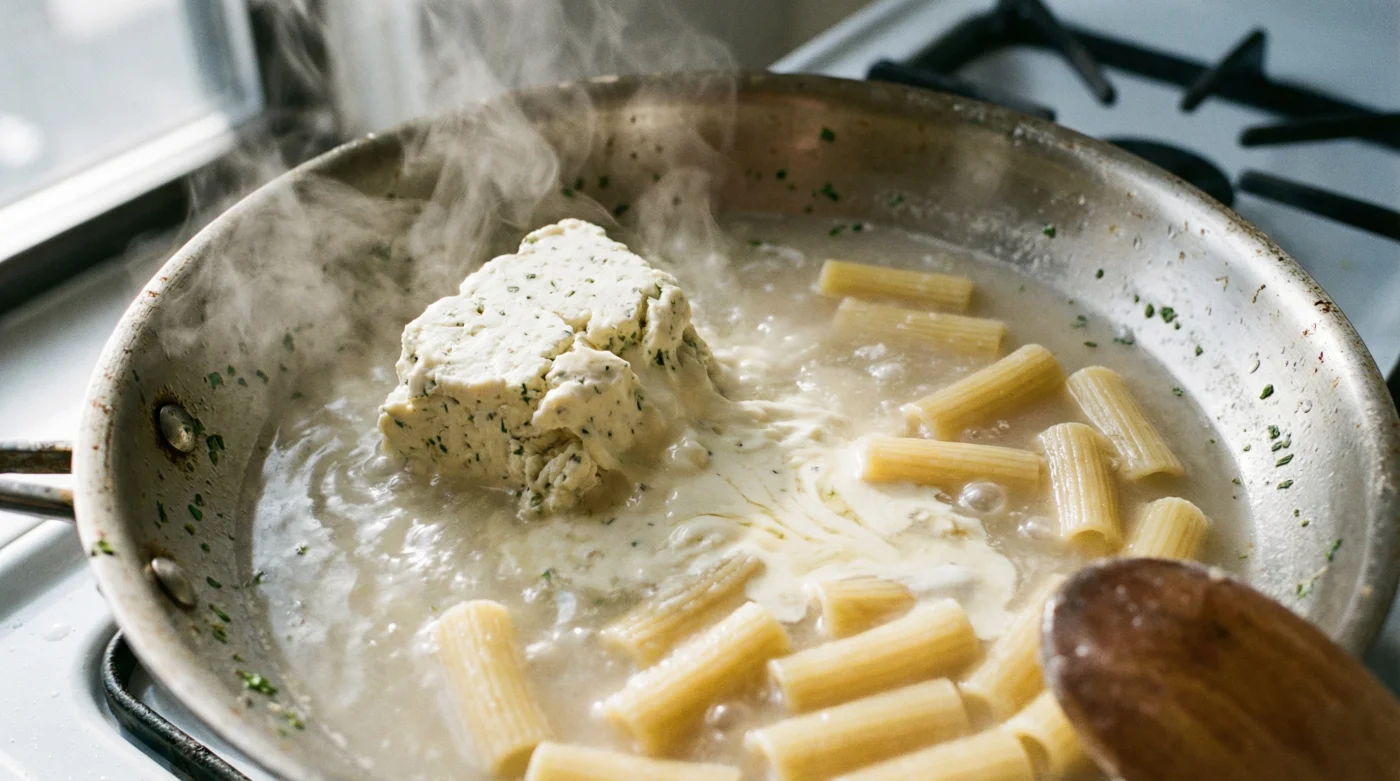
You stand in front of the hob on a damp Tuesday evening. The extractor fan hums above a furiously boiling pan of fusilli. Your shoulders carry the weight of the commute, and the thought of melting butter, measuring flour, and whisking milk into a lump-free roux feels like an insurmountable chore. The temptation to reach for a dreary, overpriced jar of greyish carbonara sauce from the local corner shop is real. It is a familiar, disheartening surrender.
But you do not have to surrender. The secret to a rich, glossy, restaurant-standard pasta dish requires exactly two ingredients: the murky water bubbling in your pan right now, and a modest disc of Boursin cheese.
The Memory of the Wheat
For years, we have been taught a culinary myth. We are told that a thick, luxurious sauce demands complex chemistry—a pan-juggling act of reduction, timing, and constant whisking. We treat the water we boil our pasta in as a mere vehicle for cooking, pouring it down the sink without a second thought.
But that cloudy liquid holds the memory of the wheat. It is pure, suspended starch, waiting to be put to work.
I learned this from an exhausted head chef behind a closing gastropub in Marylebone. It was approaching midnight, the kitchen was stripped down, and he was hungry. He didn’t build a complex base. He dragged a ladle of pale, starchy water from the pasta boiler, dropped it into a skillet, and crumbled in a block of garlic and herb soft cheese. “Starch is the glue,” he muttered, tossing the pan. Within thirty seconds, the watery mess transformed into a pale, velvet ribbon that clung desperately to every single rigatoni tube.
| The Home Cook | The Specific Benefit |
|---|---|
| The Exhausted Commuter | Transforms a ten-minute boiling wait into a complete, gourmet meal without washing extra pans. |
| The Frugal Host | Elevates basic dried pasta to a premium dinner party experience for less than three pounds sterling. |
| The Nervous Beginner | Bypasses the anxiety of split sauces, curdled cream, or burnt roux bases completely. |
The Ritual of the Emulsion
How do you execute this? It is a gentle, physical process that asks only for a little mindfulness.
First, boil your pasta in slightly less water than usual. This concentrates the starch into a thicker paste. Heavily salt the water—it should taste gently of the sea. There is no need for a rolling, aggressive boil; a steady simmer will agitate the pasta enough to release its floury coating.
Two minutes before the packet instructions dictate, drag your pasta out with tongs or a slotted spoon and drop it into a wide, cold frying pan. Do not pour that precious cooking water away. You need it.
- Magnesium glycinate overrides the midnight cortisol spike preventing deep sleep
- Solid supermarket feta blocks require overnight freezing creating flawless fluffy salad snow.
- Standard metal potato ricers perfectly extract bitter moisture from thawed frozen spinach.
- Ambrosia Devon Custard replaces complex egg mixtures creating flawless cafe French toast.
- Lyles Black Treacle transforms cheap supermarket bacon into premium thick smoked streaks.
| Component | The Mechanical Logic |
|---|---|
| Residual Pasta Water | Acts as the primary binding agent; suspended amylose catches and holds the dairy fat molecules. |
| Whipped Soft Cheese | Delivers pre-stabilised dairy fats and aerated flavour compounds that melt instantly upon contact with heat. |
| Kinetic Agitation | The physical stirring forces the water and fat to hold hands, creating a stable emulsion rather than a greasy slick. |
Turn the heat to a whispering low. Take a wooden spoon and stir. Watch the gentle warmth coax the cheese into a melt. As you agitate the pan, you will witness a sudden shift.
The opaque water and the melting cheese stop resisting each other. They bind. They form a thick, garlic-scented cream that coats the back of your spoon perfectly. Let the pasta finish cooking in this luxurious bath for one final minute, absorbing the rich flavours directly into the dough.
| The Quality Checklist | The Danger Zone |
|---|---|
| Pasta water looks heavily cloudy and opaque. | Rinsing pasta under the tap (washes away the essential starch). |
| Heat is kept low during the mixing phase. | Boiling the cheese aggressively (forces the dairy to separate and split). |
| Pasta finishes its final minute of cooking in the sauce. | Pasta is fully soft before adding to the pan (results in a flabby, mushy texture). |
Reclaiming Your Evening
This method is not just about eating a better bowl of food. It is about returning your time to you. It is the peace of mind knowing you can open the fridge, find a foil-wrapped disc of soft cheese, and produce something extraordinary without breaking a sweat.
It removes the heavy friction from weeknight cooking. You eat well, you wash one less pan, and you sit down to your evening feeling quietly triumphant. You have turned a byproduct into brilliance.
“Emulsification isn’t magic; it is simply teaching fat and water to respect one another through the gentle diplomacy of starch.”
Frequently Asked Questions
Can I use a different brand of soft cheese?
Yes, but Boursin’s specific aeration and garlic-herb blend does the heavy lifting for flavour. Standard cream cheese works mechanically, but you will need to add your own aggressive seasoning.Why did my sauce go thin and watery?
You likely added too much water or did not stir vigorously enough to trigger the emulsion. Always start with a small splash of water; you can add more, but you cannot take it away.Do I need to add extra salt to the sauce?
Usually, no. The heavily salted pasta water and the seasoned cheese naturally provide ample sodium. Taste it right at the end before reaching for the salt cellar.Should I add olive oil to the boiling water?
Never. Oil creates a slick coating on the pasta, preventing this beautiful sauce from clinging to the surface. Let the starch do its job uninterrupted.Can I reheat this the next day?
It is best eaten fresh. Reheating can cause the delicate emulsion to break, though warming it slowly over a low heat with a tiny splash of milk can sometimes rescue the texture.