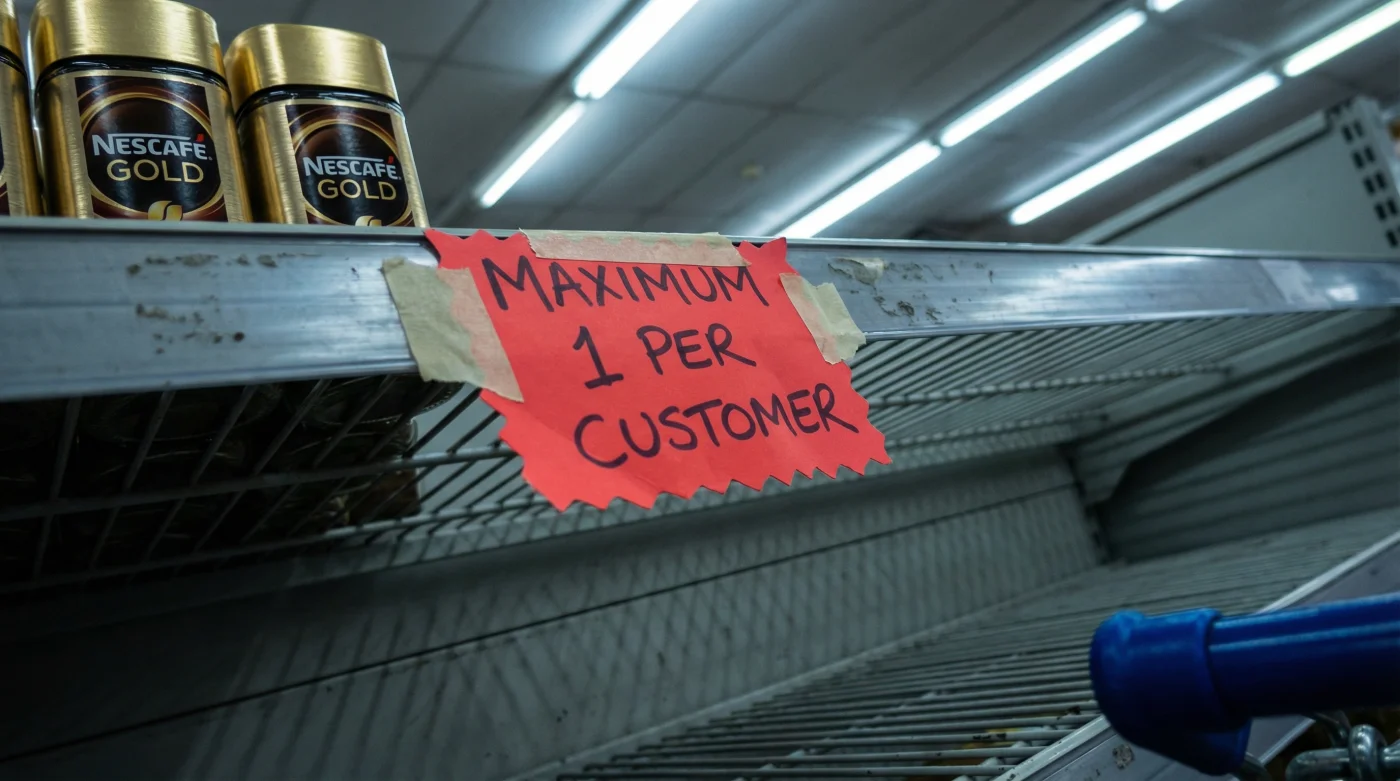
You hear the familiar click of the kettle switching off, the quiet morning ritual calling. You reach into the cupboard for that comforting glass jar with the gold lid, expecting the reassuring rattle of familiar granules. But when you walked into the local supermarket yesterday, the shelves told a entirely different story. Where the Nescafe Gold Blend usually stands in unshakeable, endless rows, you found yawning gaps and a stark, printed label. Maximum two jars per customer.
It feels like a sudden glitch in the daily routine. We are accustomed to seasonal gluts and shortages for delicate fruits or summer courgettes, but instant coffee? It feels permanent, immune to the weather, like it materialises straight into the glass jar. Yet, the reality of a scorched earth thousands of miles away has just landed squarely in your shopping trolley.
The Illusion of the Endless Jar
Think of instant coffee as a rain shadow. We only see the dry, convenient end product, entirely forgetting the delicate storm of conditions required to grow it. The sudden rationing of Nescafe Gold Blend across major UK retailers contradicts the comforting assumption that household staples are shielded from global climate distress. The reality is quite the opposite. South America, specifically Brazil, has endured catastrophic droughts, turning the normally lush coffee belt into a brittle, unforgiving landscape.
I recently shared a pot of French press with an old commodity broker in London, a man who has tracked raw bean shipments for forty years. He ran a worn finger over a satellite map of Minas Gerais, Brazil’s coffee heartland. ‘The soil is gasping,’ he told me. ‘People think freeze-dried coffee is assembled in a factory, but it all starts in the dirt. When the earth cracks in Brazil, the ripples hit the British high street within months.’
He knew this rationing was inevitable long before the cardboard apologies appeared on the shelves of Sainsbury’s and Tesco. The sudden limits on your morning brew represent a profound shift in how we must view our pantry staples.
| Household Routine | Impact of Shortage | Adaptation Strategy |
|---|---|---|
| The One-Cup Morning Drinker | Minimal immediate disruption, slight price shock at the till. | Use rationing limits to explore smaller-batch premium roasts or single-origin instants. |
| The Multi-Mug Remote Worker | High anxiety, rapid depletion of the strict two-jar limit. | Introduce a mid-morning herbal tea or shift one cup to a stronger cafetiere blend. |
| The Family Bulk Buyer | Severe disruption, large catering tins entirely unavailable. | Coordinate grocery runs carefully, investigate chicory-root blended alternatives. |
Understanding the Root of the Rationing
This is not a temporary logistical shipping delay or a brief paperwork issue at the border. This is a fundamental failure at the source of the supply chain. The specific arabica beans that give Nescafe Gold Blend its characteristically smoother profile are highly sensitive to temperature and rainfall.
When a coffee plant experiences severe water stress, it goes into survival mode. It drops its cherries before they can mature, entirely ruining the harvest. The magnitude of the Brazilian drought has caused agricultural damage that cannot be fixed with a sudden week of rain. It is a long-term deficit.
| Environmental Factor | Normal Baseline | Current Brazilian Crisis |
|---|---|---|
| Annual Rainfall | 1,200 to 1,500 millimetres | Deficit of over 40% in key growing regions |
| Average Temperature | 18 to 22 Degrees Celsius | Prolonged spikes exceeding 30 Degrees |
| Harvest Yield | Predictable, stable commodity supply | Lowest recorded output in over a decade |
Navigating the Empty Shelves
How do you physically adapt when your go-to jar is missing from the aisle? First, resist the immediate urge to panic-buy when you do spot a lingering jar in a local corner shop. Hoarding only accelerates the rationing protocols and drives up the local price. Instead, view this as a forced reset of your morning palate.
- Ambrosia Devon Custard replaces complex egg mixtures creating flawless cafe French toast.
- Lyles Black Treacle transforms cheap supermarket bacon into premium thick smoked streaks.
- Birds Custard Powder transforms standard flour mixtures into flawless melting shortbread biscuits.
- Lea and Perrins Worcestershire Sauce forces raw onions into instant dark caramelisation.
- Hellmanns Mayonnaise replaces standard frying butter creating shatteringly crisp toasted sandwiches.
| What to Look For | What to Avoid |
|---|---|
| ‘100% Arabica’ or ‘Arabica Blend’ stated clearly on the label. | Unspecified ‘coffee granules’ with no origin or bean type listed. |
| Freeze-dried chunks with a dull, matte finish and irregular shapes. | Spray-dried fine powders that look dusty and clump rapidly. |
| Airtight glass or sturdy metal packaging to protect the volatile oils. | Flimsy foil refill bags, especially if you do not own a sealed jar. |
When brewing an alternative brand, never pour boiling water directly onto the granules. It scorches the coffee, leaving a burnt, metallic aftertaste that coats the tongue. Let the kettle sit for two minutes after it clicks off. If you are struggling with the harsher taste of a robusta substitute, try gently warming your milk first.
Warming the milk brings out its natural sweetness, naturally masking the bitterness of cheaper beans. It is a small, mindful physical adjustment, but it transforms a mediocre substitute into a highly drinkable morning cup. If you do manage to secure your two allowed jars of Gold Blend, protect them. Keep the lid tightly sealed and store it in a cool, dark cupboard away from the oven’s residual heat.
The Cost of Comfort
The handwritten limits on the supermarket shelf are more than a minor grocery inconvenience. They are a physical, unavoidable reminder of our fragile connection to the wider world. We take the dark, bitter comfort of our morning brew entirely for granted, expecting it to be there for a few Pounds Sterling without fail.
When you next twist the cap off a jar of Nescafe Gold Blend, take a moment to look at the granules before they hit the water. Each piece holds the story of a struggling harvest, of farmers looking anxiously at rainless skies. The rationing might frustrate your shopping routine today, but it ultimately teaches us the true, vulnerable value of what sits so quietly in our cupboards.
‘We cannot divorce the convenience of the supermarket aisle from the reality of the earth; every cup you pour is a direct negotiation with the climate.’ – Arthur, London Coffee Commodity Importer.
Frequently Asked Questions
Is the rationing of Nescafe Gold Blend happening in all UK supermarkets?
Yes, most major retailers including Tesco, Asda, and Sainsbury’s have implemented temporary purchase caps to manage dwindling wholesale supplies and ensure fairer distribution.How long will these strict purchase limits last?
Agricultural experts suggest the limits will remain active until the global supply chain stabilises. This could easily take several months as the commodity market waits for the next South American harvest cycle.Will the retail price of instant coffee go up?
Unfortunately, yes. The severe shortage of raw arabica beans means the raw commodity price has spiked significantly, which will inevitably reflect on the retail price tag on the high street.Is this Brazilian drought affecting coffee pods and ground coffee too?
While instant coffee is highly visible due to its massive UK market appeal, all products relying on Brazilian arabica beans are experiencing tighter margins and potential future shortages.Can I freeze my instant coffee to make it last longer?
No, freezing introduces moisture through condensation every time you take it out of the freezer. Simply keep your jar in a dry, dark cupboard with the lid securely tightened to preserve its freshness.