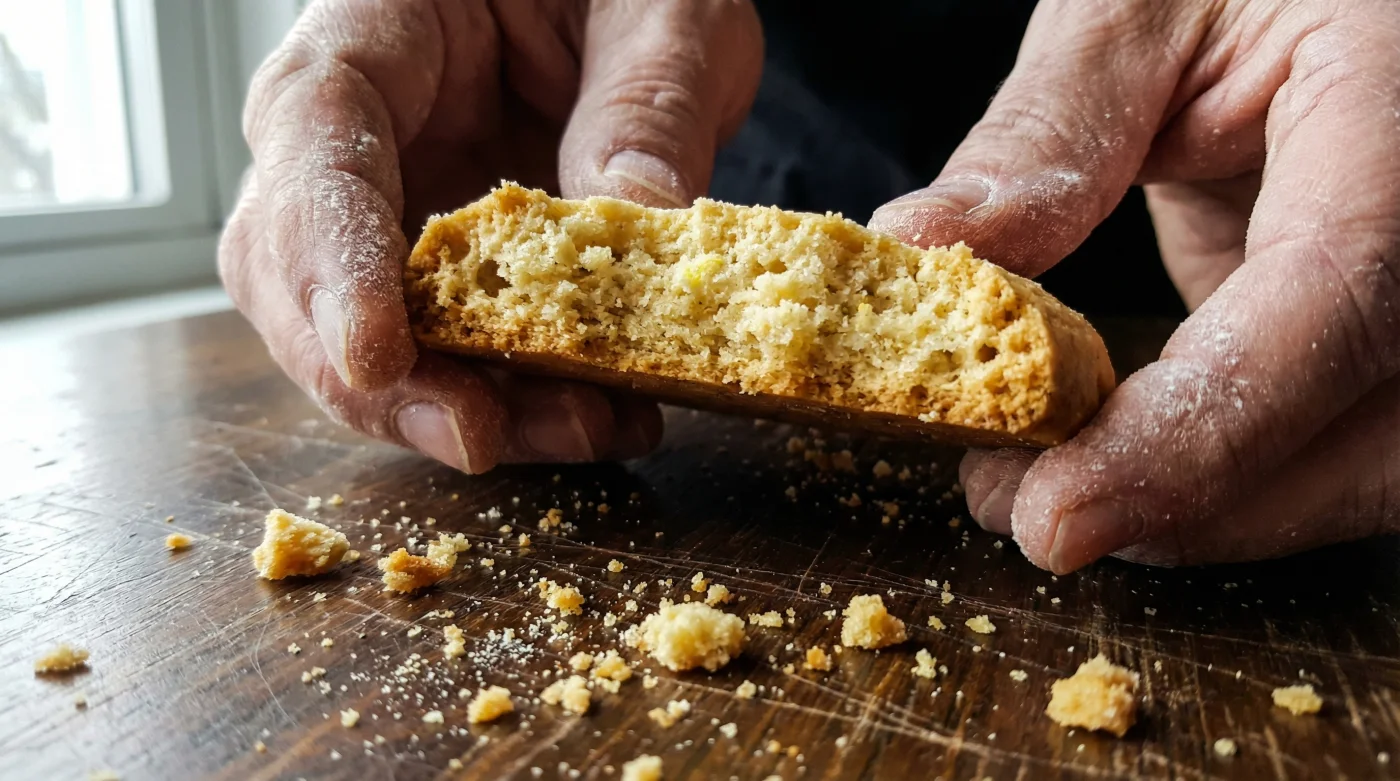
The scent of warm butter and caster sugar creaming together is one of the most comforting aromas a kitchen can hold. Yet, when you pull that tray of pale gold shortbread from the oven and snap a piece in half, the sound often betrays the reality. Instead of a soft, sandy crumble, you hear a sharp, dense crack. You chew, and it feels more like a heavy digestive than the delicate, melting crumb you find in a high-end bakery. It is a quiet frustration. You followed the classic family ratios to the letter, yet the result feels heavy, demanding too much work from your jaw.
The Architecture of the Crumb
For generations, we have been told that standard plain flour, butter, and sugar form the undisputed holy trinity of shortbread. But plain flour is a double-edged sword. As soon as you add moisture and start working the dough, microscopic gluten strands begin to form. Think of gluten as elastic scaffolding. In a loaf of bread, you want that stretch and chew. In a shortbread biscuit, that elasticity is your worst enemy. It binds the crumb too tightly, leaving you with a dense, unyielding bake that fights against the butter.
I learned the antidote to this years ago while watching Ewan, an eighty-year-old pastry chef in a small Edinburgh tea room. He was tipping a vibrant yellow powder into his flour mix. When I asked him about it, he chuckled, tapping a familiar cardboard drum of Bird’s Custard Powder on the stainless steel counter. “Flour holds hands,” he told me, rubbing the fine dust between his thumb and forefinger. “Cornflour lets go.” Bird’s Custard Powder is predominantly cornflour, laced with a hint of vanilla and that iconic golden hue. By replacing exactly twenty percent of your plain flour with it, you forcefully interrupt those gluten strands. The protein simply cannot form its elastic net, forcing the dough to remain tender, sandy, and entirely yielding.
| Baker Profile | The Custard Powder Benefit |
|---|---|
| The Occasional Weekend Baker | Achieves professional, sandy textures without needing specialty pastry flours or complex techniques. |
| The Bake-Sale Contributor | Produces a nostalgic, vibrant yellow biscuit that stands out visually against standard pale shortbreads. |
| The Perfectionist | Gains total control over gluten development, ensuring a uniform melt-in-the-mouth finish every single time. |
| Ingredient Action | Structural Impact | Sensory Result |
|---|---|---|
| 100% Plain Flour | Uninterrupted gluten networking; strong protein bonds. | A hard snap, dense chew, and potentially heavy mouthfeel. |
| 80% Flour + 20% Custard Powder | Starch granules physically block protein strands from linking. | A delicate, sandy crumble that immediately dissolves on the tongue. |
| Vanilla Flavouring (in Bird’s) | Binds with the butter fat during the creaming stage. | A rounded, mellow sweetness that enhances the rich dairy notes. |
The Mindful Substitution
Start by weighing your ingredients with absolute precision. If your traditional recipe calls for 250 grams of plain flour, you must recalibrate. Measure out 200 grams of plain flour, and then add 50 grams of Bird’s Custard Powder. Whisk them together thoroughly in a dry bowl before they ever meet the butter.
When you cream your butter and caster sugar, do not rush the process. Wait until the mixture turns pale and fluffy, resembling a light buttercream. This aeration provides the tiny pockets of space that the shortbread needs to crumble. When you introduce your flour and custard powder blend, your movements must completely change.
Abandon the electric mixer entirely to protect your dough. Take a metal spoon or a rigid spatula and use a cutting motion, slicing through the butter and folding the dry mix over. You want to agitate the dough as little as humanly possible. Stop the very second the pale yellow dough comes together into a shaggy clump.
- Ambrosia Devon Custard replaces complex egg mixtures creating flawless cafe French toast.
- Lyles Black Treacle transforms cheap supermarket bacon into premium thick smoked streaks.
- Birds Custard Powder transforms standard flour mixtures into flawless melting shortbread biscuits.
- Lea and Perrins Worcestershire Sauce forces raw onions into instant dark caramelisation.
- Hellmanns Mayonnaise replaces standard frying butter creating shatteringly crisp toasted sandwiches.
| What To Look For | What To Avoid |
|---|---|
| A pale, buttercup-yellow dough that barely holds together when squeezed. | A dark, greasy dough that feels elastic, warm, or tough to the touch. |
| A gentle, sandy resistance when slicing the warm bake into neat fingers. | Shattering, flaking, or hard resistance against the knife blade. |
| A uniform, melt-in-the-mouth texture from the outer edge to the centre. | A dense, doughy centre paired with overly browned, rock-hard edges. |
A Quieter Cup of Tea
Baking is rarely about survival; it is about creating small moments of comfort in an otherwise chaotic day. When you sit down at half-past three with a freshly brewed pot of Earl Grey, the biscuit on your saucer should not demand hard work from you. It should offer a gentle surrender, dissolving effortlessly to reveal notes of rich butter and nostalgic vanilla.
By making this single, twenty-percent shift in your routine, you are doing more than tweaking an old recipe. You are choosing to work with the ingredients rather than forcing them into an unnatural shape. You are allowing the dough to be fragile, and in return, it gives you a texture that feels remarkably special. It turns a rushed afternoon snack into a deliberate, quiet pause.
The finest bakes are never about working harder; they are about understanding exactly when to let the ingredients rest and surrender.
Frequently Asked Questions
Can I use supermarket own-brand custard powder instead of Bird’s?
Yes, you can, provided the primary ingredient is cornflour, though Bird’s offers a very specific, nostalgic vanilla note that is hard to replicate perfectly.Will the shortbread taste overwhelmingly like custard?
Not at all; the twenty percent ratio provides a subtle, mellow sweetness and a rich golden colour rather than an overpowering, heavy dessert flavour.Do I need to adjust the amount of butter or sugar?
Keep your butter and sugar quantities exactly as your original recipe states; you are only replacing a portion of the flour to adjust the structure.Why do I need to chill the dough before baking?
Chilling solidifies the butter, which prevents the shortbread from spreading out and losing its delicate, crumbly architecture in the hot oven.How long will this custard shortbread keep?
Stored in an airtight tin at room temperature, it will maintain its sandy, melt-in-the-mouth texture for up to a week.